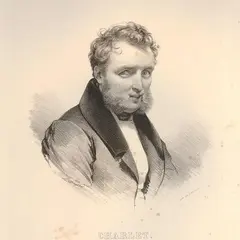
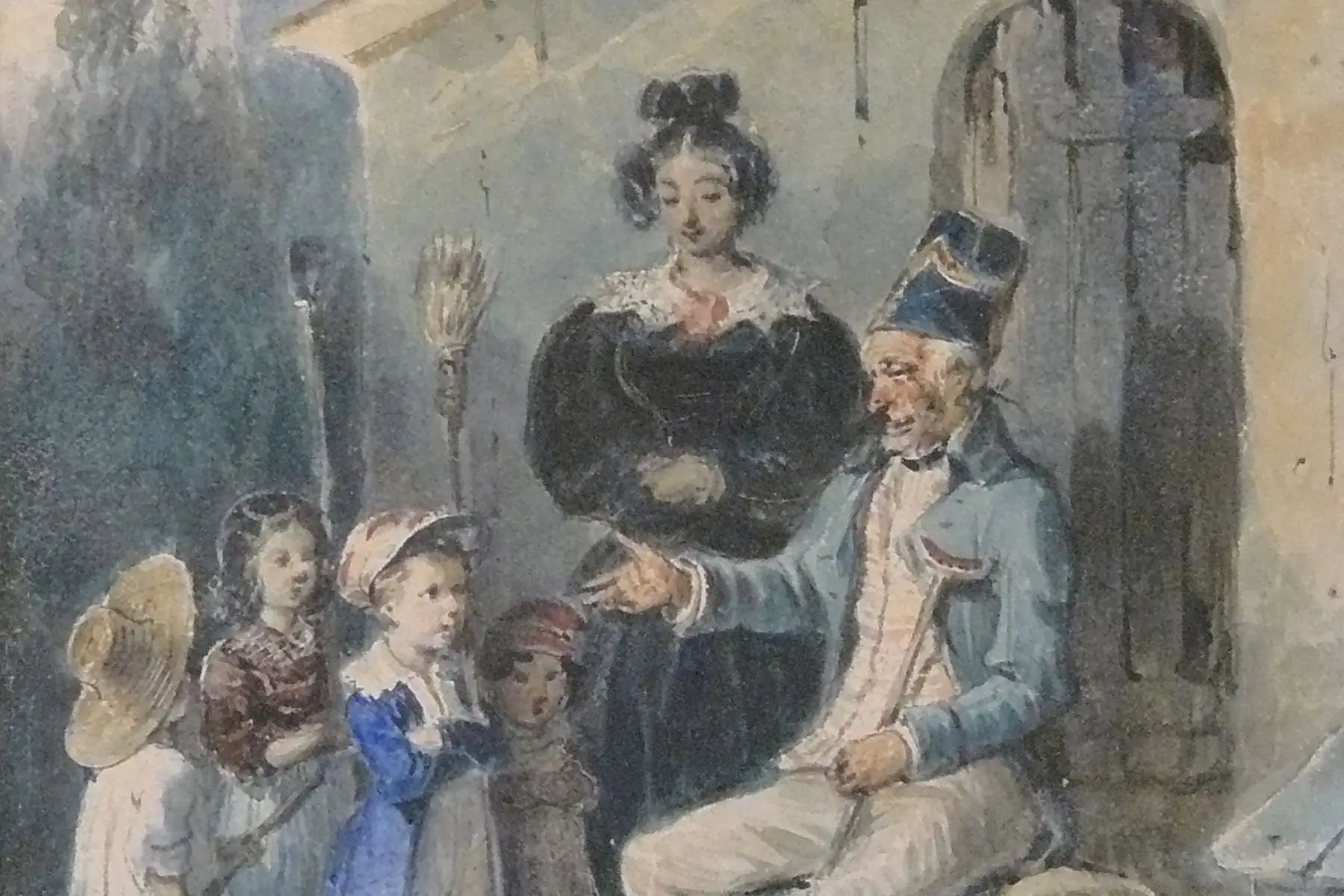

In 1889, during the Exposition Universelle, it was said that we were living in the land of the Arabian Nights; the truth is that we are living in the age of a thousand and one exhibitions. One of the most recent—for there have been others since—was held from June 1st to 25th at the Durand-Ruel gallery. This was the exhibition of Nicolas-Toussaint Charlet, a necessary sequel to the triumphant 1892 exhibition of Auguste Raffet. One might object that, by rights, Charlet should have come first, as his work partially predates Raffet's. To this, one must reply that while such an order would have been logical, or chronological, it would not have been hierarchical, for in art, Raffet takes precedence over Charlet. To speak in military terms, which is fitting here, Charlet is the elder, but Raffet is the superior.
The Elder and the Superior
While modern criticism has identified a selection of pieces in the student's work that rank him among the great names of art, immeasurably above his master, we must not forget that in their own time, Charlet was a far more significant figure than Raffet. With a certain measure of artistic talent, Charlet played a notable political role in our century. Let us even say, if you will, that to the extent of his abilities, he helped shift the very axis of French politics. He inspired, amused, and roused an entire generation. This is a point worth dwelling on.
The Société des Lithographes français (Society of French Lithographers) has done a useful thing by placing before the eyes of today's public, which no longer knows him, the work of the draftsman of the grognards (the grumbling veterans of Napoleon's Old Guard). The exhibition was presented with appropriate sobriety: one hundred and fifty lithographs out of twelve hundred, plus a series of drawings, watercolors, and oil studies. It was enough to show Charlet at his most interesting, touching, or amusing, but not so much as to reveal his tiresome side, which is just as undeniable as the first.
Charlet's work, though unified in concept and purpose, is multiple, diverse, and uneven in its subjects and execution. To gain an accurate idea of it, the best approach is to examine it, as much as possible, in chronological order.1
The Rise of a Napoleonic Artist
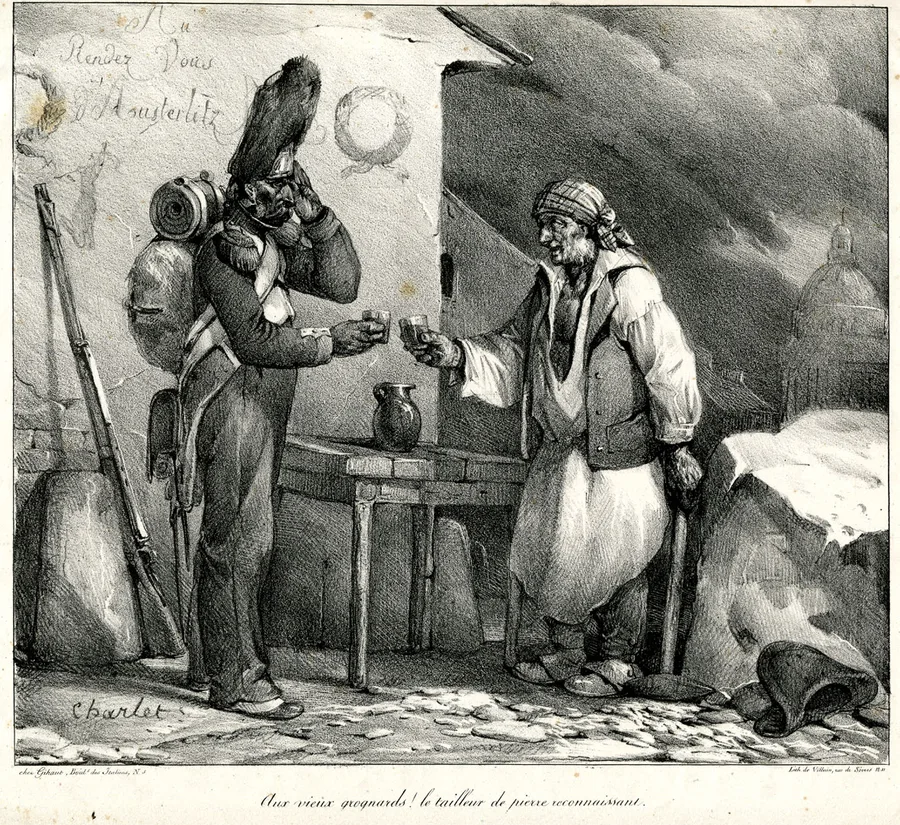
Everyone recalls the piquant portrait that Victor Hugo, in Les Misérables, composed of the year 1817, humorously characterizing it through a singular amalgam of minor events. To such a picture, one could endlessly add details, and here is one that particularly interests us. In that year, 1817, French painters ardently adopted lithography, an easy and spontaneous method for multiplying an original drawing. Some applied it to landscapes; others, who would soon enlist behind Baron Taylor, used it for picturesque architectural drawings. The most prominent, in the wake of painful events, dedicated themselves to the glorification of the soldier of the Grande Armée.