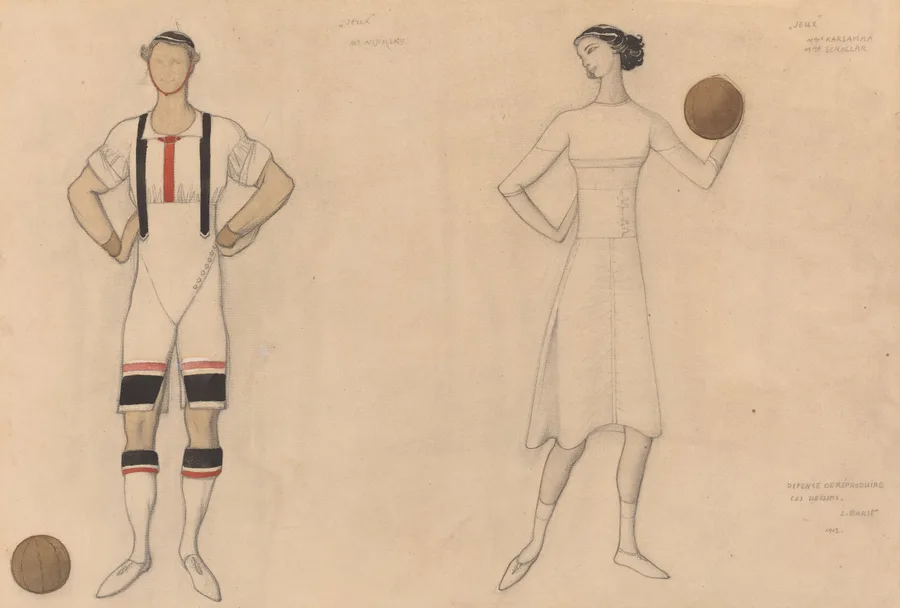
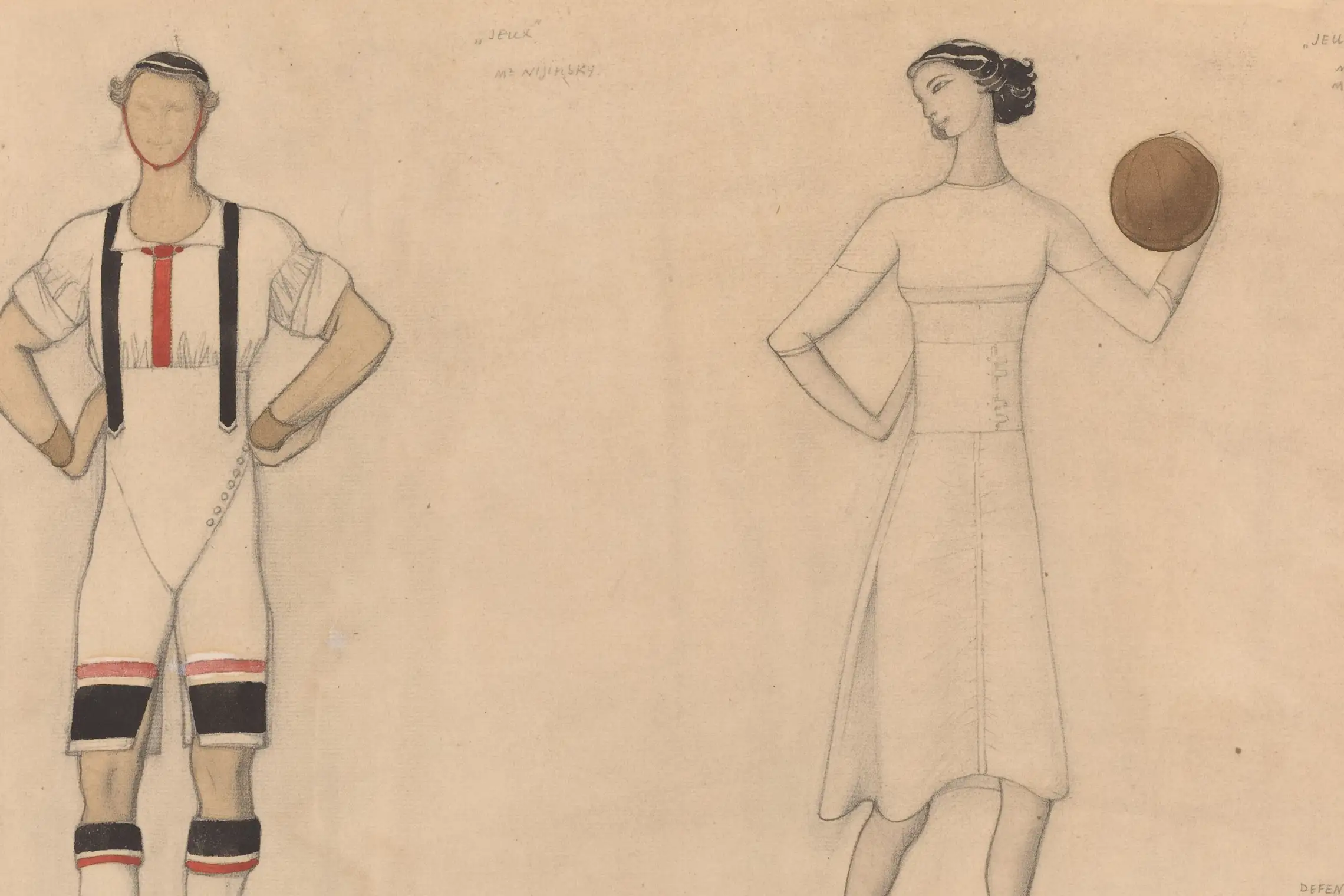

Nearly four years now separate us from the time we first saw Boris Godounow on the stage of the Paris Opéra. We were all, assuredly, enchanted by the music of Mussorgsky, of which Mr. Debussy's Pelléas had given us a foretaste. Yet our joy and surprise were even newer before the admirable sets in which the work was presented.
Perhaps we would have retained from that spectacle only the hazy memory one keeps of a beautiful dream, forever vanished, had we not had the good fortune in Paris to see these astonishing Russians—musicians and singers, dancers, set designers, and costumers—return among us.
A Revolution on the French Stage
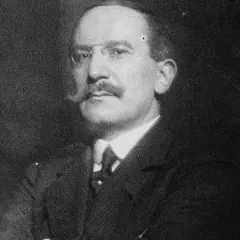
It is only right to name here Mr. Serge de Diaghilev, the organizer of these precious festivities. Thanks to the spectacles he has shown us on three occasions, something in the art of decoration in France has changed. We need no more proof than the current endeavor of Mr. Rouché at the Théâtre des Arts, or the innocent report of a journalist who, returning recently from a rehearsal at the Opéra, exclaimed: "The Russians have rubbed off on our designers: they are using bright colors on light backgrounds!"
Soon the majority of French spectators, obedient to the infatuation of an elite, will no longer be able to tolerate stage design as it is still conceived in almost all our theaters. They will find these meticulously detailed sets, devoid of color and atmosphere, to be ugly and useless. Before them, characters dressed in purplish or dead-leaf rags come and go, but this will no longer suffice.
The public will refuse to be enthused by groves of fake-real ivy, by "sterilized" cypresses and "naturalized" ferns that designers have for too long caused to sprout from the dusty boards of our stages. They will demand an illusion that is at once more vague and more durable. We are still at the stage of Millais and Paul Delaroche; it is high time to return, by way of Monticelli and Albert Besnard, to Veronese and Tiepolo.