
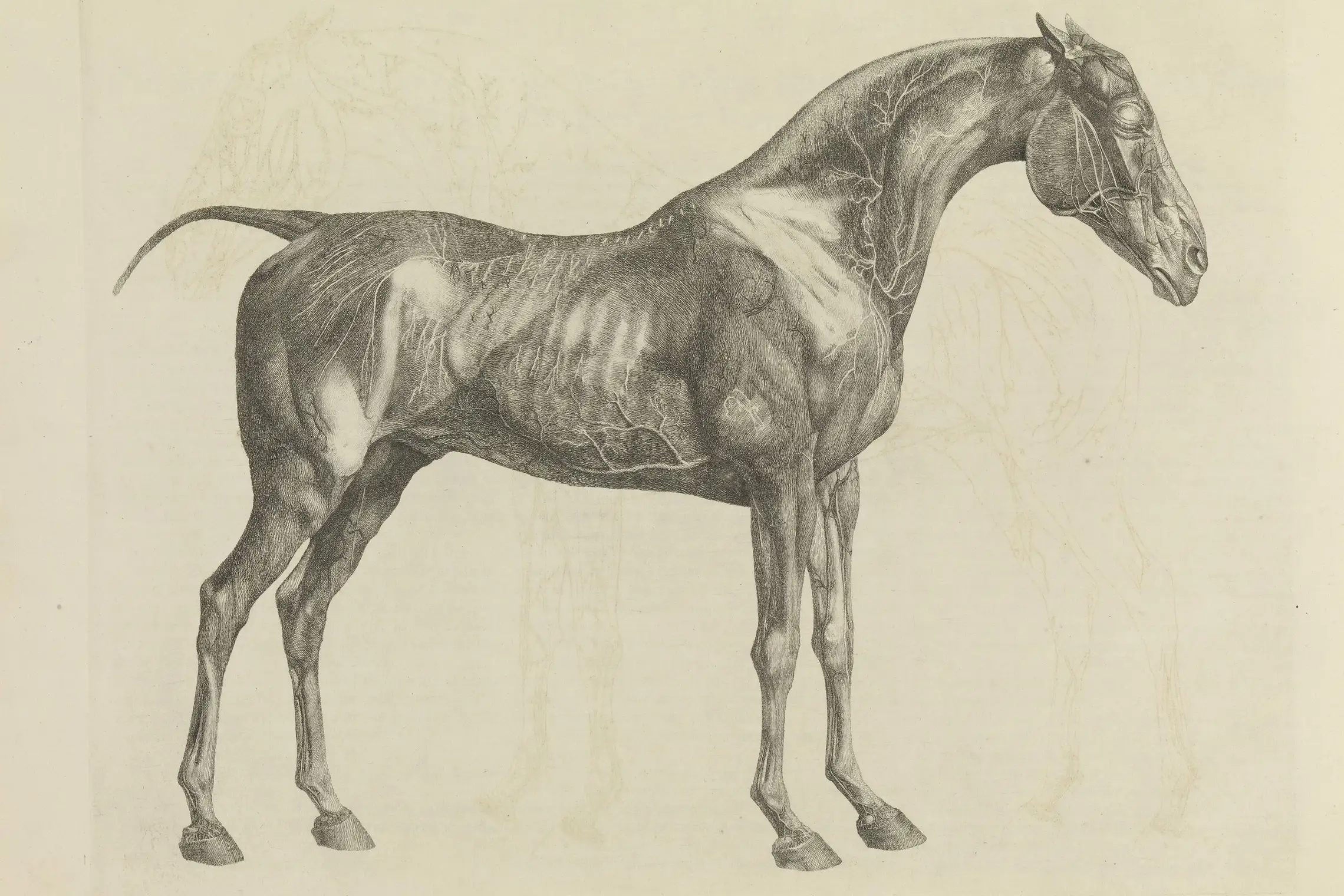
Wishing to follow up on the articles already published in the Gazette regarding the horse in art,1 I undertake today to write the practical advice that follows. My motivation stems from the nature of my work, which has afforded me the opportunity to discuss these matters with many artists. These artists have shown interest in the goal of my research, which aims to popularize the knowledge of the horse's true proportions and to facilitate its useful study.
For the past dozen years, as this interesting animal has been studied more seriously, I have been struck by the hesitations even the most skilled artists experience when trying to correctly draw a horse from life. This is true no matter how accustomed the eye may be to the accuracy of relationships between different subjects, particularly with regard to the profiles that define them.
The Challenge of Anatomical Accuracy
I am therefore convinced, based on what I have seen and heard, of the great difficulties presented by the reproduction of the horse's forms, even when its study is pursued seriously. One must admit that a true understanding of the horse becomes absolutely inaccessible to those who draw this noble animal casually. Such individuals lack the persistence to comprehend its muscles, whose contours conceal the internal framework, and its postures, which cannot be rendered without investigating muscular attachments and the placement of the skeletal bones.
In a word, it is absolutely necessary to learn to see the horse as it is before using it to animate compositions where its presence is required. The taste for sports, in which the horse holds such a prominent place, is spreading more every day. It is therefore important for the specialist in this genre to be as well-informed as possible, to stay current with the various scenes through which an artist can interest and captivate the public with a believable rendering.
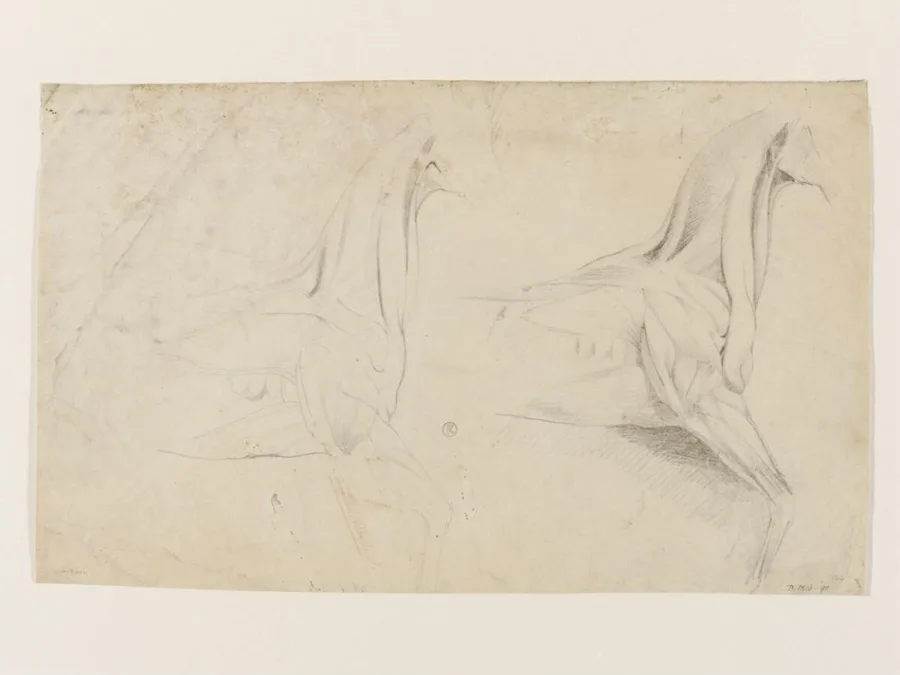
In the past, the horse in painting and sculpture was an isolated model, always a slave to a certain convention, leaving a fleeting impression that was insufficiently reproduced by drawing. It might have satisfied curiosity, but not the desire to learn. How many errors did battle painters commit in its name! Today, artists are more concerned with form when it comes to animals and understand the necessity of appealing to memory through comparison. We hope that study will lead them all to achieve verisimilitude—artistically perfecting nature—only by grounding it in truth.
Before proposing the principles that serve as a mnemonic for proportions, we will assume that the student is familiar with the fundamental notions of the horse's structure. We also assume they are acquainted with the different regions composing its exterior, through studies from life and the inspection of fine photographs. We will then initiate them into certain indicators that will establish reference points, allowing them to faithfully render what they see. In this way, we will draw them out of the uncertainty of not knowing where to begin.