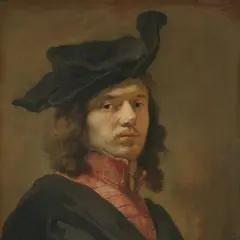
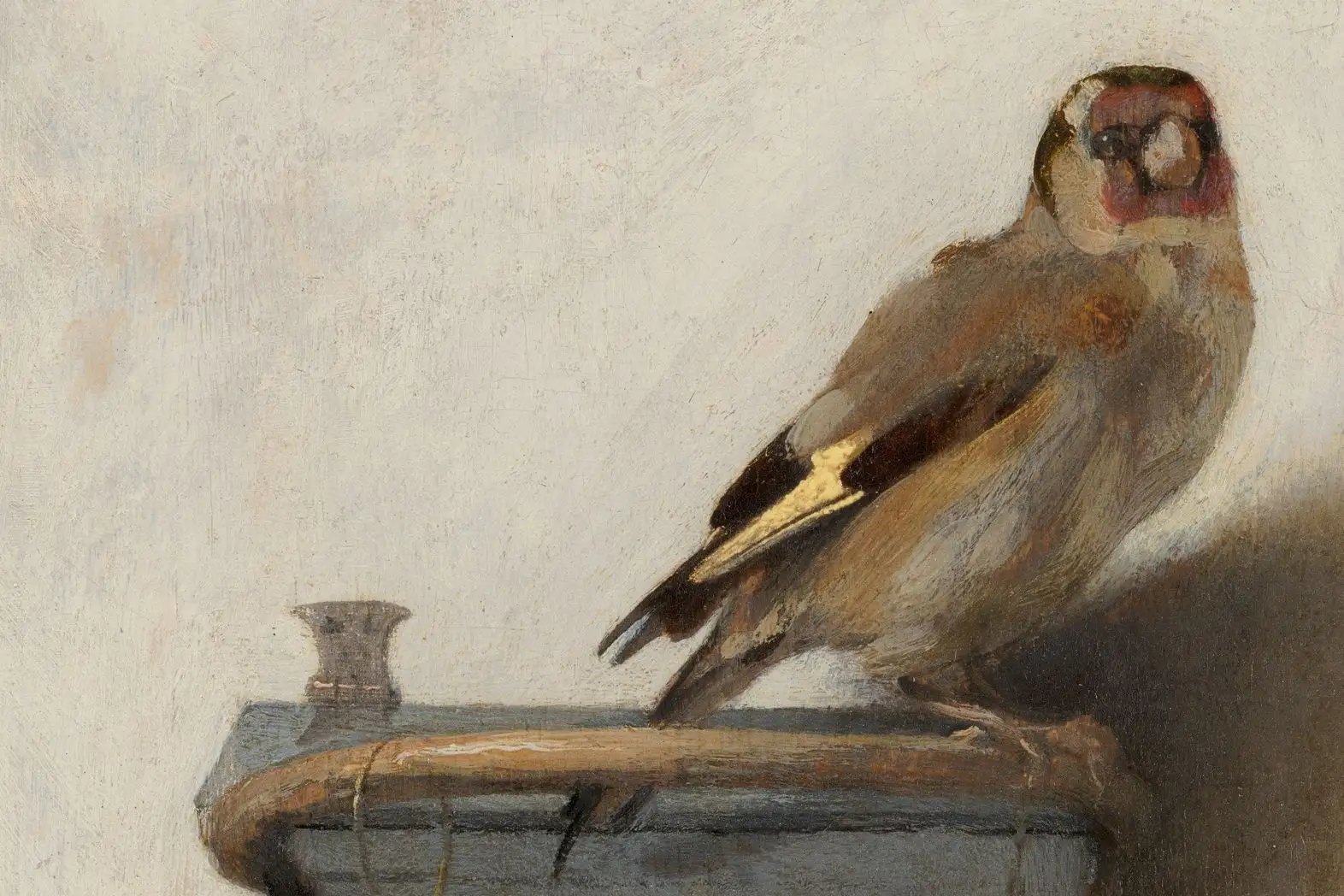
All those who have frequented the museums of Holland will remember the stir caused, a few years ago, by the discovery of the name Fabritius on a man's portrait that had, until then, been attributed to Rembrandt. This painting belonged to the museum in Rotterdam, and most English, German, and French critics had admired this masterful work without ever thinking to question the accuracy of its attribution.
Théophile Gautier in the Moniteur, M. Maxime Du Camp in the Revue de Paris, and M. Louis Viardot in his Musées d'Angleterre, de Belgique et de Hollande (to speak only of our own compatriots), had all praised the work to the skies. M. Maxime Du Camp declared that it alone was worth the trip to Rotterdam, while M. Viardot classified it among "the great masterpieces of Rembrandt," and all of this was no more than its due. This portrait, or rather this study head, is indeed a marvel of craftsmanship and execution.
A Rediscovered Masterpiece in Rotterdam
The painting represents a man of the people, with an energetic, rough, uncultured face, a poorly combed brow, brutally accentuated features and planes, deep-set orbital ridges, a strong mouth, and a solid, square chin. It is enough to say that the model is not handsome, but the whole is admirably structured, built with a master's hand, and brushed with an incredible bravura of the paintbrush.
Through an open shirt, a hairy, hirsute chest appears. The neck is bare. On the shoulders, the painter has draped a brown jacket. This astonishing figure—full of relief, truth, and force, and whose wildness is reminiscent of Ribera—is set against one of those neutral, greenish backgrounds that Rembrandt used to such marvelous effect in some of his portraits, notably in the one we have here named the Woman of Utrecht.
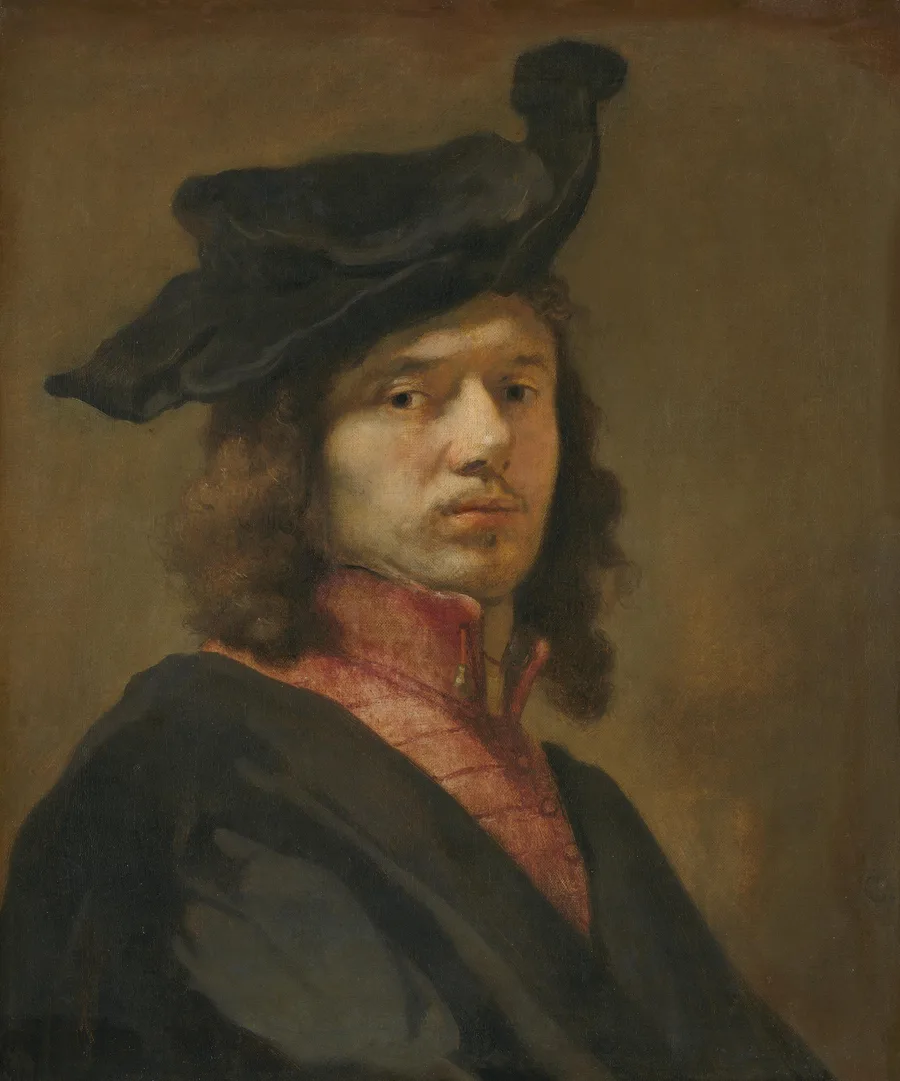
To all these qualities indicating a first-rate master was added a superb signature of Rembrandt. How, then, could one suspect the authenticity of such a work? However, M. Lamme, the museum's director, proved more skeptical than the critics who had paraded before the painting. He began to doubt the signature, which seemed too perfect to him. He noticed some clumsy repainting in its vicinity. He cleaned this small corner of the painting, removed the retouches, and the signature disappeared along with them.
M. Lamme then had the good sense, before returning the painting to the frame from which it had been removed for this operation, to examine it thoroughly from top to bottom and from right to left. At the very top of the canvas, in a spot once covered by the frame, he perceived the name Fabritius. This time, he was faced with the true signature—authentic and indisputable, for the name was traced into the very thickness of the paint with the handle of the brush.