Russian art is, so to speak, a discovery of modern criticism; consequently, it is still almost unrecognized in Russia itself, where the following objections are raised against its very existence. How, it is asked, could an art have existed among the ever-warring tribes—the Scandinavians from the North and the Slavs from the East—who, after long periods of ebb and flow, finally settled around Novgorod? Constantly kept on alert by new incursions from peoples of the same origin, they scarcely found rest until the time when Rurik (862–877) came to govern this federation.
Christianity itself had not yet been introduced, and one must wait until the end of the 10th century for Vladimir to convert and lead the Russians to follow his example. Art must have entered with the new religion; but the civil wars, among the most appalling and prolonged ever endured, were hardly favorable to its development. At most, the Russians could borrow their religious architecture from the Greeks, along with their orthodoxy.
The Debate Over a National Art
In the 12th century, as Western art was freeing itself from the last Roman influences and becoming what we must call Gothic for lack of a better name, Russia was subjugated by Tatar invaders under the leadership of Genghis Khan. The nation was preoccupied with paying the rigorously exacted tribute amidst the ever-continuing civil wars. Alexander Nevsky (1251) and his successors, who had settled further east of Novgorod in Vladimir-on-Klyazma, were merely skilled negotiators, always with money in hand to appease and calm the Khan, who exploited Russia like a tenant farm.
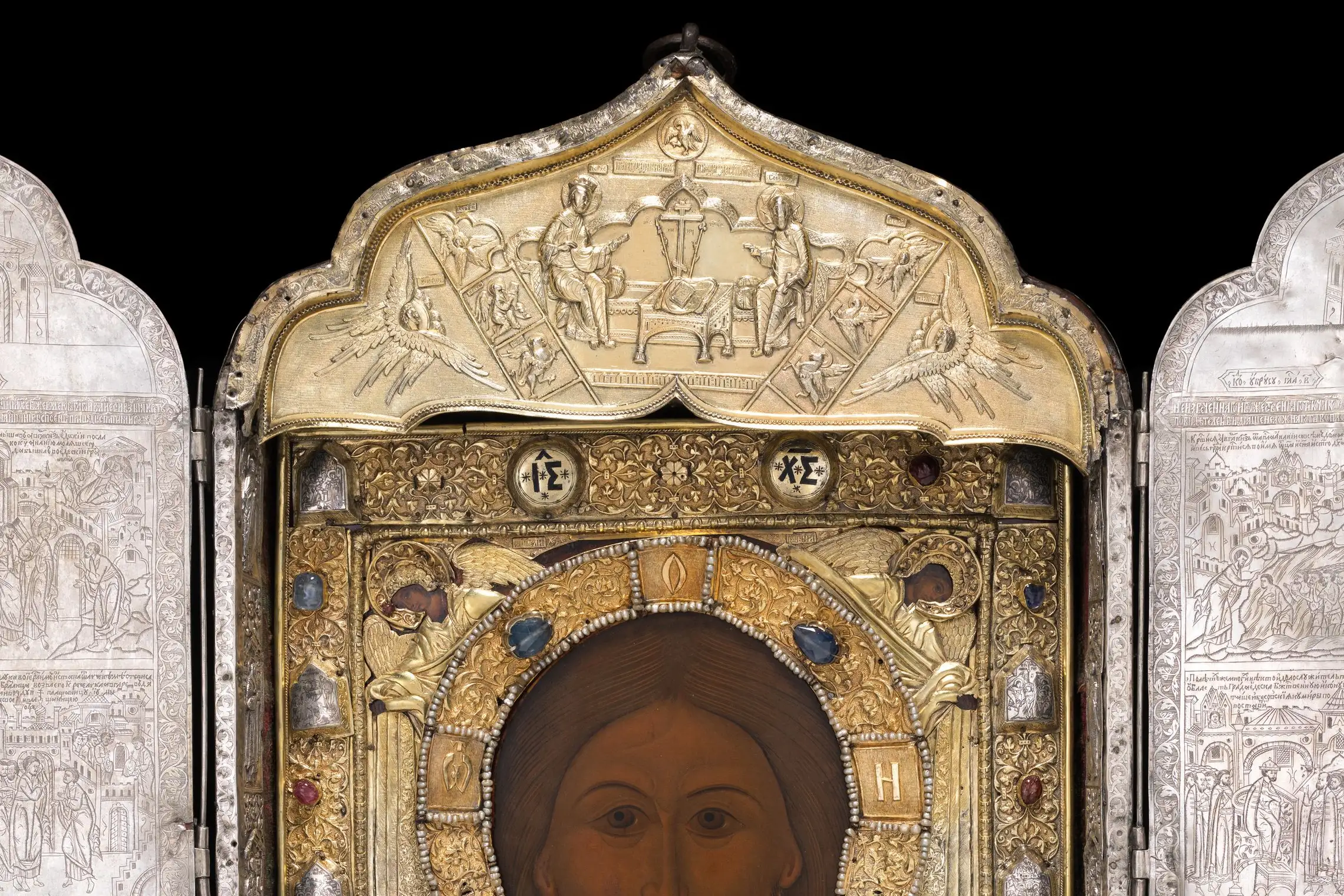
When the grand dukes took the title of tsars and established themselves in Moscow (14th century), their task was difficult enough: to gradually oust the Tatars and unite the scattered elements of what is now Old Russia. During this formative period, Byzantine art dominated in both architecture and ornamentation, a living expression of a religion developing in isolation between the idolatry and Islam of the south and east, and the Catholicism of the west.
During the Reformation and the religious wars that accompanied it, Russia, out of hatred for Catholicism, served as a refuge for persecuted Germans. Consequently, Western art, under the protection of Boris Godunov (1598 to 1605), was introduced to Moscow by Lutheran German craftsmen.
At that time, Russian workers entered the workshops of goldsmiths from Nuremberg or Augsburg, though they seem to have limited themselves to engraving Slavonic inscriptions on exclusively Western pieces. Later, under the first Romanovs (1613), Russian armorers collaborated with Germans to manufacture firearms. These weapons, preserved in the Imperial Treasury in Moscow, bear their signatures and exhibit the same hybrid character found in contemporary goldsmithing. One might have hoped to see the birth of a Russian art from this dual national and foreign influence. But soon, Peter the Great brutally aborted these attempts by opening Russia to all the art of the West, which dominated from his reign onward.