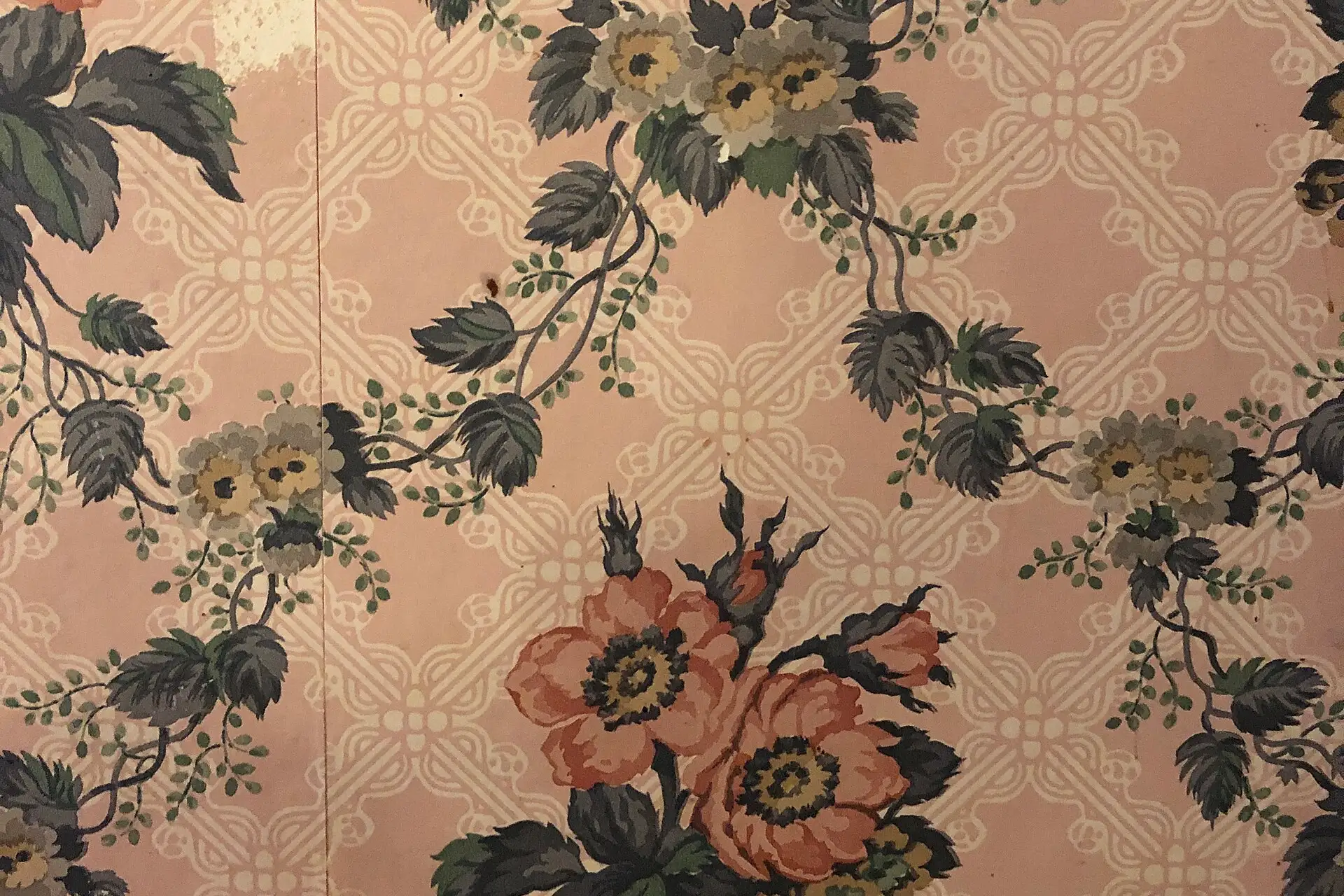
Towards the end of the 17th century, wallpaper made its very timid entrance into French decorative arts. The invention, in truth, was not new. For a century, and perhaps longer, the use of more or less decorated paper to furnish walls was known: a 1397 decree attests to the existence of "manufacturers of papers intended for making tapestries and other ornaments." However, the modest wood engravers who engaged in this type of industry were anything but artists. They contented themselves with rudimentary designs: checkerboards, stripes, mosaics, compartments, and small flowers, crudely engraved in outline and printed in black on small-format paper. The sheets were then colored by stencil with distemper paints and sold by the quire (twenty-five sheets) to country folk and shopkeepers, who used them to paper their stalls. The repeating pattern—that is, a design that continues and connects from one sheet to the next to produce an uninterrupted design after assembly—was, it seems, entirely unknown to the dominotiers, as these early industrialists were called.
The Inspector General of Manufactures, Savary des Brûlons, who in the early 18th century was gathering materials for his Dictionnaire du Commerce (published in 1723, seven years after his death), is the first to note the nascent vogue for wallpaper. "This type of paper tapestry," he tells us, "which for a long time had served only country people and the common folk of Paris... was brought to such a point of perfection and charm towards the end of the 17th century that, besides the large shipments sent to foreign countries and the principal cities of the kingdom, there is not a house in Paris, however magnificent, that does not have some area, be it a dressing room or even more private places, that is not papered and quite pleasantly adorned with it." He adds, in what is not the least interesting part of his account: "We will not specify here the subjects represented on these light tapestries, as that depends on the taste and genius of the painter; but it seems that grotesques and compartments mixed with flowers, fruits, animals, and a few small figures have hitherto succeeded better than the landscapes and the kinds of high-warp tapestries that some have occasionally tried to depict."
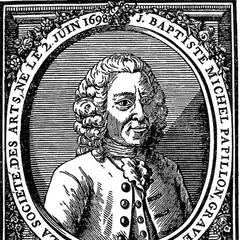
Unfortunately, when Savary addresses the technique of the craft, he seems less well-informed. We would be reduced to reproducing, in our turn, a description we have every reason to believe is erroneous—one repeated by the two great Encyclopédias, Diderot's (1751) and Panckoucke's (1783)—if we did not have, on the same subject, the infinitely more precise information of a professional: Jean-Baptiste-Michel Papillon.
The Papillon Dynasty and the Repeating Pattern
Jean-Baptiste-Michel Papillon's Traité historique et pratique de la gravure sur bois (Historical and Practical Treatise on Wood Engraving), published in 1766 by a member of the Academic Society of Arts, is an infinitely precious book, like all those in which artists speak of their art. Not only does it contain precepts on woodcutting that have hardly aged, but on every page, one finds amusing remarks about the things and people of the era, about engravers and booksellers, about stationers-paperhangers, and about the author's own family. For the father, and perhaps also the grandfather, of Jean-Baptiste-Michel were engaged in this industry.
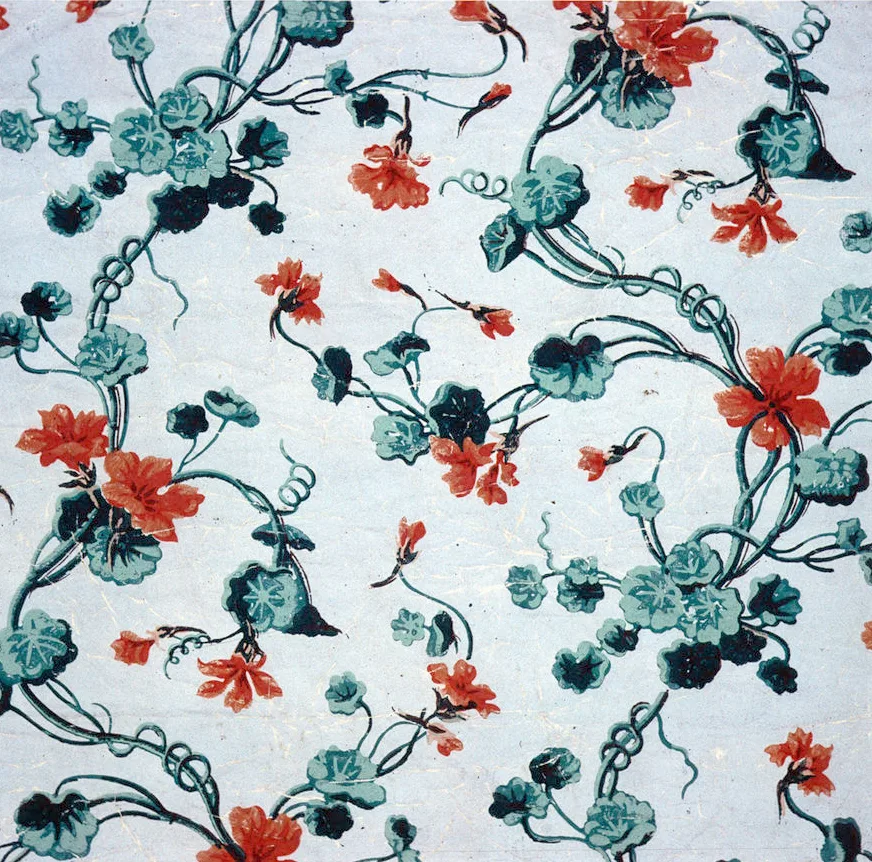
At the age of nine, the author of the treatise took up the point and the gouge and engraved his first block, a large design of poppies for a tapestry, composed by his father and of a very beautiful decorative effect (1707). But, this first step taken, when he wanted to start copying prints, the head of the family rather harshly instructed him to devote only his recreation time to this diversion and to spend his working hours on less delicate engravings that were more profitable for his business. "And I remained constrained," Papillon tells us, "to printing our wallpaper papers, and even to coloring them when I was not engraving blocks for them, as well as to going into fine houses to paste them and put them in place."¹
Jean-Baptiste-Michel was therefore a true professional of wallpaper, and we can take him at his word when he speaks of it. It is he who will allow us to shed some light on this heroic age of wall decoration.