
The ninth volume of the History of Art in Antiquity is dedicated to the "minor arts" of archaic Greece. One cannot open it without a respectful glance at the monumental series in which it takes its place. For those to whom Georges Perrot was and remains a beloved master, there was never any doubt that he had precisely measured his own strength when he set himself a work program that no other scholar, in France or abroad, would have deemed achievable without the assistance of multiple qualified collaborators.
Since the death of the architect Charles Chipiez in 1901, the eminent archaeologist has continued alone, tirelessly and with a disciplined ardor that age will not slow, the enterprise begun thirty years ago. Even if the History of Art were a collective work, it would be enough to secure the glory of the one who conceived its plan and directed its execution. Since it has been brought to fruition by a single man, the life and unity it gains from this only increases our duty of gratitude and admiration.
A Monumental Achievement
To explain the result Perrot has achieved, one must look beyond the soundness of his method, the regularity of his labor, and the breadth of his knowledge, which is as familiar with the literature of the Ancients as with the monuments of their plastic arts. What gives the author his original character, what distinguishes his work from so many manuals—useful, no doubt, but opened only to look up a piece of information—is the clarity of his intelligence, which results in precision of language, and that tireless curiosity which keeps the mind eternally young. These are two qualities the Greeks would have loved in their historian.
Mr. Perrot instructs us because he seeks to instruct himself. Like the interlocutors in Plato's Dialogues, he delights in asking questions. He has read everything,1 without letting himself be led astray or troubled by contradictions. He clarifies obscure problems or prefers to reserve his opinion if he cannot find a clear and simple solution. Never losing sight of the necessities of a general logic, he dismisses the hazardous theories invented by scholars confined to their specialties; and these specialists themselves can fruitfully read the chapters where he, after them, addresses the subjects of their studies.
An art history is not a catalogue of monuments, however copiously and rationally enumerated. Classification is a means, not an end. The true object of the writer is to help us penetrate the spirit of a privileged civilization. Mr. Perrot does not separate what the Greeks never separated. The Muses are sisters, daughters of the greatest of gods, Zeus, king of Olympus. By a privilege never again granted in its fullness to any people, the plastic arts, poetry, philosophy, and even politics are united among the Greeks under the guiding idea that the beautiful and the useful are one and the same.
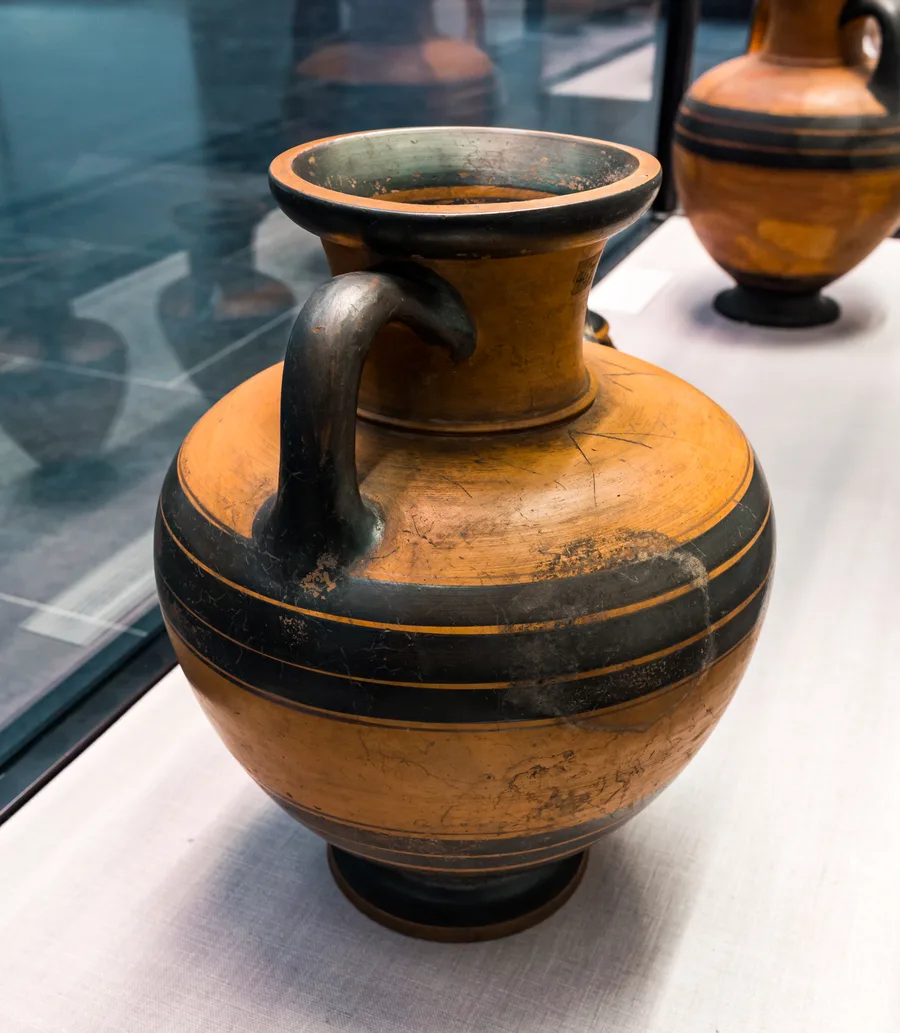
If nothing is beautiful without being useful, and if nothing, even among the most modest forms of human industry, can fulfill the conditions of utility without obeying the commands of beauty, one understands why the stone on which a prince has an emblem engraved as a signature, the coin to which the city, by its guarantee, confers a power of exchange while commemorating a cult or a national glory, and the vase that will hold wine, oil, or precious essences, all received from a people—who did not invent glyptics (the art of gem-carving), numismatics, or ceramics—a character of art that was never surpassed or even equaled elsewhere.