
A Manifesto in Print
Before the understated cover and discreet title, there was the Baroque title page: a dense, declamatory, and often beautiful statement of purpose. It was not merely a label but a manifesto, an advertisement, and a table of contents rolled into one. The title page of the 1664 Basel edition of Jacobus Theodorus Tabernaemontanus’s New und vollkommen Kräuter Buch (New and Complete Herbal) is a superb example. It does not simply name the work; it proclaims its vast ambition to an audience of “physicians, apothecaries, surgeons, gardeners, cooks, housefathers, and all lovers of the art of medicine.” This is to be a book of ultimate utility and unimpeachable authority.
It promises a comprehensive catalogue of the known plant world, from familiar “domestic plants, herbs, flowers, shrubs,” to the enticingly exotic: “precious foreign roots, barks, fruits, etc.” from lands as far as Spain and, crucially, “the newly-discovered East and West Indies.” The page boasts of its “beautiful, artful, and lovely figures and portraits,” but its true intellectual weight is declared in the lineage of its editors. This is not simply Tabernaemontanus’s original 1588 text. It is a work sharpened and expanded over decades, culminating in the masterful revisions of Caspar Bauhin, one of the most important figures in the history of botany, and his son, Hieronymus. This page, printed in the great scholarly hub of Basel, is a document of science in motion—a testament to the immense intellectual challenge of ordering a rapidly expanding world.
The Weight of a New World
The late 16th and 17th centuries faced a problem of success: an information crisis. As European ships returned from the Americas and Asia, they brought back not just gold and spices, but a bewildering array of previously unknown flora. The classical botanical knowledge inherited from Dioscorides and Pliny, which had been the foundation of European medicine for over a millennium, was suddenly and dramatically insufficient. The world was larger and stranger than the ancients had ever conceived, and its new plants held the promise of new cures, new foods, and new poisons.
This is the world into which Caspar Bauhin (1560-1624) was born. A professor of anatomy and botany at the University of Basel, he understood that the great task of his era was not merely to collect, but to organize. The title page of the 1664 Herbal proudly states that he “augmented and improved” the work of Tabernaemontanus in “countless places with many new herbs, plants, experiments, and special medicinal pieces.” This was more than just appending new entries; it was an act of intellectual synthesis. Bauhin’s project was to create a system that could accommodate the known and the unknown, to find a rational order in the beautiful chaos of creation. His genius lay in classification, most famously in his 1623 Pinax theatri botanici, a landmark work that attempted to list and provide synonyms for every plant then known. He moved instinctively towards a binomial system, often giving plants a generic and a specific name, a full century before Carl Linnaeus would formalize the method.
When we see his name on this title page, it signals a profound upgrade. The book is being presented not as a charming relic, but as a state-of-the-art scientific instrument, one capable of navigating the flood of new data pouring in from across the globe.
The Grammar of Plants
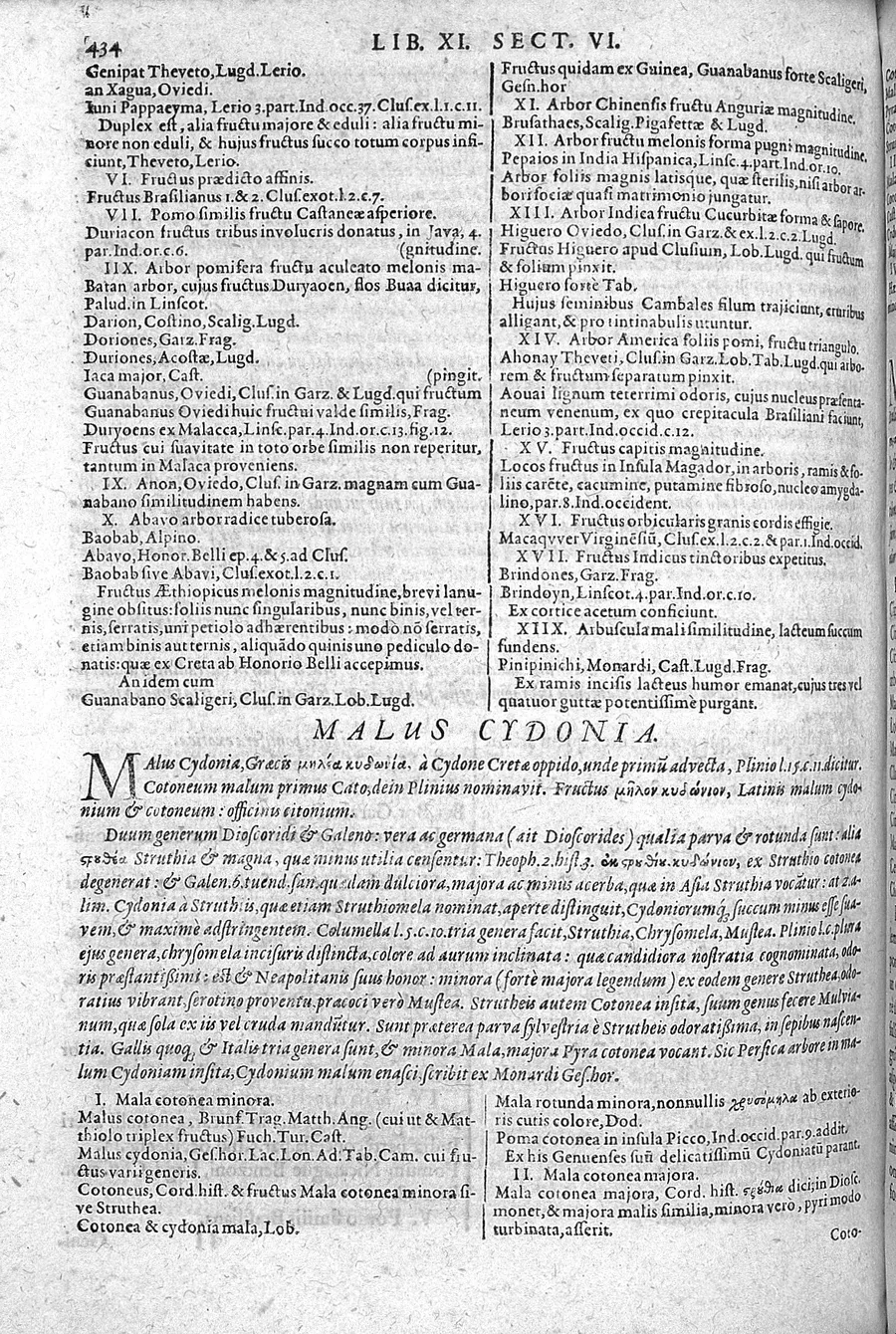
How does one create order from this botanical deluge? The answer, as the title page makes clear, lies in the rigorous management of language. It promises to provide the plants’ “true names in various many languages, as read in the old and new writers.” More importantly, it announces that Caspar’s son, Hieronymus Bauhin, has augmented this edition with “the addition of marginalia and all Synonimorum (which were formerly in this part completely lacking), new registers, and other things.”
To a modern reader, marginalia and synonymies might seem like dry academic housekeeping. To a 17th-century scholar, they were revolutionary tools. A plant might be known by one name to a German apothecary, another to an Italian physician, and a third in the classical texts of Theophrastus. Was the Moly of Homer the same as the wild garlic growing on a Swiss hillside? Were two plants described by different explorers in the Indies actually the same species? Without a system for cross-referencing names—a synonymy—the entire body of botanical knowledge risked collapsing into a babel of confusion and redundant effort.
The Bauhins’ work, embedded in this edition of Tabernaemontanus, was an attempt to create a stable linguistic framework for botany. By diligently compiling synonyms, creating exhaustive indexes (“new registers”), and reconciling the “contrary opinions of the ancient, as well as several more recent authors,” they were building the intellectual infrastructure for a modern science. They were establishing a grammar for speaking about the natural world with precision and clarity, laying the foundations upon which Linnaeus and all subsequent botanists would build.
A Household Science
For all its scholarly rigor, the Kräuter Buch was never intended to be a purely academic text. Its purpose, as declared on the title page, was intensely practical. It was a guide for making “excellent medicines, potions, juices, syrups, waters, extracts, oils, salves, powders, plasters.” It even hints at alchemical traditions, offering access to “highly-proven secret arts.” This was a book meant to be used, its pages stained by the work of the kitchen and the apothecary’s shop.
The intended audience reveals how deeply this scientific knowledge was woven into the fabric of daily life. This was a resource for the professional—the doctor and surgeon—but also for the domestic sphere. The “gardener,” the “cook,” and the “housefather” were all expected to consult it, to understand the virtues of the plants in their garden, and to prepare remedies for their families and even their livestock. The book bridges the gap between the university professor’s study and the common household.
In this, the 1664 Herbal is a monument to a specific moment in history, a time before the strict separation of scientific disciplines and before medicine became the exclusive domain of licensed professionals. It represents a world where the systematic ordering of nature was not an abstract pursuit but a vital, practical art, essential for health and survival. The colossal effort of scholars like the Bauhins to catalogue the world was ultimately in the service of the household, an attempt to make the vastness of a newly discovered planet intelligible and useful to all.
Seen at auction: Kiefer