
A Passport to Paris
On a simple title page, printed in Paris, a story of ancient horror is laid bare. IDOMENEO, Rè di Creta, o sia ILIA E IDAMANTE. Idomeneo, King of Crete, or, Ilia and Idamante. The title itself suggests a divided focus: the public burden of a monarch and the private passion of two lovers. Published by Bonafede de Lormel and the bookseller Michot near the Sorbonne, this libretto was a passport. It carried a drama, first performed at the Electoral Theatre in Munich in 1781, into the intellectual heart of pre-revolutionary Europe. For a Parisian connoisseur, this booklet was more than a guide to the plot; it was an invitation to witness a formidable contest of ideas, set to music by a prodigy of 25 named Wolfgang Amadeus Mozart. The opera it described was not merely entertainment, but a profound philosophical inquiry, cloaked in the grand drapery of opera seria, that posed a deeply unsettling question: what is the nature of justice when the laws of heaven demand an inhuman price?
The Elector's Experiment
The commission for Idomeneo came from Karl Theodor, the Elector of Bavaria. His court in Munich was a crucible of the German Enlightenment, a place where art was expected to be more than decorative. It was to be an instrument of moral and intellectual cultivation. For his 1781 carnival season, he tasked Mozart with composing a major work in the most prestigious, if somewhat rigid, operatic form of the day: opera seria, or “serious opera.” This was the genre of gods and heroes, of stilted formality and vocal pyrotechnics, a form seemingly at odds with the era’s burgeoning emphasis on naturalism and human feeling.
Yet it was precisely this tension that Mozart and his librettist, the court chaplain Giambattista Varesco, exploited. They took the ancient, brutal myth of the Cretan king who vows to Poseidon to sacrifice the first living thing he meets on his return from Troy, and they transformed it into a distinctly modern drama. The story, which echoes the biblical tale of Jephthah, becomes in their hands a trial—not of one man's faith, but of an entire worldview. The rigid, ancient code of a divine pact is pitted against the new, enlightened ideal of a benevolent, rational sovereign whose duty is to his people's happiness, not to a cruel and arbitrary god.
A Vow Against Nature
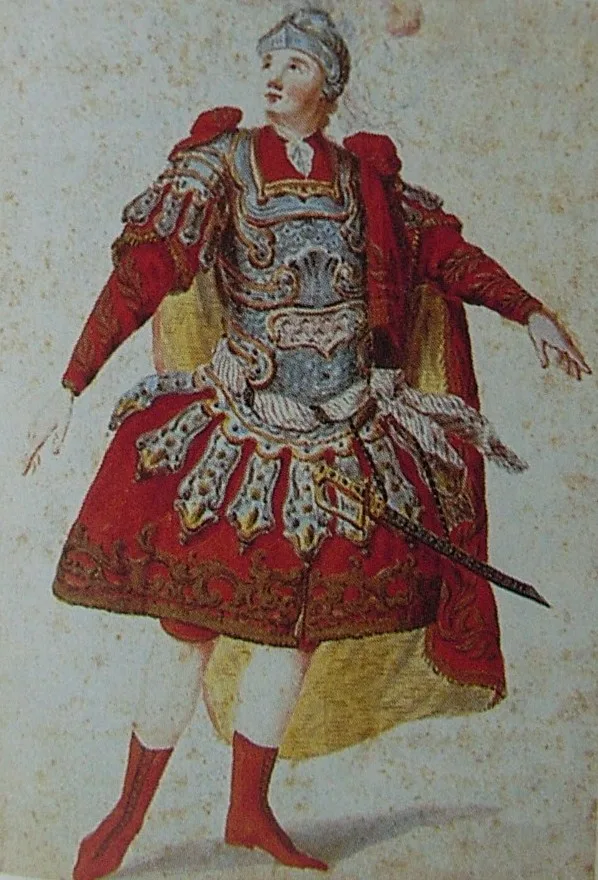
The opera’s central conflict is a powerful engine of psychological and philosophical drama. When King Idomeneo, saved from a shipwreck, lands on the shores of Crete, the first person he sees is his own son, Idamante. The vow, made in terror, must now be fulfilled in cold blood. This terrible bargain sets in motion a chain of events that interrogate the very foundations of authority. Is a ruler’s power absolute, derived from an unbreakable contract with the divine? Or is it contingent on reason, compassion, and the welfare of the state?
This is not the stuff of polite courtly entertainment. It is a debate about the nature of law itself. The High Priest of Neptune represents the old order, demanding the vow be kept without question. The people of Crete, ravaged by a sea monster sent by the angry god, cry out for the sacrifice. Against this stands Idamante, the embodiment of a new generation, willing to die for his father but also in love with the Trojan captive, Ilia. Their love, a force of nature and human connection, stands in direct opposition to the unnatural, inhuman demand of the sea god. The drama’s brilliance lies in its refusal to offer easy answers, instead exploring the agonizing space between duty and love, law and mercy, the state and the individual.
The Music of a Mind in Conflict
Mozart’s score is not just an accompaniment to this drama; it is its very substance. He uses every tool at his disposal to articulate the opera’s intellectual stakes. The rage of the sea is palpable in the orchestra's turbulent choruses, while the inner turmoil of the characters is rendered with unprecedented psychological acuity. Nowhere is this more potent than in the celebrated quartet in Act III, “Andrò, ramingo e solo” (“I shall go, wandering and alone”). Here, four characters—Idomeneo, Idamante, Ilia, and the jealous Greek princess Elettra—simultaneously express their distinct, conflicting torrents of grief, love, and despair. It is a watershed moment in the history of opera. More than a technical innovation, it is the sound of the Enlightenment mind grappling with a problem that reason alone cannot solve. The clear lines of soloistic expression dissolve into a complex, painful polyphony, a musical model of a society on the verge of breakdown, torn apart by an impossible moral demand.
A Modern Resolution
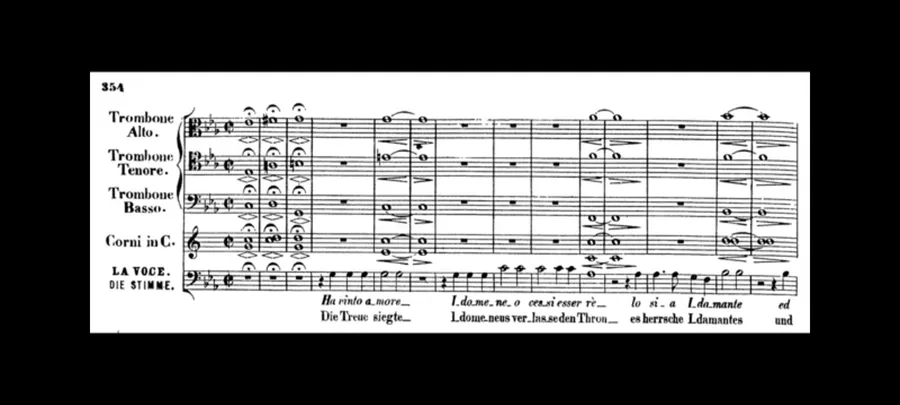
In the ancient sources, such stories rarely end well. But Mozart and Varesco, writing for an enlightened prince, crafted a revolutionary conclusion. As Idomeneo is about to strike his son, an otherworldly voice—a true deus ex machina—intervenes. The oracle of Neptune declares that love has triumphed. The vow is dissolved, but on one condition: Idomeneo must abdicate. He is to be replaced by his son, Idamante, who will rule alongside Ilia, uniting the warring peoples of Crete and Troy.
This is a radical political statement disguised as a mythical resolution. The old king, a figure bound by superstition and a tyrannical vow, must step aside for a new ruler who represents love, reason, and reconciliation. The monarchy is not overthrown, but reformed. Its legitimacy is re-founded not on a terrifying pact with an unseen god, but on the consent of humanity and the promise of peace. The opera concludes not with a bloody sacrifice, but with a hymn to love and marriage, a vision of a new social and political order. It is the Enlightenment’s optimistic answer to the barbarism of the past.
This Parisian libretto, therefore, represents more than the travels of a popular opera. It charts the dissemination of a powerful idea: that humanity, through reason and compassion, can break free from the chains of ancient dogma and forge a more just world. Idomeneo remains Mozart’s first great operatic masterpiece precisely because its music is wedded so perfectly to this profound and enduring intellectual drama. It reminds us that the grandest stories are not about gods and monsters, but about the agonizing choices that define our own humanity.
Seen at auction: Sotheby's