
The Allure of a Secret
There is a particular fantasy of the book, a story we tell ourselves about uncovering knowledge. It involves dust, forgotten shelves, the scent of leather and decaying paper. In this fantasy, we find not just a text but a relic, a portal. The book is bound in secrets, its title page an incantation, its date a key turning in the lock of a lost century. It might promise alchemy, or astrology, or something darker: the art of commanding spirits, of making the dead appear. To hold such an object is to feel the weight of a forbidden history in your hands. But what if the dust was applied yesterday? What if the secret it holds is not about ancient magic, but about the modern hunger for it?
Consider a small, potent book known as Le Véritable Dragon Rouge—The True Red Dragon. Its title page is a cabinet of wonders, a lurid handbill for the supernatural. It offers nothing less than “the art of commanding the spirits infernal, aerial and terrestrial,” the power to read the stars, to unearth hidden treasures, mines, and springs. As if this were not enough, it comes bundled with another text of equal repute, La Poule Noire (The Black Hen), and is “augmented” with the cryptic secrets of Queen Cleopatra and the alchemist Artephius. To authenticate this trove of power, it bears a publication date: MDXXI, or 1521. Here, it seems, is the genuine article, a grimoire that has survived five centuries, a testament to the persistence of magic in a world that has tried to forget it. Except it is not. The book is a fraud. Not a malicious one, perhaps, but a commercial one. Its typography, its paper, its entire material being, belong not to the Renaissance but to the age of the steam engine and the gas lamp. It is a product of nineteenth-century France, a piece of manufactured antiquity designed to satisfy a very modern desire.
The Forger's Artifice
The practice of antedating grimoires was not an exception but the rule. To print a book of black magic in the nineteenth century under a contemporary date was to invite prosecution and social condemnation. But to present it as a reprint of a historical curiosity, a scholarly reissue of a Renaissance text, was a far safer proposition. It shifted the book from the category of active heresy to that of historical artifact. The date, 1521, was a shield. It was also a masterstroke of marketing.
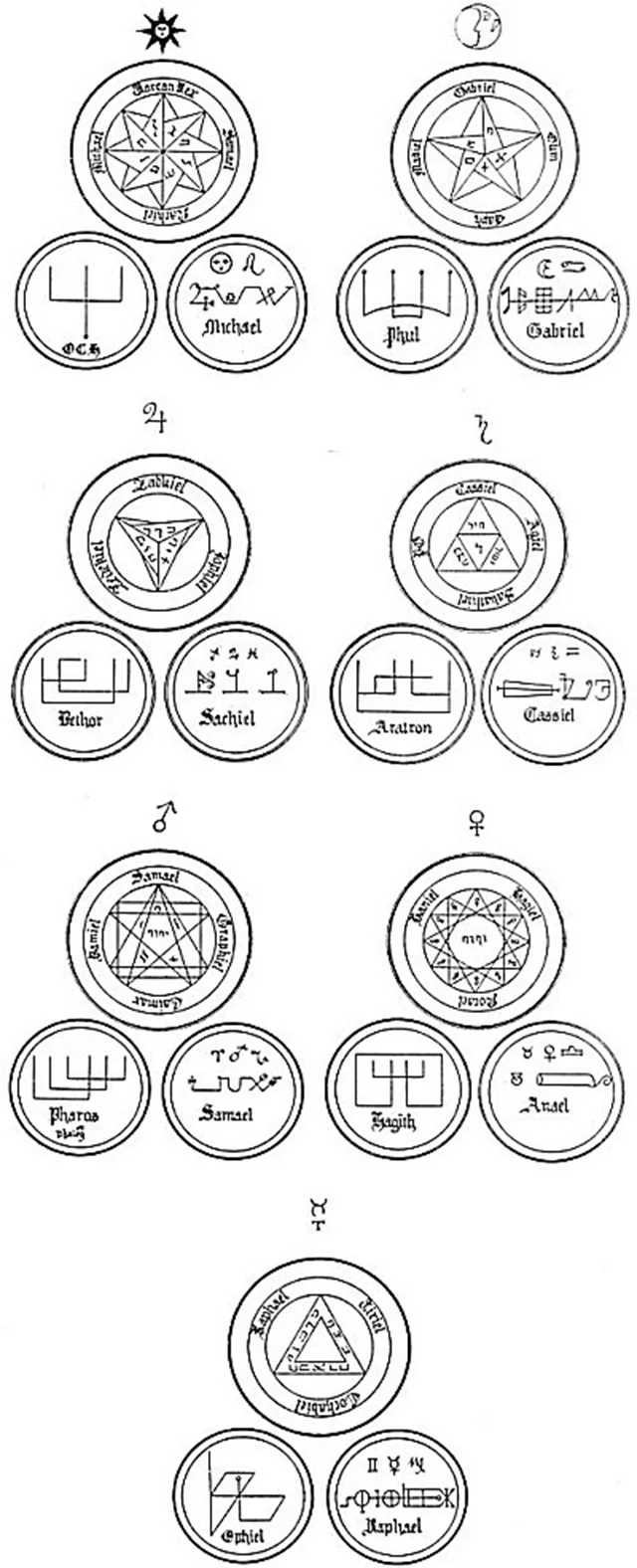
This false date performed a crucial function: it built a brand. In the economy of occultism, age is currency. A spell whispered by a Ptolemaic queen or a pact transcribed in the era of Luther carries an authority that no modern invention can match. The name “Cleopatra” on the title page is not a claim of historical authorship; it is an invocation of a world of exotic power, of ancient Egypt’s mythic hold on the European imagination. Artephius, a shadowy figure from the alchemical tradition, serves a similar purpose, lending the weight of hermetic wisdom. The demon Astaroth, whose “mark” is promised, anchors the text in the established hierarchies of goetic magic, the ceremonial practice of summoning and commanding demons catalogued in earlier grimoires like the Key of Solomon.
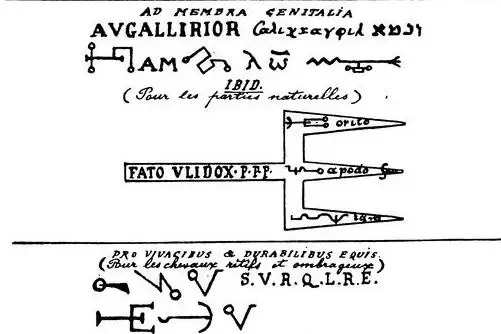
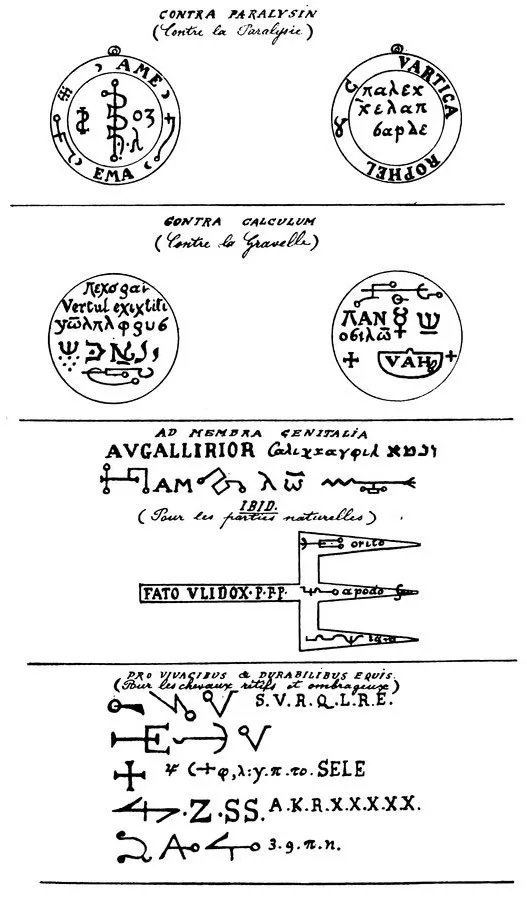
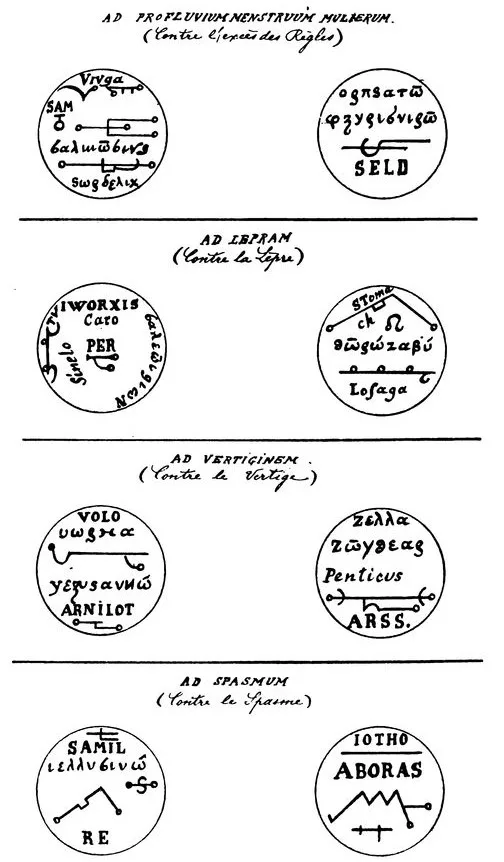
These were not random additions; they were carefully chosen signifiers, assembled to construct an aura of authenticity. The printers who produced Le Dragon Rouge—men like Blocquel, Goupy, and Delarue, working in Paris and Lille—were not sorcerers but entrepreneurs. They were part of a long tradition of French popular publishing, the bibliothèque bleue, which for centuries had supplied rural and working-class readers with cheap almanacs, romances, and tales of wonder. In the nineteenth century, this same network became the primary vector for the dissemination of occult texts. These books were not sold in grand libraries but in back-street shops and by traveling peddlers. They were commodities, designed to be affordable, portable, and, above all, desirable. The elaborate title page, the mysterious sigils often printed in red ink, the tantalizing promise of power—all were calculated to appeal to a customer base that yearned for a gateway to a more magical reality.
A Spell for the Machine Age
To understand why such a book would find a market, one must look to the era that actually produced it. The nineteenth century was a period of profound dislocation and disenchantment. The Industrial Revolution was remaking the landscape, emptying the countryside and filling smog-choked cities. Scientific rationalism, championed by the Enlightenment and accelerated by new technologies, was systematically dismantling traditional beliefs. The world was becoming brighter, louder, faster—and for many, flatter and more meaningless.
This created a powerful counter-current. The same decades that saw the rise of the factory and the railroad also witnessed a massive surge of interest in the supernatural. Romanticism celebrated intuition over reason and the past over the present. Spiritualism, with its séances and table-rapping, offered empirical “proof” of a world beyond the material. Theosophy and other esoteric movements sought to synthesize ancient wisdom into a new universal religion. It was an age of ghosts and steam, of mesmerism and machinery.
Into this cultural ferment, the reprinted grimoire arrived as the perfect product. It offered a direct, unmediated connection to a past that seemed richer and more potent than the mundane present. For a disenfranchised artisan, a curious bourgeois intellectual, or a farmhand steeped in folk tradition, the spells in Le Dragon Rouge were more than just text; they were tools. They promised a form of agency in a world where individuals increasingly felt like cogs in a vast, impersonal machine. While the state and the church held institutional power, the grimoire offered personal power: the ability to find wealth, to win love, to become invisible, to control one’s destiny through hidden means.
This occult revival was not a simple continuation of older traditions. It was a reinvention. Figures like Eliphas Lévi, a former seminarian turned ceremonial magician, repackaged esoteric ideas for a modern audience, blending them with romantic philosophy and revolutionary politics. Lévi and his contemporaries created the intellectual climate in which a book like Le Dragon Rouge could be seen not just as a collection of peasant superstitions, but as a vessel of genuine, if dangerous, knowledge. It was pulp fiction for the aspiring magus.
From Daimon to Demon, and Back Again
The power promised by Le Dragon Rouge represents a fascinating turn in the long history of humanity’s relationship with the unseen. The very idea of “commanding” spirits harks back to a worldview far older than the Christian framework that nominally condemns it. The ancient Greeks spoke of the daimon, a guiding or intermediary spirit that was not inherently evil. For Socrates, his daimonion was a divine inner voice, a source of guidance. This nuanced conception was flattened by later theological developments.
In the dualistic cosmology that came to dominate Christian thought, influenced by traditions like Zoroastrianism with its cosmic battle between good (Ahura Mazda) and evil (Ahriman), the spirit world was cleaved in two. Any entity that was not an angel of God was, by definition, a demon of Satan. The goal was no longer to consult or bargain with these entities, but to exorcise and repel them. The official literature of the church, from the works of the Church Fathers to the witch-hunting manuals of the early modern period, was overwhelmingly concerned with identifying and destroying demonic influence.
Grimoires like Le Dragon Rouge represent a kind of populist, underground resistance to this official doctrine. They return to a more instrumental, almost pagan, view of the supernatural. In their pages, Astaroth is not simply a symbol of cosmic evil to be feared; he is a powerful being with specific skills and jurisdictions, a prince of the infernal kingdom with whom one can negotiate. The magician does not pray for deliverance; he performs a ritual, draws a circle of protection, and issues a command. This is not an act of worship but of technology. The grimoire functions as a technical manual for manipulating metaphysical forces.
This approach restores a sense of human agency in the face of overwhelming supernatural power. It suggests that the cosmos is not merely a moral battleground, but a system governed by hidden laws that a clever and courageous individual can learn to exploit. This is the perennial appeal of magic: the promise that the universe can be bent to the human will.
The Enduring Enchantment
The most successful spell cast by Le Dragon Rouge was the one it cast upon itself: the illusion of antiquity. It is a testament to the power of the printed word to create its own reality. The book is not a survival from 1521, but it is a powerful artifact nonetheless. It is a window into the soul of the nineteenth century, revealing its anxieties, its nostalgias, and its desperate search for meaning in a world stripped of its old magics.
Today, these grimoires are experiencing another revival. In a digital age of simulated realities and curated identities, the allure of a physical book that promises authentic, secret knowledge is more potent than ever. We continue to be fascinated by the idea of a hidden tradition, a wisdom passed down in whispers and encoded in symbols.
Le Dragon Rouge and its kin remind us that the past is not a fixed territory but a landscape we continually redraw to suit the needs of the present. They are forgeries that tell a deeper truth: that sometimes, to find our way forward, we feel an irresistible urge to invent the histories we wish we had. The ink may be relatively fresh, but the yearning it answers is as old as humanity itself.
Seen at auction: Briscadieu