
A City Learning to Laugh
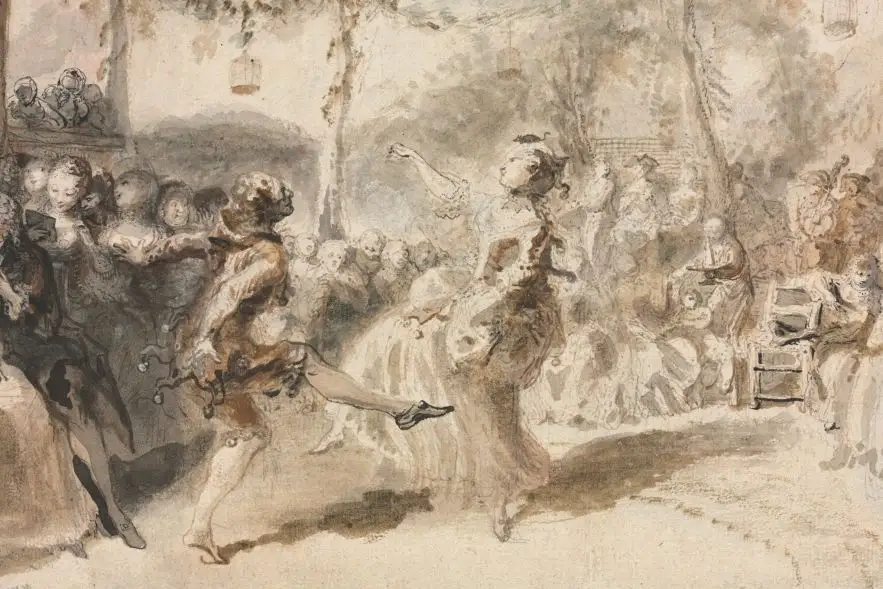
Paris, Year VI of the Republic—or 1798, to a world clinging to the old calendar. The guillotines in the Place de la Révolution had been dismantled for four years, but their shadow lingered. The Reign of Terror was over, yet the city held its breath. This was the Directory, a precarious interregnum between the bloody idealism of Robespierre and the imperial ambition of a young general named Bonaparte. It was a time of survivors, of fortunes made and lost overnight, of political intrigue and profound social exhaustion. In the salons and cafés, people were relearning the grammar of peacetime, searching for a way to live together that was neither the gilded servitude of the monarchy nor the paranoid virtue of the Jacobins.
Into this nervous landscape, a small book appeared in the shop of a bookseller named Michel, on the rue de l'Arbre-Sec. It was not a political treatise or a philosophical manifesto. It was an updated edition of an old text from 1714, a work of buoyant, scholarly satire titled Éloge de l’Ivresse—the Eulogy of Drunkenness. Its frontispiece, engraved by J. Redouy from a drawing by Claude-Louis Desrais, depicted a classical scene: Bacchus, god of wine, generously pouring a drink for a convivial party. Below it, a quote from an ode by the academician Antoine Houdar de La Motte proclaimed, “Give... redouble... oh sweet drunkenness! / I am happier than the Gods.”
For a city still processing a collective trauma, a manual on the etiquette of inebriation might seem a frivolous, even decadent, distraction. But this book was something more. In a society whose laws had recently been instruments of death, this playful text offered a new kind of legislation—a code of conduct for the pursuit of pleasure. It was a cultural document of the highest order, a quiet but firm vote for the return of conviviality, and a blueprint for how a republic, founded in blood and virtue, might learn to live with joy.
The Two Addresses of Pleasure
The book’s title page is a key to its character, a carefully constructed joke that reveals the cultural tightrope walked by Parisians during the Directory. It bears a dual imprint, two competing provenances that capture the era’s blend of escapism and reality. The first is a flight of fancy: “A BACCHOPOLIS, De l'Imprimerie du vieux SILÈNE, L’AN DE LA VIGNE 5555.” Here is a mythical city of Bacchus, printed by the press of the eternally drunken satyr Silenus, in a year dated from the birth of the vine. This was a classic device of libertine literature, a wink to the reader signaling a departure from the staid world of official morality and censorship. It promised wit, transgression, and the sophisticated pleasure of being in on the joke.
But immediately below this fantastical address, the page grounds itself in the hard commercial reality of post-revolutionary Paris: “ET A PARIS, Chez MICHEL, Libraire et Commissionnaire, rue de l'Arbre-Sec, Nº. 38, AN VI.” The dream of Bacchopolis is for sale in a real shop, on a real street, in the real sixth year of the French Republic. This juxtaposition was not merely a convention; it was the very essence of the Directory. It was a period that lived in two cities at once: the aspirational city of revolutionary ideals and the messy, pragmatic city of daily commerce. A society that had executed a king in the name of abstract virtues now found its footing in the tangible transactions of the marketplace. The Éloge de l’Ivresse existed in this exact space, a classical fantasy packaged for a modern consumer.
This double identity was a survival strategy. The book’s author, Albert-Henri de Sallengre, had written the original text decades earlier, but its revival in 1798 gave it a new urgency. It allowed its readers to indulge in a nostalgic, pre-revolutionary form of literary pleasure while affirming their place in the new republican order. You could be a citizen of Paris and a denizen of Bacchopolis simultaneously; you could participate in the new France without abandoning the old European traditions of wit and erudition that the Terror had sought to obliterate.
A New Social Contract, Poured from the Bottle
The true genius of the Éloge, and the reason for its resonance in 1798, lies not in its praise of intoxication itself, but in its meticulous attempt to codify it. The book is, fundamentally, a work of legislation. After surveying the history of drinking, cataloguing its famous practitioners from poets to popes, and satirizing the drinking habits of various nations, Sallengre presents his own clear-sighted rules. He calls them the “six laws of losing sobriety,” a phrase whose ironic framing conceals a deeply serious social project.
These laws were a direct response to the anxieties of the age. They offered a middle path between the ruinous excess of the aristocracy and the lethal austerity of the Jacobins. Consider the first three: drink not too often, keep good company, and choose good wine. This is not a call to hedonistic oblivion. It is a call to discernment, quality, and, above all, social cohesion. The command to “keep good company” was especially poignant. During the Terror, “good company” was a mortal danger; any gathering could be construed as a conspiracy. Sallengre’s rule reclaims the social circle as a space of safety and pleasure, not suspicion.
The final three laws complete this new social contract. Drink at a reasonable time, never force others to drink, and remain within limits. Here, the principles of the moderate, bourgeois republic are laid bare. The rule against coercion is a quiet rebuke to the political zealotry that had torn France apart. In this new conviviality, individual choice and consent are paramount. The final injunction—to remain within limits—is the ultimate Directory-era virtue. It is a philosophy of containment, a recognition that absolute freedom, like absolute virtue, leads to destruction. The ideal citizen of this new republic of the vine is not the solitary, uncontrolled drunkard, but the masterful social performer who knows precisely how far to go.
These six laws were more than just advice; they were a new moral framework. In a nation where the official Ten Commandments had been supplanted by the Declaration of the Rights of Man, and where that too had been corrupted, Sallengre’s small treatise provided a manageable, humane, and achievable code of conduct. It suggested that the foundation of a stable society might not be grand political pronouncements, but the small, repeated rituals of civilized life. Before France could agree on a constitution, perhaps it first needed to agree on how to share a bottle of wine.
The Civilized Drinker and His Barbarian Other
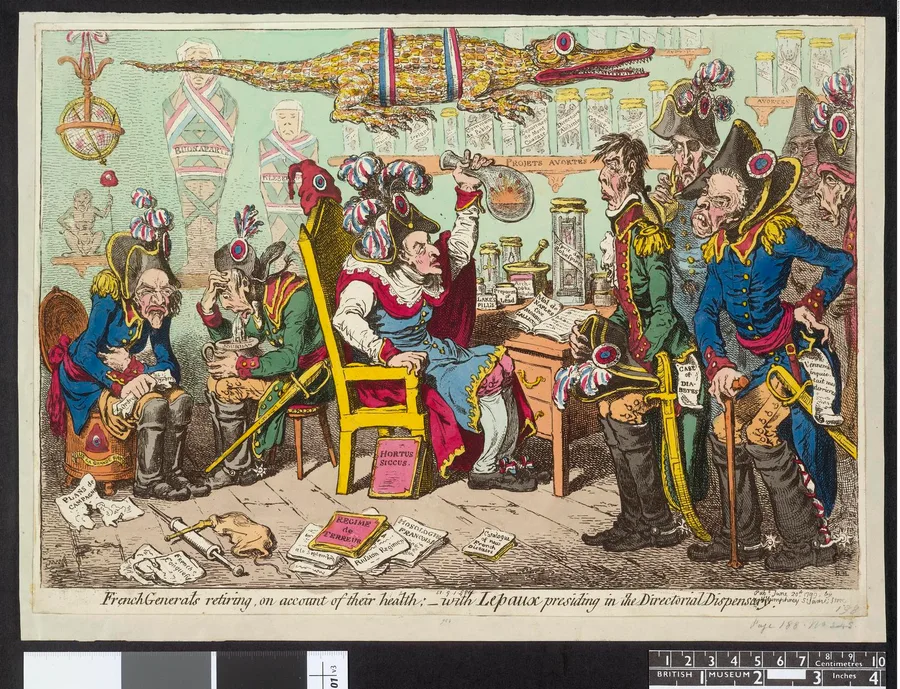
Like any project of identity-building, the one outlined in the Éloge de l’Ivresse defines itself as much by what it is not as by what it is. To delineate the ideal French drinker—witty, sociable, and in control even when inebriated—Sallengre needed a foil. He found it, following a long tradition of European satire, in the figure of the German. The book includes a lengthy, comical survey of “drunken nations,” and the Germans receive special attention. Citing earlier travelers and moralists like Fynes Moryson and Martin Luther himself, Sallengre paints a picture of a people for whom drunkenness is not a refined art but a national pathology.
This stereotyping served a crucial purpose. It allowed the French reader of 1798 to distinguish their own nascent cultural identity from that of their neighbours. The German drunkard is clumsy, boorish, and solitary. The French drinker, by contrast, elevates intoxication into a performance of taste and intelligence. Wine, in this formulation, is cultural capital. It is the substance that, when consumed according to the correct rules, “give[s] wit” and helps to “win friends and reconcile enemies.” The Latin epigraph on the title page, from the 16th-century German poet Vincentius Obsopaeus’s De Arte Bibendi (The Art of Drinking), is chosen with deliberate irony: “You will be a nobody, if your strength for cups is weak; / Unless you drain many cups, you will be a nobody.” What Obsopaeus presented as a straightforward challenge, Sallengre reframes as a satirical warning. Brute capacity is not the goal; style is everything.
This act of cultural differentiation was part of a larger post-revolutionary project. As France sought to define its new role in Europe, it increasingly relied on culture, taste, and intellectual prestige as markers of its unique genius. The Éloge is a document of this shift. It argues, implicitly, that French superiority lies not in its armies or its politics, but in its art of living—an art exemplified by the proper consumption of wine. The book helped to solidify a national myth that endures to this day: that France is the global arbiter of taste, the one place where pleasure is pursued with the seriousness of a science and the grace of an art.
The Afterlife of an Idea
The vision of civilized pleasure articulated in the Éloge de l’Ivresse proved remarkably durable. The book’s influence rippled through the nineteenth century, informing the work of writers who saw in wine a powerful tool for social and artistic exploration. Voltaire and Diderot both drew on the libertine tradition it represented, and a century later, Charles Baudelaire, in his own meditations on wine and hashish, would echo Sallengre’s fascination with intoxication as a key to a different kind of consciousness, albeit with a darker, more modern sensibility.
The book’s journey, however, did not end there. It resurfaced, significantly, in another moment of profound national crisis and recovery. In 1945, with France once again emerging from a period of trauma and occupation, a deluxe, limited-edition facsimile was produced in Paris by Editions de la Couronne. This version, splendidly illustrated with 24 color plates by the artist Jo Merry, transformed the modest 1798 volume into a luxurious art object. One surviving copy is housed in a magnificent morocco binding by the master binder Jacques Blanchet, its cover adorned with an on-lay image of a hand squeezing a bunch of grapes.
That this text should be revived with such care in 1945 is no coincidence. Just as the 1798 edition spoke to a society recovering from the Terror, the 1945 edition spoke to a nation rebuilding after World War II. In both instances, the Éloge served as a cultural touchstone, a reminder of a uniquely French tradition of sophisticated, life-affirming pleasure. It was a symbol of resilience, a declaration that even after the darkest of times, the republic of the vine would endure.
Looking back at the modest edition from the Year VI, one sees more than an antiquarian curiosity. One sees a document of profound hope. In its pages, a society shattered by political violence sought to piece itself back together, not through grand monuments or sweeping reforms, but through the intimate rituals of the dinner table. The laughter echoing from the mythical press of Old Silenus was the sound of a culture choosing life, finding in the regulated art of drunkenness a way to be free, and a way to be French, once more.
Seen at auction: Briscadieu