
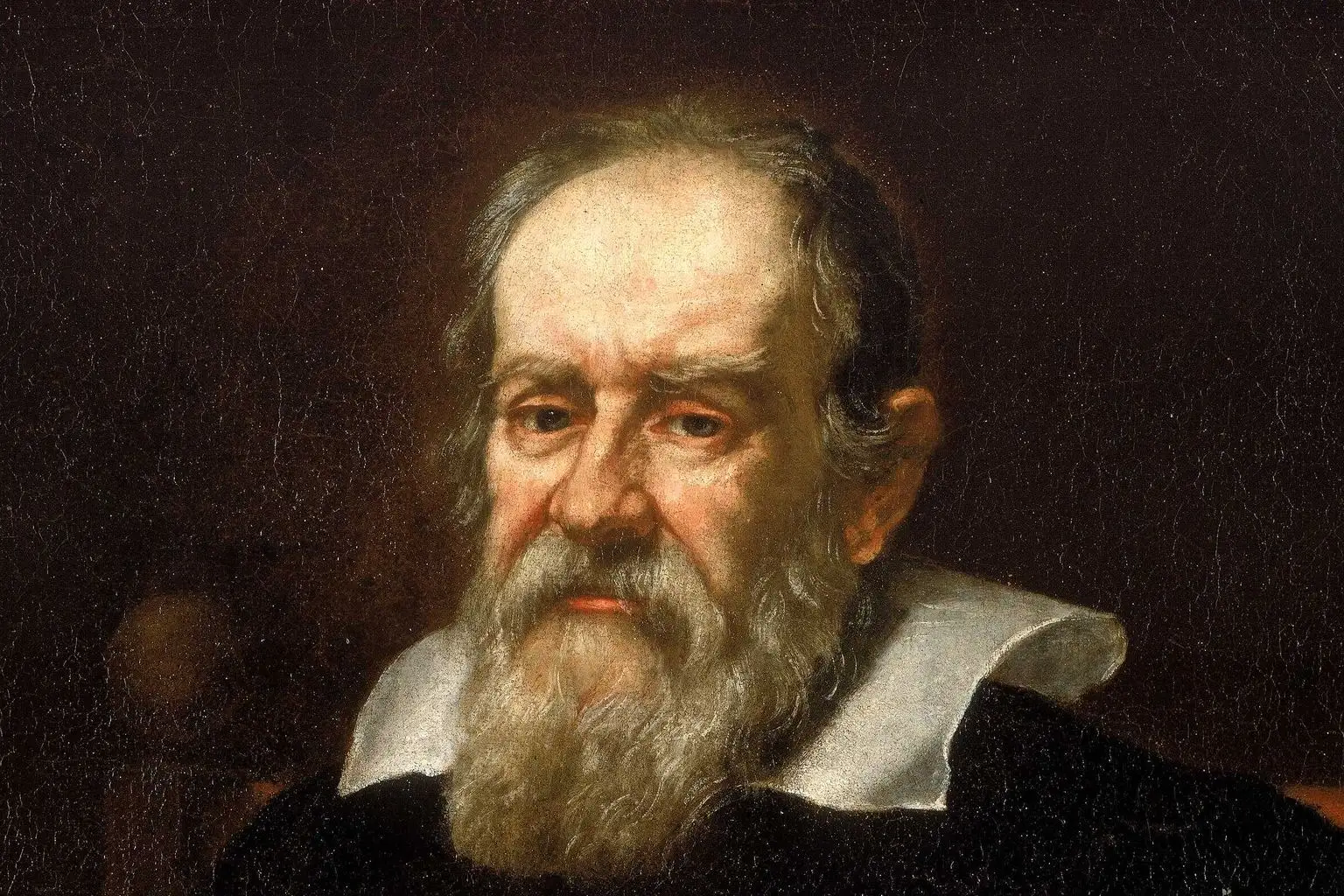
The Philosopher in the Forge
In the final years of the sixteenth century, the University of Padua was a vibrant, worldly nexus of ideas, a place where the Venetian Republic’s pragmatism met the deep intellectual currents of the late Renaissance. Here, a professor of mathematics, still decades away from cosmic notoriety, was engaged in a pursuit that seemed, on its surface, far more terrestrial than celestial. This was not yet the Galileo of legend, the defiant sky-gazer staring down the Inquisition. This was Galileo the practitioner, the instrument-maker, a man whose mind was as occupied by the angle of a cannon barrel and the strain on a rope as it was by the motions of the planets.
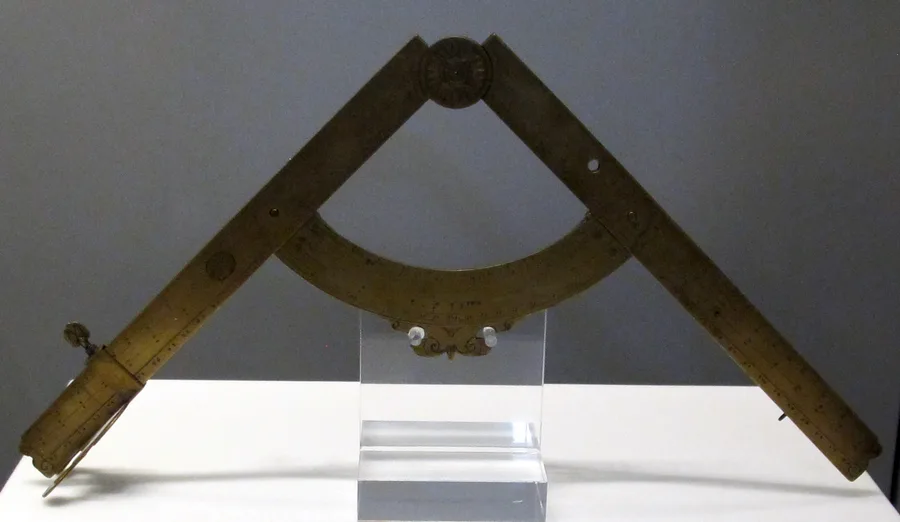
His laboratory was not a secluded study but a workshop, buzzing with the sounds of metal being filed and wood being turned. His closest collaborator was not a fellow academic but a skilled artisan, Marc'Antonio Mazzoleni, whose hands gave physical form to the professor’s geometric insights. Together, they were building a device: a “geometric and military compass,” or sector. It was an elegant instrument of calculation, a kind of analog computer in brass, designed not for abstract contemplation but for immediate, practical use by soldiers, surveyors, architects, and merchants. And to explain its function, Galileo wrote a manual, a set of lessons that circulated in manuscript among his students and clients. This text, titled Della Scienza Mecanica—Of Mechanical Science—would not see a printing press in his lifetime. Yet, when it was finally published posthumously, as in the rare 1655 Bologna edition, it revealed something more profound than the workings of gears and levers. It offered a blueprint for a new kind of knowledge, and a new kind of knower: the scientist as a public, practical, and even commercial figure.
This early treatise, often overshadowed by the high drama of the Dialogue Concerning the Two Chief World Systems, is in many ways the more revolutionary document. It captures the precise moment when the pursuit of natural philosophy began its decisive shift from the cloistered world of qualitative Aristotelian commentary to the bustling, quantitative world of the engineer’s workshop. It is the story not just of the birth of modern mechanics, but of the birth of the modern scientific enterprise itself, one grounded in utility, instrumentation, and the radical idea that the universe, from a humble screw to the orbital paths of Jupiter’s moons, operated according to the same mathematical laws.
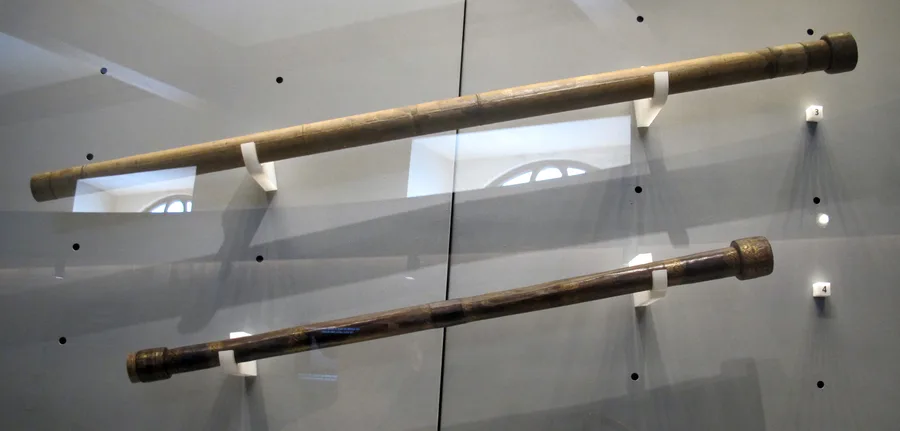
A Grammar for Machines
The world Galileo inherited was one still largely understood through the lens of Aristotle. For nearly two millennia, physics had been a descriptive, philosophical discipline concerned with causes and essences. Why does a stone fall? Because its nature is to seek the center of the Earth. Motion, force, and weight were qualities to be explained, not quantities to be measured and manipulated. The world of the artisan, who understood the practical behavior of a winch or a pulley, was considered separate, a lower form of craft knowledge, distinct from the high philosophy of the universities.
Della Scienza Mecanica demolished that distinction. In its pages, Galileo reframed the five simple machines known since antiquity—the lever, pulley, winch, wedge, and screw—not as distinct devices but as manifestations of a single, underlying principle: the concept of moment. He proposed that the effectiveness of any force to create rotation depended on both its magnitude and its distance from a fulcrum. With this insight, expressed through the clear, rigorous language of Euclidean geometry, he unified the workings of disparate instruments into a coherent, mathematical system. A small force, he demonstrated, could be made to act as a greater one, not by magic or inherent virtue, but through a calculable mechanical advantage.
His treatment of the inclined plane was particularly elegant, showing that the component of weight pulling an object down the slope was proportional to the sine of the angle. He laid out how to calculate the center of gravity for various solids, a problem of immense practical importance for architects and engineers. Later, in the appended fragment on the force of percussion, he wrestled with the complex dynamics of impact, a question that would vex physicists for another century. While the Scottish mathematician John Playfair would note in 1816 that some of Galileo’s proofs were incomplete, relying on unstated assumptions, this very incompleteness is telling. The book is not a finished dogma but the record of a mind at work, applying mathematics to physical reality with a relentless, probing intensity.
What Galileo was creating was a new grammar for the physical world. He was teaching his students and readers to see a construction site or a battlefield not as a scene of brute labor but as a complex diagram of forces, vectors, and moments. By translating physical problems into the language of geometry, he made them solvable, predictable, and controllable. This was a profound departure from the Aristotelian tradition. It asserted that the “how” of the world—the mathematical relationships governing its behavior—was a more fruitful avenue of inquiry than the metaphysical “why.” The universe was not a text filled with hidden meanings, but a mechanism whose workings could be understood and, crucially, exploited.
Knowledge as a Commodity
This new, practical science found its perfect expression in the sector. The instrument was a triumph of applied mathematics, capable of performing dozens of calculations, from finding square and cube roots to calculating compound interest and converting currencies. For military commanders, it offered a new, safer way to elevate cannons accurately and compute gunpowder charges for various projectiles. For architects, it could be used to design regular polygons or scale drawings. It was a tool of power, precision, and profit.
And Galileo marketed it as such. He and Mazzoleni produced more than a hundred sectors in their Padua workshop. They were not given away to patrons in hopes of favor; they were sold, for a handsome price of 50 lire each. More significantly, Galileo offered a course of instruction on the instrument’s use for 120 lire. Della Scienza Mecanica was, in its original form, the textbook for this course. It was knowledge packaged, branded, and sold as a service. This was a radical departure from the established systems of patronage and university teaching. Galileo was not just a professor; he was an entrepreneur.
This commercial dimension is essential to understanding the cultural shift he represents. The value of his mechanics was not determined by its philosophical purity or its alignment with ancient authorities, but by its demonstrable utility. Its truth was proven every time a gunner hit his target or a merchant calculated his exchange rate correctly. This direct feedback loop between theory, instrument, and real-world application became the engine of the new experimental science. It fostered a culture of precision, measurement, and empirical verification that stood in stark contrast to the text-based disputations of scholastic philosophy.
His success drew praise from contemporaries like the nobleman and mathematician Guidobaldo del Monte, but it also signaled a change in the social standing of the “mechanic.” The term, which had often carried connotations of manual, and therefore inferior, labor, was being rehabilitated. In a world of increasing technological ambition—in warfare, architecture, and navigation—the person who could master the forces of nature was no longer a mere craftsman but a figure of immense importance, an ingegnere, an engineer whose intellectual prowess had tangible, world-altering consequences.
A Safe Heresy
Thirteen years after Galileo’s death under house arrest, the world of Italian science was a precarious one. His condemnation in 1633 for advocating the Copernican heliocentric model had sent a chilling message. Publishing his work, particularly anything touching on cosmology, was a dangerous proposition. And yet, in 1655, the Bolognese publishing house run by the heirs of Dozza issued Della Scienza Mecanica. The title page bears a crucial inscription: Con licenza de' Superiori—with the license of the Superiors. The book had received official approval from the Church or civil authorities.
How could the work of a condemned heretic be published with an official imprimatur? The answer lies in the subject matter. Mechanics, unlike cosmology, was seen as a safe, practical field. It dealt with earthly things, with machines and buildings, not with the structure of God’s heavens or humanity’s place within them. It did not challenge scriptural interpretation or the philosophical foundations of theology. It was, in a word, useful. The same authorities who had silenced Galileo’s cosmic speculations saw the value in his terrestrial science. The principles that could help an architect build a stronger dome or an artillerist win a battle for a papal army were not threatening; they were assets.
This posthumous publication highlights the complex, often paradoxical relationship between science and power in the 17th century. The Church was not monolithically opposed to science, but it was deeply invested in maintaining control over the domains of knowledge it considered theologically significant. Galileo’s tragedy was that his greatest discovery—that the Earth moves—collided directly with that domain. His mechanics, however, operated in a different sphere. It was a tool, and its power could be harnessed by any regime, secular or clerical, without upsetting the established cosmic order.
The survival and dissemination of Della Scienza Mecanica demonstrates the irresistible momentum of this new, practical science. Even as its author’s name was officially disgraced, the utility of his method was undeniable. The knowledge was simply too valuable to suppress. It continued to circulate, to be taught, and to be built upon, forming a kind of underground river of scientific progress that would eventually resurface and reshape the intellectual landscape of Europe.
The Unfinished Blueprint
The quiet influence of Galileo’s mechanics rippled out across the century. His mathematical analysis of motion, particularly his conclusion that a projectile follows a parabolic path, provided an essential foundation for the new science of dynamics. His work was studied, debated, and refined by a generation of physicists and engineers. Ultimately, it flowed into the grand synthesis of Isaac Newton, whose laws of motion are the direct intellectual descendants of the principles first laid out in Galileo’s Padua lectures. When Newton famously wrote, “If I have seen further it is by standing on the shoulders of Giants,” one of those giants was undoubtedly Galileo, not only the astronomer but the mechanic.
The legacy of Della Scienza Mecanica is not just in the specific laws it contains, but in the method it embodies. It champions a science that is quantitative, experimental, and instrument-driven. It bridges the ancient gap between the theoretical philosopher and the practical artisan, creating a new hybrid figure who uses mathematical abstraction to solve concrete, physical problems.
Looking back at the modest title page of the 1655 edition, one sees more than a table of contents. In the simple phrase, “Of Mechanical Science, and of the Utilities that are drawn from the Instruments thereof,” lies an entire manifesto. Galileo’s genius in this early phase of his career was to understand that utility was not a vulgar distraction from the pursuit of pure truth, but a powerful engine for its discovery. By seeking to build a better tool, he built a better science. The workshop, where mind and hand worked in concert, where theory was tested against the unforgiving reality of brass and wood, became the forge for the modern world. It was in this artisan’s cosmos, long before he turned his telescope to the stars, that Galileo first learned to measure the universe.
Seen at auction: Kâ-Mondo