
The Face of Defiance
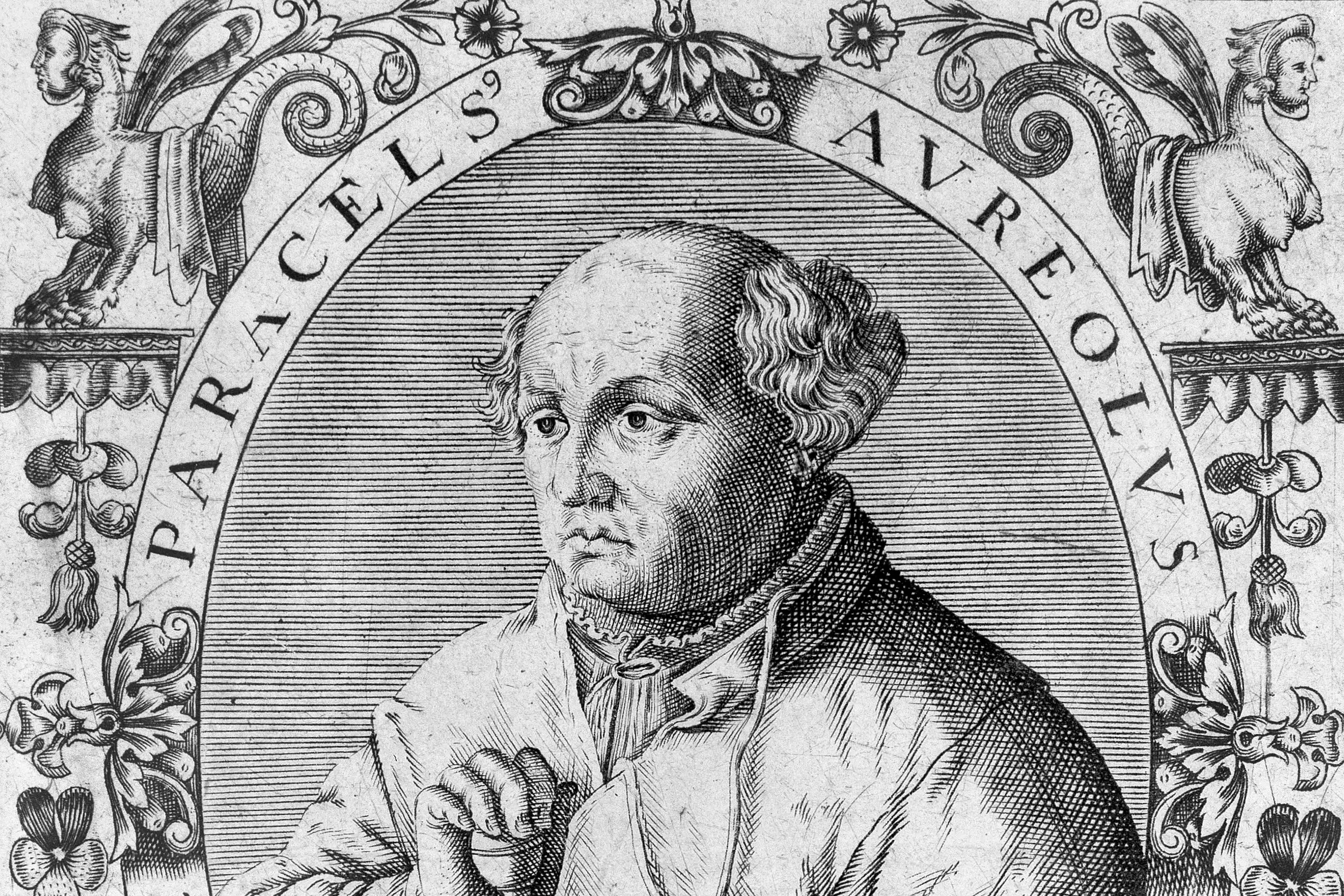
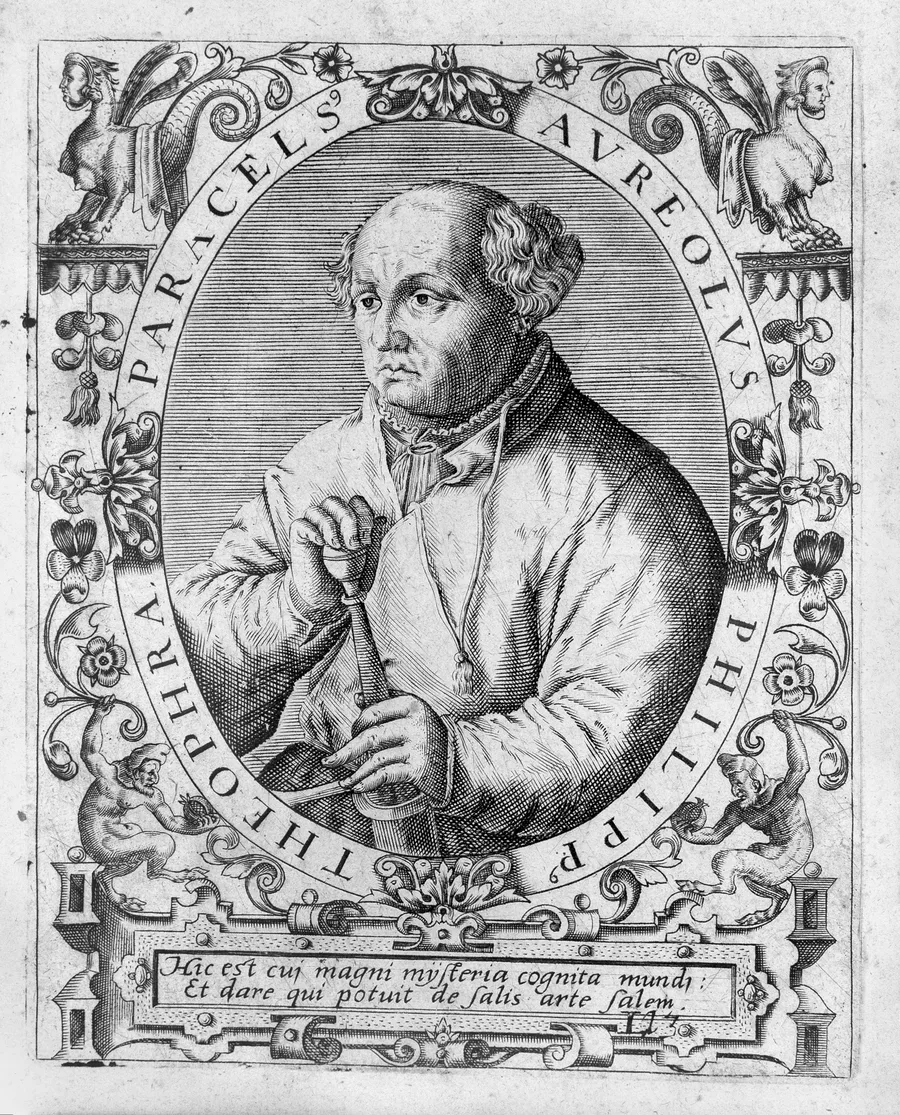
“Alterius non sit qui suus esse potest.” Let him not be another’s who can be his own. The motto floats above the head of the man depicted, a declaration of intent as sharp and unyielding as his gaze. This is Philippus Aureolus Theophrastus Bombastus von Hohenheim, known to history as Paracelsus. The portrait, engraved by François Chauveau after a painting attributed to the great Venetian master Tintoretto, is more than a likeness; it is a manifesto. It forms the frontispiece to the monumental 1658 Geneva edition of his Opera Omnia, his complete works, published more than a century after his death in 1541. Every element of this image—the determined set of the jaw, the fur-collared robes of a scholar, the direct and challenging stare—is engineered to project an aura of authority and uncompromising intellectual independence.
This was the man who, according to legend, threw the canonical texts of Avicenna and Galen onto a student bonfire in Basel, declaring that his own shoelaces knew more than those ancient physicians. He was a wanderer, a drunkard, a visionary, a man who lectured in his native German instead of scholarly Latin, and who challenged the very foundations of a medical establishment that had reigned for over a millennium. In his own lifetime, he was as much reviled as revered, a charlatan to his enemies and a prophet to his followers. Yet by 1658, something had shifted. The man was gone, but the icon was being forged in copperplate and bound in leather. This book was a key instrument in that transformation, a project designed to tame the wild man of medicine and seat him in the pantheon of science.
The Alchemist in Print
The choice of publisher was itself significant. The house of De Tournes in Geneva was a bastion of humanist and Reformation printing, known for its scholarly precision and elegant typography. For them to undertake the immense project of compiling, editing, and printing the complete works of Paracelsus was a statement. This was not the pulp printing of popular almanacs but a serious, lavish, and authoritative scholarly endeavor. The title page proclaims it the “newest and most corrected edition,” collated from the best German and Latin sources and enriched with newly discovered works. It was an act of canonization.
By the mid-17th century, the intellectual landscape of Europe was crackling with the energy of the Scientific Revolution. The old authorities were being questioned, and new systems of understanding the world were emerging. Paracelsus, once an outlier, now seemed prophetic. His rejection of ancient dogma and his insistence on direct observation and experience resonated with the new scientific spirit. This Opera Omnia was an attempt to gather his sprawling, chaotic, and often contradictory writings into a coherent system. It sought to present the mercurial Paracelsus not as a mere iconoclast, but as a system-builder, a “most celebrated Physician and Philosopher, and Prince of Chemists.” The printing press, which had once disseminated the attacks against him, was now the engine of his posthumous ascent, transforming a contentious historical figure into a foundational authority for a new age of inquiry.
A Medicine of Poisons and Principles
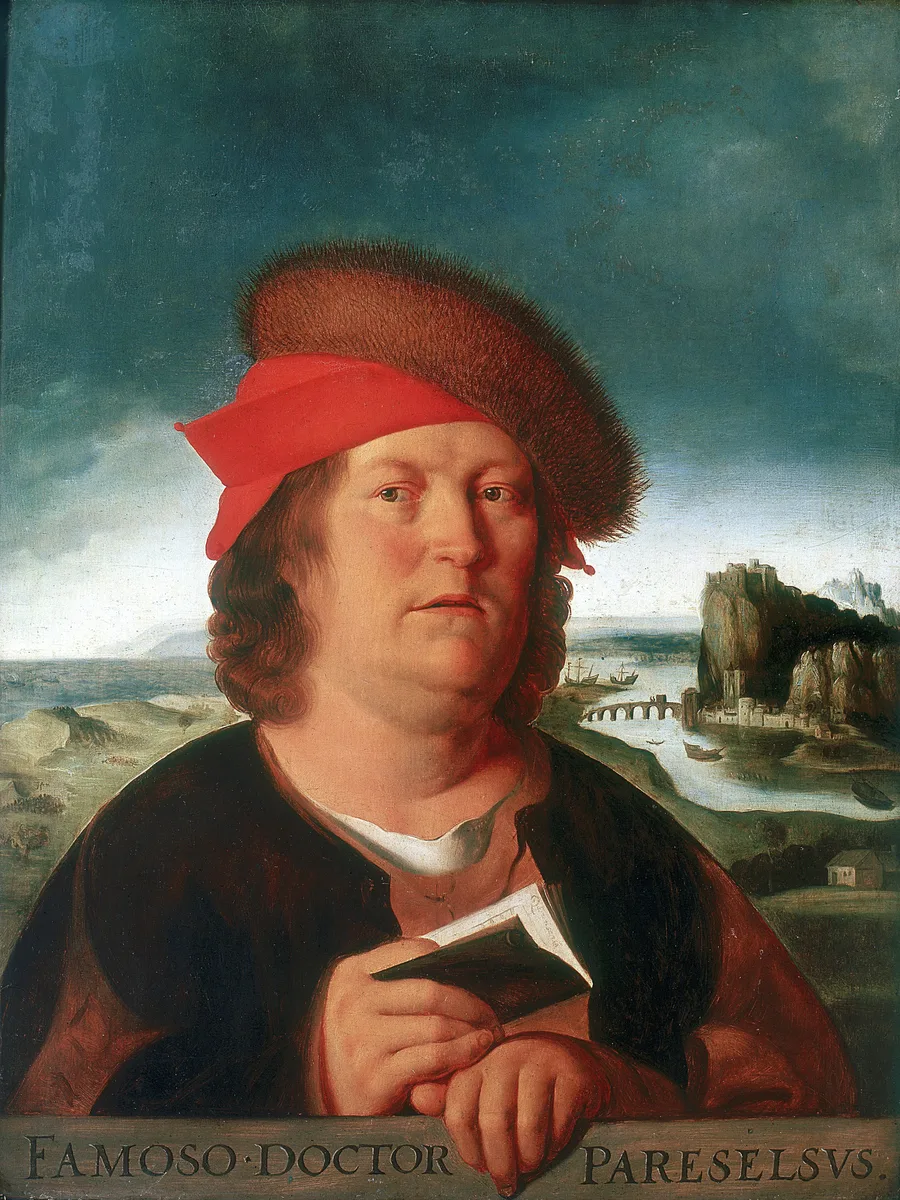
Within these volumes lay the radical ideas that had so scandalized the 16th century. Paracelsus rejected the Galenic theory of the four humors—blood, phlegm, yellow bile, and black bile—which had dominated Western medicine since antiquity. In its place, he proposed a new vision of the human body as a microcosm, a small-scale reflection of the macrocosm of the universe. He believed that health depended on the harmony of man (the microcosm) with nature (the macrocosm) and that illness was caused by specific external agents that could be countered with specific remedies.
Central to his system was iatrochemistry, or chemical medicine. He argued that the world and the body were composed of three essential principles, the Tria Prima: salt (representing stability and substance), sulfur (representing inflammability and spirit), and mercury (representing fusibility and the soul). Sickness was a chemical imbalance that should be treated with chemical remedies. He championed the use of metallic and mineral substances—compounds of antimony, arsenic, and mercury that his contemporaries regarded as deadly poisons.
Herein lies his most enduring contribution, the foundational principle of modern toxicology and pharmacology, famously summarized in his own words: “All things are poison, and nothing is without poison; the dosage alone makes it so a thing is not a poison.” This insight, that the difference between a medicine and a toxin is merely a matter of quantity, was revolutionary. It shifted medicine away from gentle herbal infusions and towards a potent, targeted chemical intervention. While his alchemical framework has been superseded, this core principle—the dose-response relationship—remains an unshakable pillar of medical science. The 1658 Opera Omnia gathered these radical prescriptions and philosophies, preserving the insights that would pave the way for modern pharmaceutical development.
A Contested Legacy
This grand edition was an exercise in reputation management. The defiant motto and the magisterial portrait frame a figure of undeniable genius, but the very act of producing a polished, three-volume scholarly work smooths his rough edges. The printer’s device of De Tournes, a pair of intersecting triangles with the Golden Rule inscribed within—“What you do not wish to be done to you, do not do to another”—lends a surprising air of ethical sobriety and humanist piety to the work of a man often accused of heresy and diabolism.
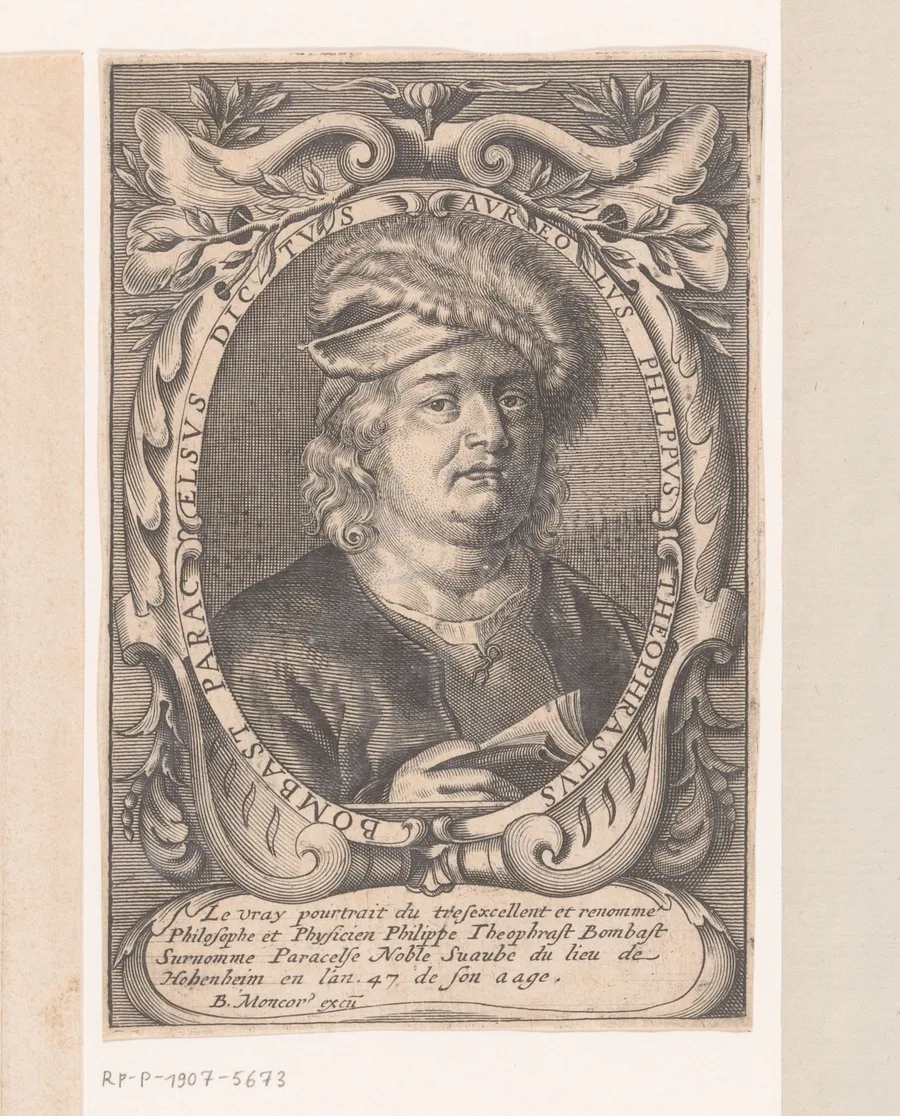
Paracelsus became a battlefield for the soul of modern science. He was claimed by alchemists and mystics who saw in his work a path to spiritual enlightenment, and simultaneously hailed by early chemists and physicians who recognized the power of his empirical methods and chemical therapies. This Geneva edition, produced in a Protestant city suspicious of occultism, subtly emphasizes the physician and philosopher over the magus. It presents a rationalized Paracelsus, a man whose challenging ideas could be integrated into the burgeoning scientific discourse of the Enlightenment.
By collecting his works, the editors performed a delicate act of curation, establishing a definitive corpus that could be studied, debated, and built upon. They ensured that Paracelsus would be remembered not just as a folk hero or a madman, but as a towering figure whose intellectual legacy, for all its complexities, could not be ignored. He was no longer just his own; he now belonged to the ages.
Seen at auction: Forum Auctions