
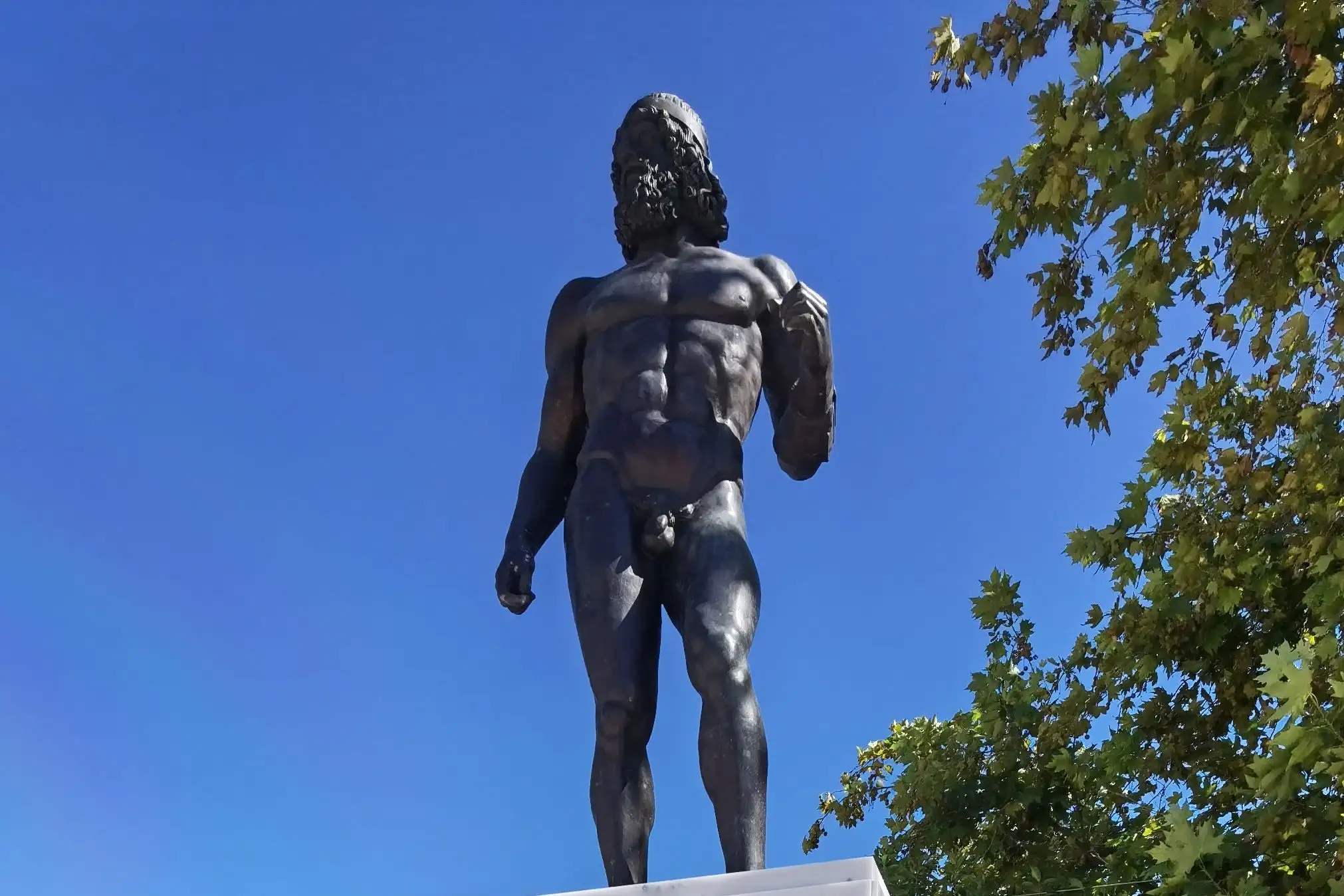
Recent discoveries in Greece have awakened public interest in the period of art that precedes the perfection of the 5th century. The excavations of the Acropolis and of the Ptoion have revived Attic and Boeotian archaism for us, just as the discoveries on Delos had already revealed the art of the old island schools with singular precision. But while we are now familiar with the primitive sculpture of the 6th century through impressive series of monuments, we are far less informed about the transitional period from 500 to 450 BC, which prepared for the blossoming of the grand style. To grasp this, one need only follow the discussions still provoked today by the study of the Olympia marbles, which are recognized as the manifestation of a great school whose origin remains uncertain.
Truth be told, the prevailing opinion is that the solution to this problem should be sought less in Attica and more in the Peloponnese. Struck by the significance of traditions that attribute a capital role to Argos in the education of the three great sculptors of the 5th century, very good judges connect the artists of Olympia to the Argolid.2 They look to the Argive school for the starting point of the evolution that, at the beginning of the 5th century, broke the narrow mold of old archaic conventions and introduced greater freedom into art.
Furthermore, the excavations in Athens have raised unforeseen questions that also seem to lead us back to Argos. It has been noted, not without surprise, that shortly before the Persian Wars, the Attic school reacted against the mannerism into which the example of the Ionian masters of Chios had led it, and that it fell under the influence of a more severe style, undoubtedly emanating from the Peloponnese.3 This was precisely the moment when the school of Argos held the first rank among the schools of mainland Greece, and when the workshop of Agelaidas—the master who would train Myron, Polykleitos, and Phidias—was in full activity.
There is, therefore, considerable interest in summarizing the recent research that can shed some light on the history of an artist whom ancient texts designate as the undisputed head of the Argive school.
The Peloponnesian Tradition of Bronze
One of the most salient characteristics of the Peloponnesian schools is a marked predilection for working in bronze. In the 6th century BC, Argos, Sikyon, and Aegina were the three great centers where the workshops of founders produced bronze groups and statues—votive offerings and images of victorious athletes—that were placed on the terraces of Delphi or under the plane trees of the Altis at Olympia. Through the rigorous practice of the metal arts, Peloponnesian sculptors early on acquired, along with rare technical skill, habits of precision that gave their works a remarkable accent of severity.
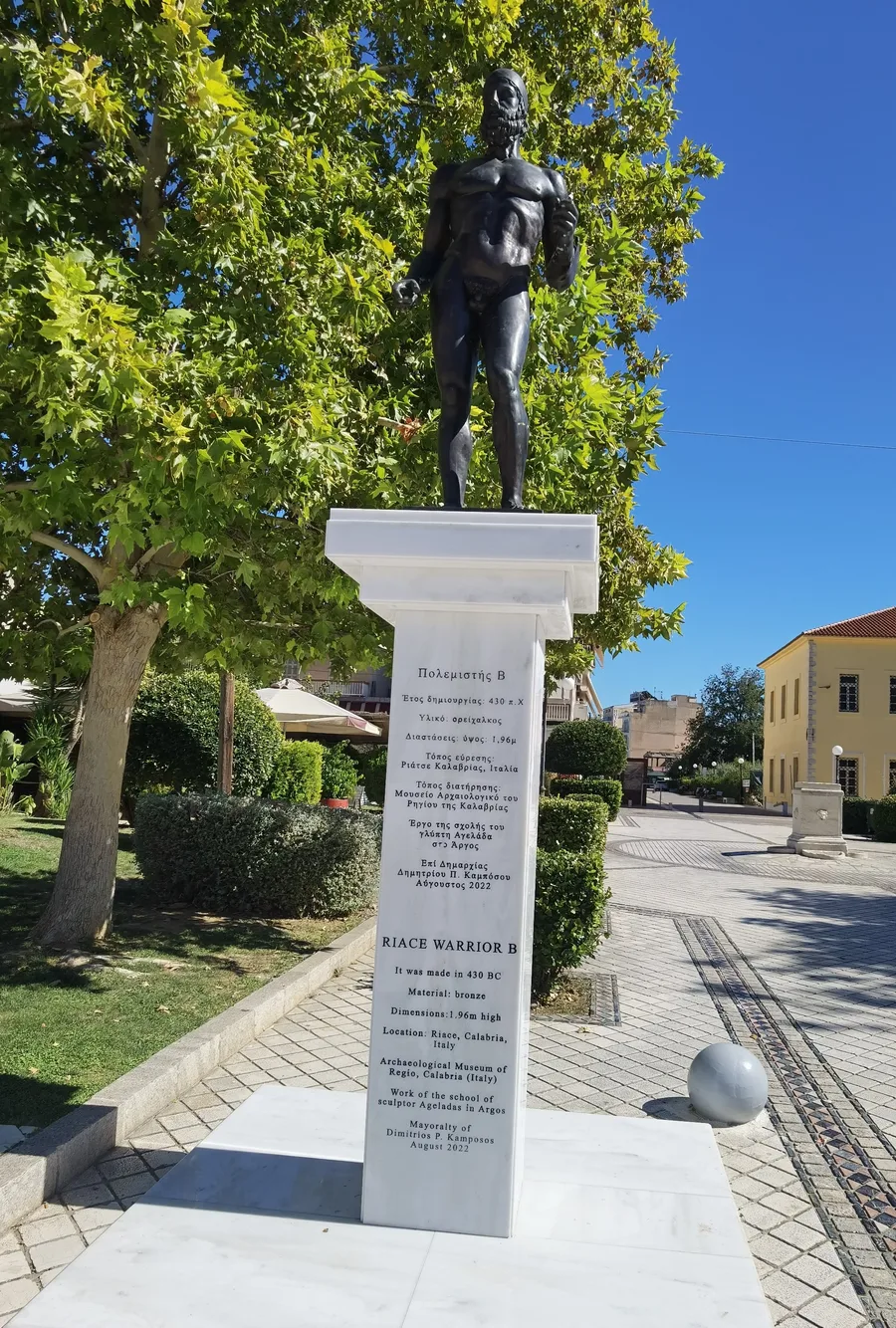
One of the masters of classical archaeology, Heinrich Brunn, long ago highlighted the essential characteristics of the archaic Peloponnesian style: a decided taste for robust proportions, a solid, almost architectural construction, and above all, a reasoned, one might say mathematical, conception of the forms of the body.4 One can already foresee that the efforts of Dorian sculptors would turn toward the study of proportions, and that it would fall to a master from Argos, Polykleitos, to formulate the rules of a canon proper to statuary.