

In a time when we perhaps did not hold tragedy in all the reverence that, according to the best authors, is due to this severe form of eternal drama, we were not constant attendees in the parterre of the Comédie-Française. We listened, enraptured, to the winged words of the actress Rachel, and we applauded her furies. But the great enchantress was not always on stage, and, adept at absenting ourselves, we gladly extended the intermission.
It is a terrible thing to admit, but for some of us, Théramène's speech from Racine's Phèdre was sometimes an occasion to leave our seats. We could sense the monster with its yellowing scales approaching from afar and would avoid its arrival. We would signal to each other with a cabalistic sign and, ascending the solemn staircases with a light foot, we would go to the deserted foyer of the theater to converse a little with Jean-Jacques Caffiéri.
The Busts of the Comédie-Française
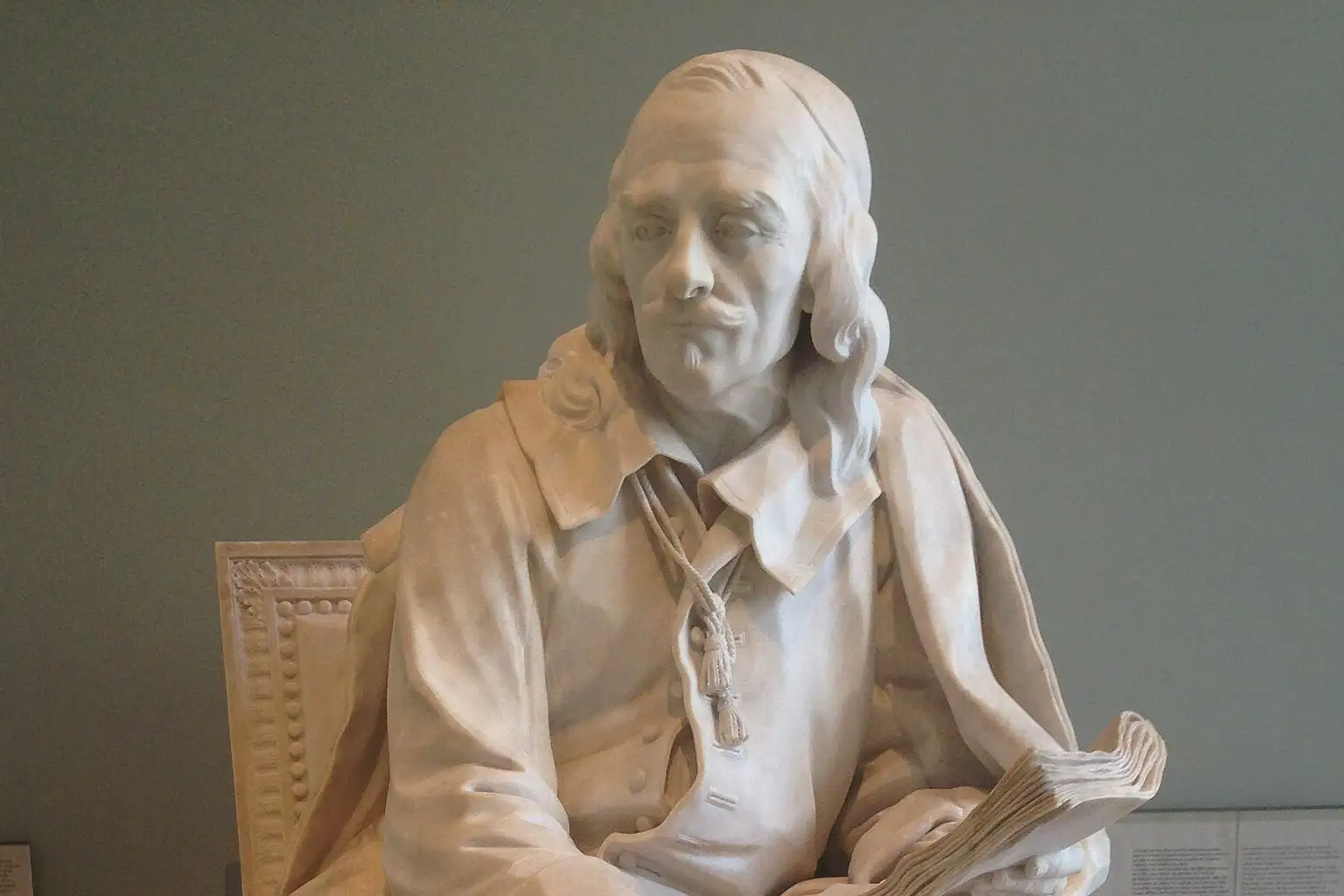
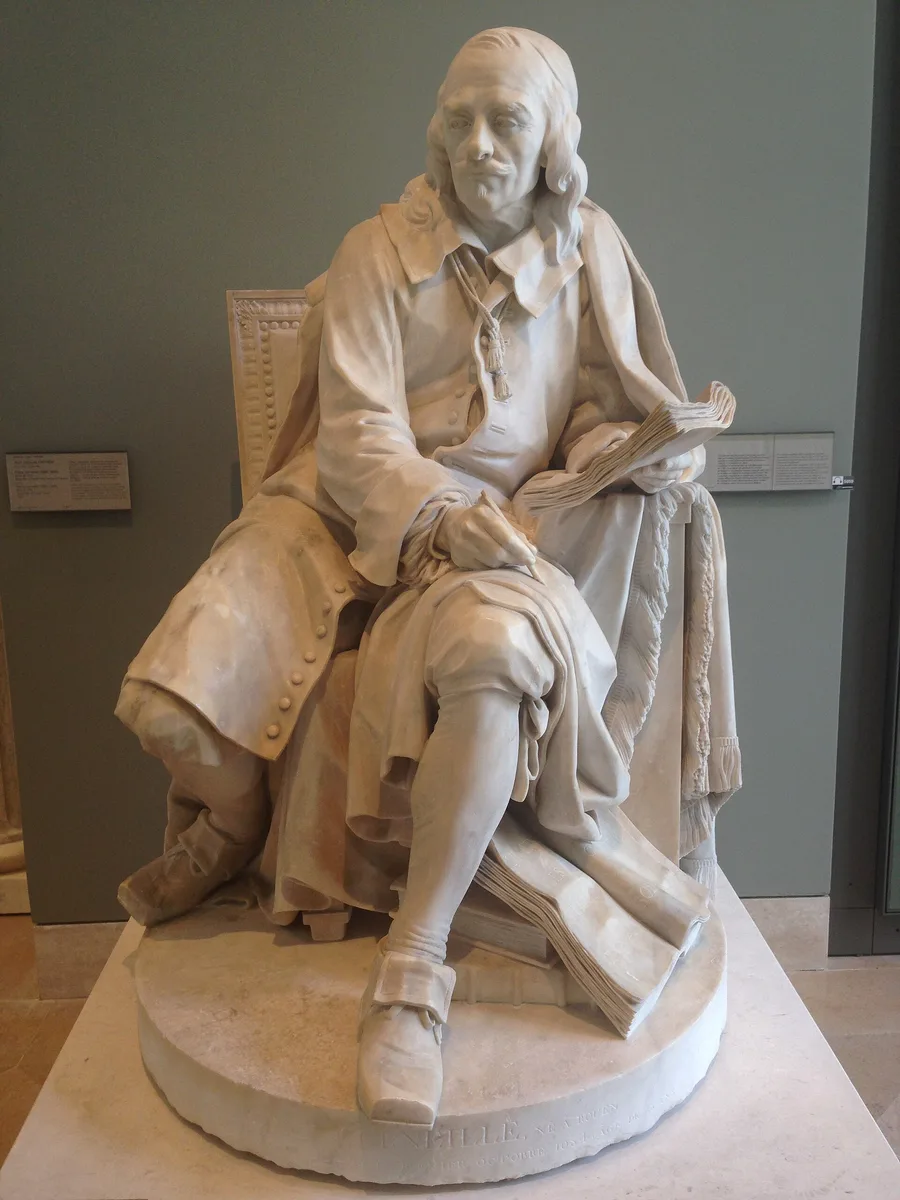
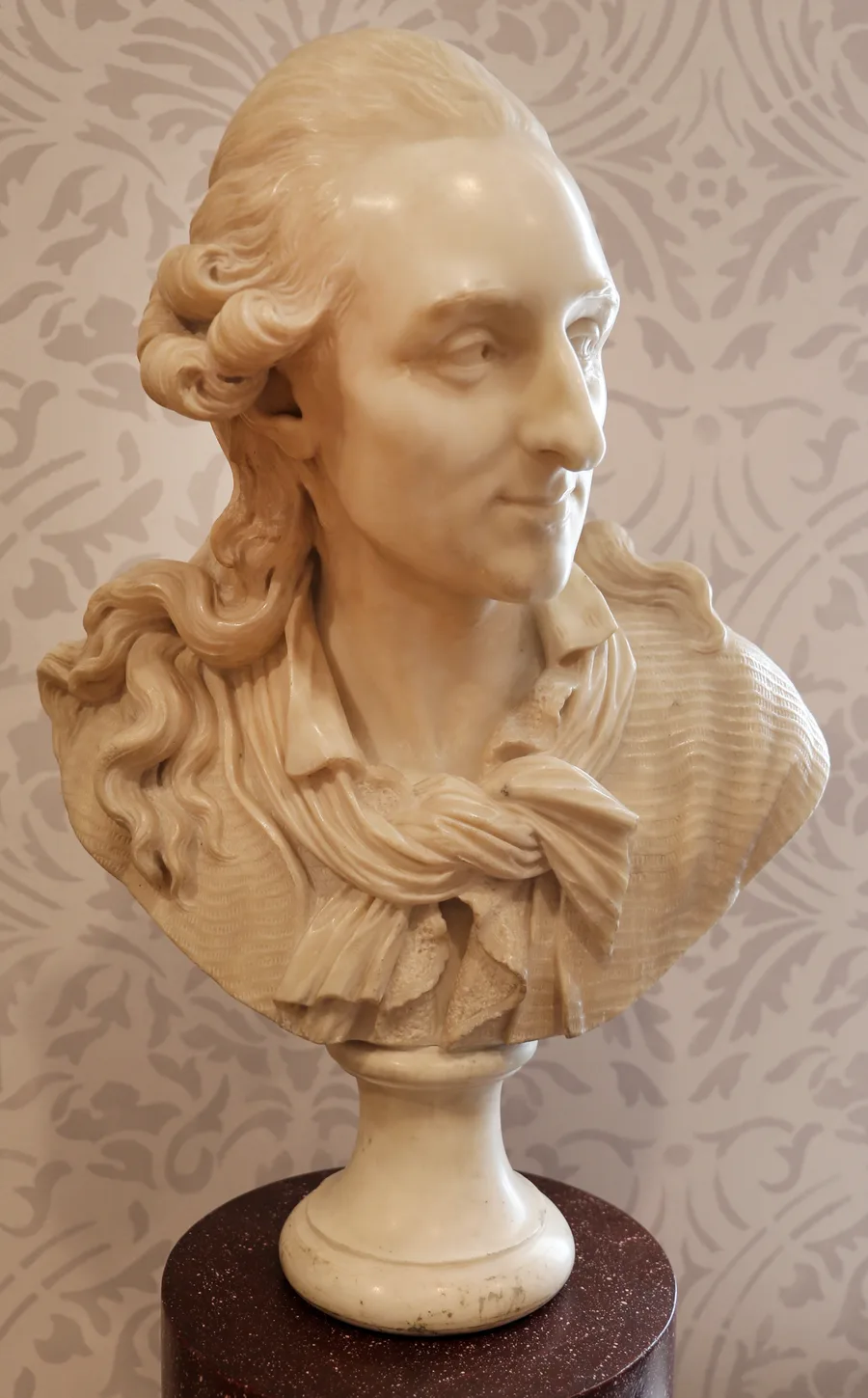
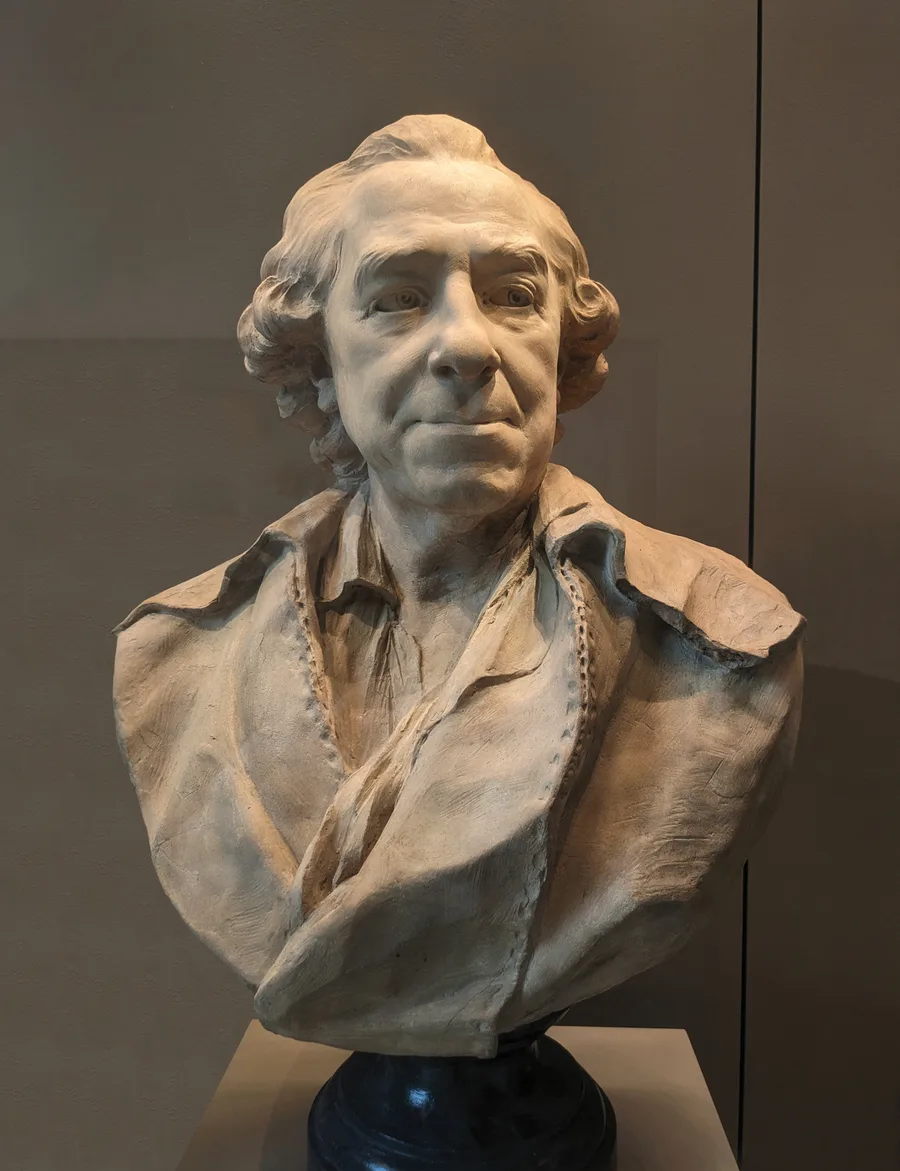
This Caffiéri pleased us. He was of our school. His busts of Piron, Thomas Corneille, La Chaussée, and especially that of Rotrou, captivated us with their agitated silhouettes, the fire in their gazes, and the beautiful freedom of their execution. Indeed, the virtue of the 18th century is there, and also its folly. Caffiéri represents, with intellectual authority, one of the most singular ways of interpreting the human face and giving it the eloquence of life.
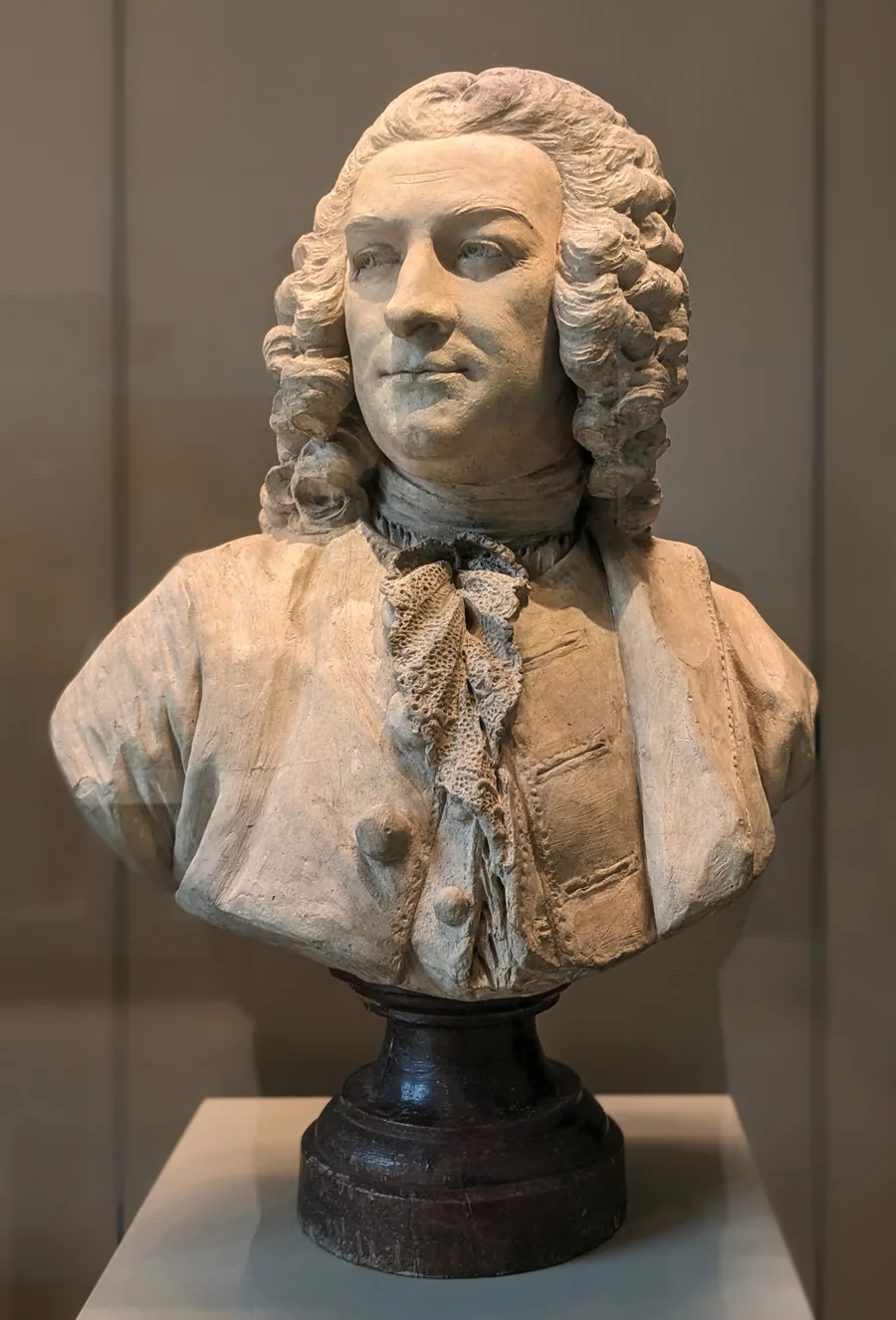
From the perspective of a more intimate and Florentine art, which our Romanticism then ignored, one might say that there is something artificial and a certain excess in these tumultuous busts. But the originality of the works remains evident, and it is clear that Caffiéri, that valiant carver of marble, faithfully expressed, according to the formula fashionable under Louis XV and Louis XVI, the cavalier aspect of the figures and the commotion of their forms.
For a long time, our generation knew only—and the public still knows only—Jean-Jacques Caffiéri, the author of the busts at the Théâtre-Français and of the amusing little River God, which was his reception piece for the Royal Academy and which the Louvre has since inherited. More patient research was needed to teach us that this Caffiéri, the last to arrive in the order of time and the most famous, belonged to a family of artists whose role had been highly significant.
We had a few indications here and there in books, among them an interesting note by the Abbé de Fontenay, but everything remained to be discovered; many obscure points needed to be clarified. M. Jules Guiffrey has courageously undertaken this difficult work and has accomplished it with that endless curiosity, with that loyal spirit of research that exhausts archives and extracts from old papers all the lessons they hold. His book first threw us into extreme surprise, and after reading it, we remain astonished at the quantity of things a gentleman can know about the Caffiéri family.1
The Patriarch: Philippe Caffiéri
The ancestor is Philippe Caffiéri, born in Rome in 1634 and deceased in 1716. He was a sculptor, more so than a statuary. Arriving in France in 1660, he was soon employed by Louis XIV, or at least by those who distributed commissions and works in his name. The accounts of the royal buildings and other registers, titled Argenterie du roi (the King's Silver), show Philippe engaged in quite diverse tasks: he made frames for paintings, supports for orange tree planters, table legs, armchairs, guéridons (small ornamental tables), and bed frames.
The elder Philippe Caffiéri was thus involved in the most active way in the history of furniture under Louis XIV, and these are facts that would have remained unknown if M. Guiffrey had not brought them to light. At the same time, the indefatigable Caffiéri produced a multitude of designs for the king's ships. These are pencil drawings whose originals still exist; they even prove that the Italian sculptor took superb liberties with French orthography. One of these drawings bears the surprising inscription: Decens d'un veco nomé le Sovor costrui à Tulon (Design of a vessel named the Superb built at Toulon).
The old Caffiéri seems to have been particularly skilled at carving wood, which is why, in his immortal quatrains, the Abbé de Marolles places him alongside the cabinetmaker Domenico Cucci. But he also knew how to carve stone and marble, and he created capitals for the Louvre with Lespagnandelle. Philippe Caffiéri was only indirectly involved in metalwork. I do not see, in the extracts cited by M. Guiffrey, that he was a founder or a chaser. He only provided models, and he provided many of them.
Let us be careful, however, not to exaggerate the importance of the old Caffiéri as an original inventor. M. Guiffrey very rightly remarks that the great master of decoration, at Versailles and at Marly, was Le Brun. The Italian artist is somewhat lost in the radiance of this invasive glory, and no matter what we do or say, we will have difficulty pulling him out of the half-light where he slumbers.
The Master Founder: Jacques Caffiéri
Philippe Caffiéri, the first of the name, had several sons. Some of them were employed in the sculptural work carried out in our arsenals, but only one of Philippe's children was important as an artist: Jacques, born in 1678, who died in 1755. This Jacques Caffiéri, who until now had remained very mysterious, is of great interest to us, for he made his mark in the great industry of the Regency and the reign of Louis XV: cast, repaired, chased, and gilded metal.
As early as 1714, he entered the community of master founders, and the following year, he worked as a designer for the association to which he belonged. Every well-established guild possessed a funeral pall, an embroidered cloth used to cover a colleague's coffin on the day of his burial. Jacques Caffiéri supplied the model for the master founders' pall, and his drawing is preserved at the Musée archéologique du Mans. M. Guiffrey provides a curious photograph of it.
It is a reasonable composition, in the style of Jean Bérain: the patron Saint Eligius naturally plays his part, but one also sees, in a rigid and cold arrangement, the various types of the founders' principal works—bells, church lamps, chalices, monstrances, and lectern eagles, along with a family-sized howitzer and a small cannon that does not look very menacing. "The elegance and form of these attributes," says M. Guiffrey on this subject, "already show a very pronounced Louis XV style."
This is not my opinion. This drawing, "where one can see that a very sober gentleman has applied himself," is dated 1715; it looks as if it were from 1710. Jacques Caffiéri, at this point in his career, is slightly behind the times, and his invention, a little meager and overly symmetrical, completely lacks flourishes and embellishments. The Louis XV style would only come later. One could, it is true, tell me that for a funeral pall, gaiety is not obligatory.
The Abbé de Fontenay had taught us that Jacques Caffiéri "worked a great deal for the royal houses." This assertion is confirmed by the extracts from the accounts that M. Guiffrey has brought to light. Jacques supplied "feux dorés d'or moulu" (andirons gilded with ground gold) and mirror frames. He did many other works whose nature the overly discreet scribe does not specify, but which were certainly metalwork. He also made the bronze busts of the two Barons de Bezenval (1735 and 1737), which one may recall seeing at the exhibition organized for the benefit of the Alsatians-Lorrainers.
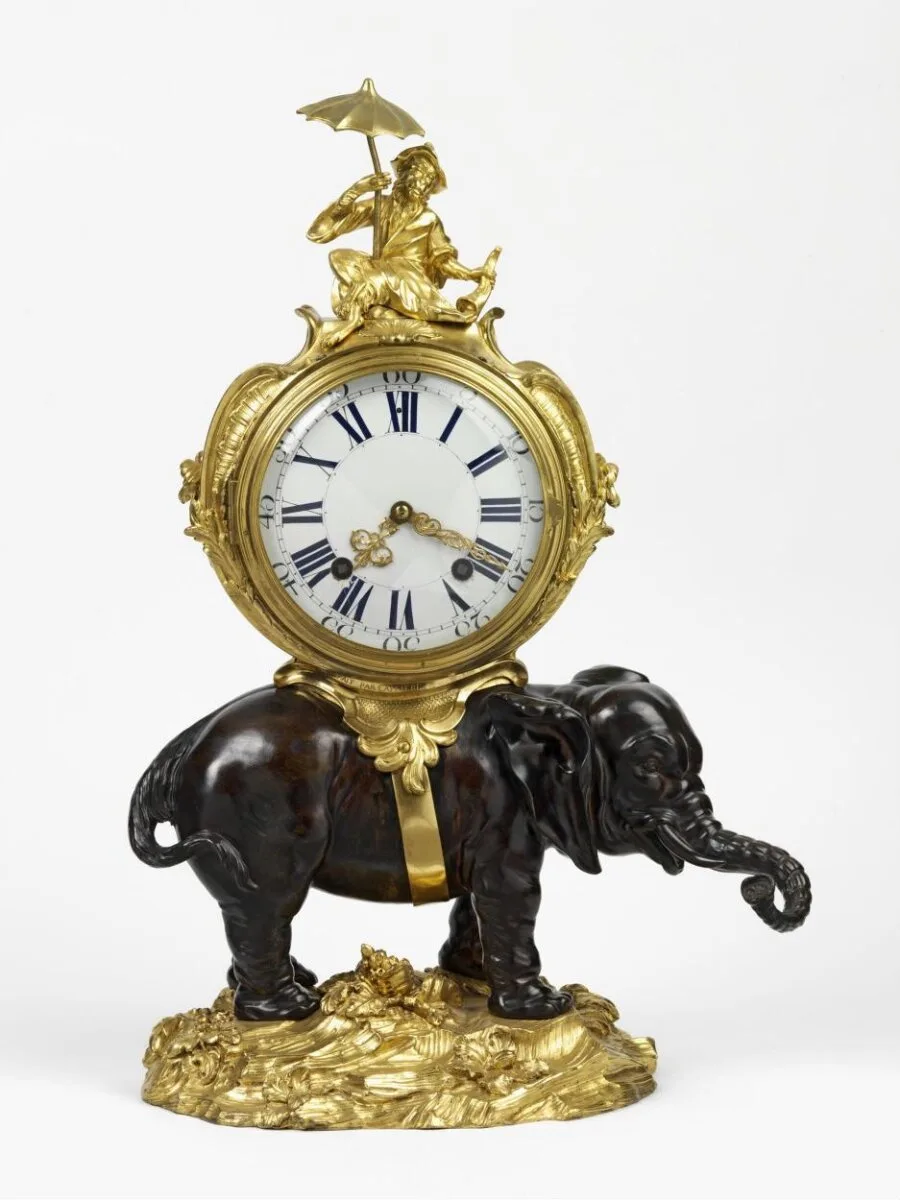
Finally, the work that, in the last years of his life, brought Jacques Caffiéri a semblance of renown is the case of the famous Passemant clock, a work in which he collaborated with one of his sons, a skilled man of whom we will have more to say. The base and mounting of this clock are very much in the Louis XV style: Jacques Caffiéri, very Louis-Quatorzien at the outset, had eventually converted.
The Heir: Philippe Caffiéri the Younger
The collaborator and son of the master founder was Philippe. Born in 1714 and deceased in 1774, he is better known than his father, with whom, for lack of sufficiently explicit documents, he has sometimes been confused. He too was a founder-chaser. M. Guiffrey's book will complete our knowledge of him as an artist and reveal him as a lover.
A Youthful Scandal
Philippe Caffiéri, much more Louis XV in style than his venerable father, began his life with romance and scandalized the bourgeois of the Rue du Mail with his freewheeling attitude. M. Guiffrey has found the official report of the complaint that Jacques filed in 1738 before the commissioner at the Châtelet, concerning the intrigues that a young girl and her mother had allegedly organized to ensnare this 24-year-old seducer, who had himself been seduced. The father was even obliged to call upon the archers for help to tear the prodigal son from the young lady's arms. So much fuss for a little love affair! In any case, paternal authority won the day, and Philippe, freed and soon consoled, was able to practice the art of chasing in peace.
A Career in Gilt Bronze
He had first worked with his father on the decoration of the king's châteaux and undoubtedly also on the embellishment of the townhouses of great financiers. On March 3, 1760, he signed a contract with the chapter of Notre-Dame for the execution of two torchères, six candlesticks, and a gilt bronze cross, intended for the adornment of the cathedral's altar. All the old descriptions of Paris speak of these works, which we have previously mentioned in our Recherches sur l'orfèvrerie française (Research on French Goldsmithing). But Philippe Caffiéri did other work for Notre-Dame, and M. Guiffrey has been able to reconstruct the list.
Philippe was the master of gilt bronze; he should not be counted among the goldsmiths. And yet, we see from a passage in the Mercure de France that in 1765 he provided the design for the pieces of the vermeil (gilded silver) toilet set intended for the Princess of Asturias, which was executed in the workshops of Chancelier and François-Thomas Germain. Finally, M. Guiffrey has gathered absolutely new information on another of Caffiéri's works: the six candlesticks and the altar cross for the Bayeux Cathedral (1771). By a happy stroke of fortune, these works, of which M. Guiffrey provides a fine engraving, still exist: the Du Barry style has replaced the Pompadour style.
Philippe Caffiéri played a particularly considerable role as an inventor or manufacturer of bronze furniture mounts. I do not mean only andirons, candlesticks, girandoles, and wall sconces like those found in Boucher's home, but also actual pieces of furniture—cabinets, desks, and shell-display cases—traces of which can be found in the glorious catalogs of the time.
The Problem of Attribution
Here, M. Guiffrey broaches a delicate question that, despite the ingenuity of his research, remains perplexing. When these bronzes date from after 1755, they are by Philippe Caffiéri. But for the period between 1740 and this latter date, which is when Jacques died, how can one distinguish the father's works from the son's? On the famous commode belonging to Lord Hertford, once engraved in the Gazette and later in Albert Jacquemart's Histoire du mobilier, one reads the words: Fait par Caffieri (Made by Caffieri). The clock case belonging to M. Aquarone is signed: Caffiéri fecit (Caffiéri made it). There is no first name, hence all sorts of legitimate hesitations.
The case of the Passemant clock also bears only the name Caffiéri; but we know that this small monument, which was not completed until 1753, is the collective work of Jacques and Philippe. They must have combined their talents more than once. M. Guiffrey attributes the Aquarone clock case, which we do not know, to the father, and the Hertford commode, which in a work published in 1865 by the Gazette we had naively given to Philippe Caffiéri, to him as well. It may be that M. Guiffrey is right, and the excellent considerations he invokes on this subject will doubtless convince the reader. As for me, I ask for permission to reflect on it a little. The life of a researcher is made of perplexities.
The Most Celebrated: Jean-Jacques Caffiéri
The last of the Caffiéris is a brother of Philippe, the sculptor Jean-Jacques, a member of the Royal Academy and the author of the busts at the Comédie-Française. Here, documents abound, and the life of this feverish artist has been recounted almost day by day, from 1725 until its end in 1792. M. Guiffrey has treated Jean-Jacques Caffiéri with all the respect due to him, and I do not believe that anything of great importance can henceforth be added to the biography he has dedicated to him.
He shows him as a resident at the French Academy in Rome, then as an academician, occupied with a thousand considerable works, and, moreover, as very jealous and quick to anger. When, in the years of our youth, we were unfaithful to Théramène to go and study Caffiéri's busts, we knew the man very poorly. Thanks to M. Guiffrey, we know today that he was never very tender toward his colleagues, that he witnessed Houdon's successes with fury, and we have the letters, of mediocre dignity, in which he tirelessly begs for every pension that becomes vacant. Would one have believed him capable of such ill humor and so much pettiness, the sculptor who gave Rotrou such a noble air?
A Monumental Study
M. Guiffrey's book is enriched with etchings by M. Maurice Leloir and facsimiles of original documents. To neglect nothing is the author's motto. He wanted to say everything; he has multiplied the details. No one will complain. These Caffiéris never triumphed over the difficulties of spelling, but for a century and a half, they held a major place in French art, and it was right that justice be done to them.
Today, the thing is done, and when fine talkers wish to discourse on the Caffiéri family, they will find in M. Guiffrey's volume authentic texts, instructive facts, and ingenious and just observations. The book is a little large, no doubt, and the author, enamored of his subject, has perhaps said too much. But we, less than anyone, would have the right to reproach him for it. The whim of our studies may lead us sooner or later to occupy ourselves with the masters of gilt bronze and 18th-century furniture. We will then pick up the volume on the Caffiéris and make use of its riches. To steal from M. Guiffrey will be to demonstrate his opulence.
Paul Mantz