
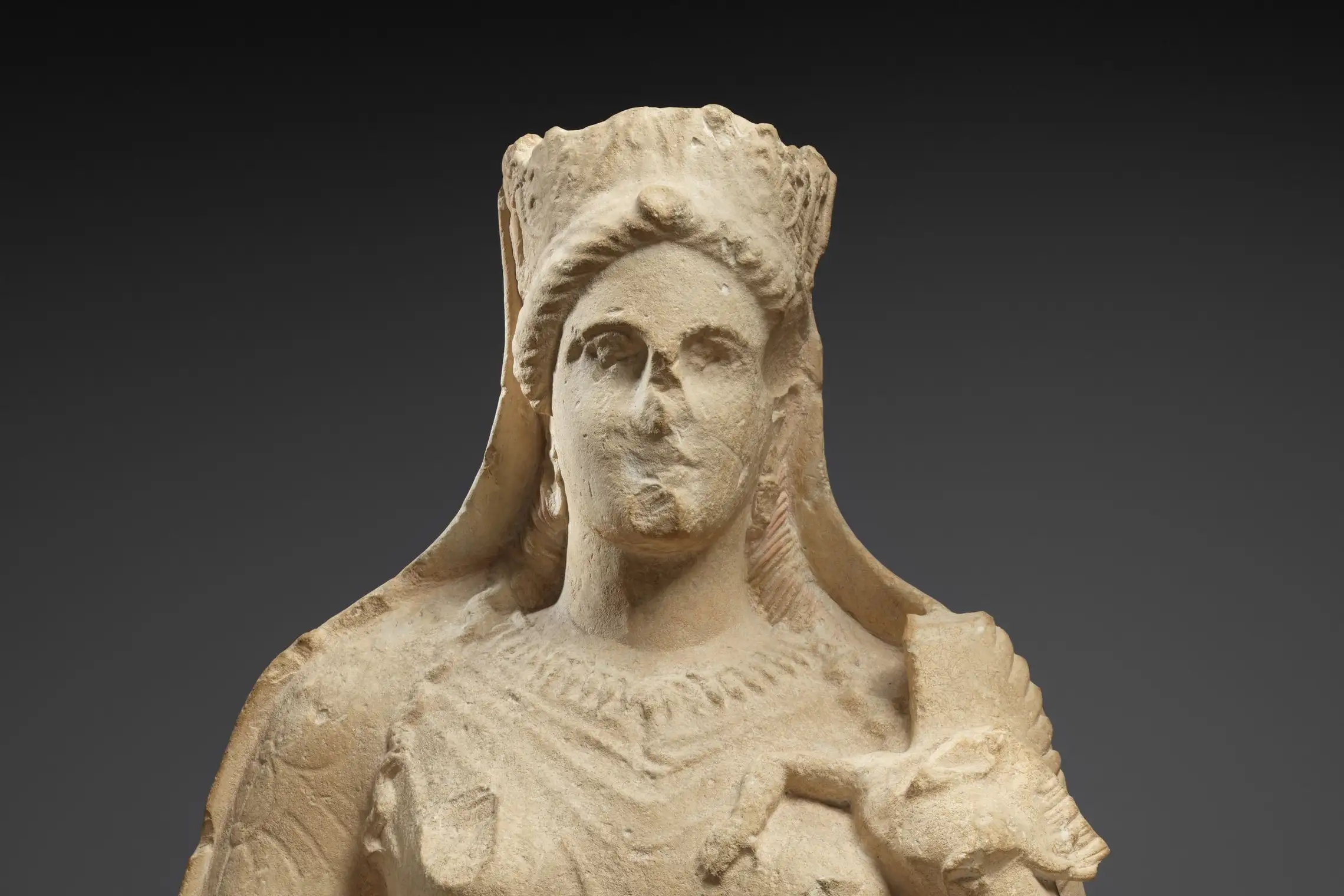
A charming work of art, which also holds real importance for the history of art, has reached us from a distant region of the ancient world. This area, until recently almost barbaric, was never considered a particular favorite of the Muses even in antiquity itself. The ancient city of Odessos, near the modern port of Varna,¹ was founded by the Milesians in the 6th century BCE. It was a rather modest town on the western shore of the Pontus Euxinus (the Black Sea), 130 kilometers south of Tomis (modern Constanța), a city more famous for the exile and tears of Ovid.
Like all Greek cities, however, Odessos was not devoid of artworks. Its coins attest that it possessed a temple and a statue of Serapis, the great Alexandrian god. If we accept a compelling hypothesis presented in 1895 by Mr. Théodore Reinach, it is from Odessos that a bust of Mithridates the Great, now in the Louvre, would have originated after passing through Rome.² Indeed, on the coins of Odessos, the head of Mithridates is depicted wearing the skin of the Nemean lion, just as in the Louvre bust. It seems, therefore, that artworks existed in Odessos representing the King of Pontus as Hercules, whereas elsewhere he appears as Bacchus. In 73 BCE, Marcus Lucullus captured and plundered a number of Greek cities on the Black Sea coast, including Odessos. We know with certainty that he brought back to Rome many sculptures he had seized during this campaign. One is thus tempted to suppose that the Louvre bust was part of a statue of Mithridates that the brother of the wealthy Lucullus took from Odessos and placed in a garden in Rome.
I am unaware of the circumstances under which the group published with this article was unearthed from the ruins of Odessos. It was very recently acquired by Mr. Dobrùsky for the young museum of Sofia in Bulgaria. Founded in 1893, this museum promises to soon become, thanks to the intelligent zeal of its director, the most important on the Balkan peninsula after those of Constantinople and Athens. For several years, despite the meager funds at his disposal, Mr. Dobrùsky has found ways to enrich the collection entrusted to his care with statues, bas-reliefs, small bronzes, coins, and epigraphic documents. Not content merely to assemble these monuments and publish them in a journal written in Bulgarian (the Sbornik), he generously sends photographs to Western scholars, who in turn make them known.³ It would be highly desirable for a scholar like Mr. Dobrùsky to have the necessary resources to conduct excavations in Bulgaria, a country still almost unexplored and where tumuli, the remains of cities, and Roman camps are scattered in great numbers. In the meantime, the readers of the Gazette will thank Mr. Dobrùsky for offering them the first look at the group from Odessos. As for myself, I can only renew here the expression of gratitude I owe to this obliging archaeologist.
Description and Artistic Context
The group in question is made of white marble; it is only 0.43 meters high, not including the modern base. One can notice some plaster restorations on both feet of the left figure. The head of the small Eros and the right arm of the ephebe (an adolescent male) have not been found; all the rest is in a state of almost perfect preservation, with a remarkable freshness to its surface.
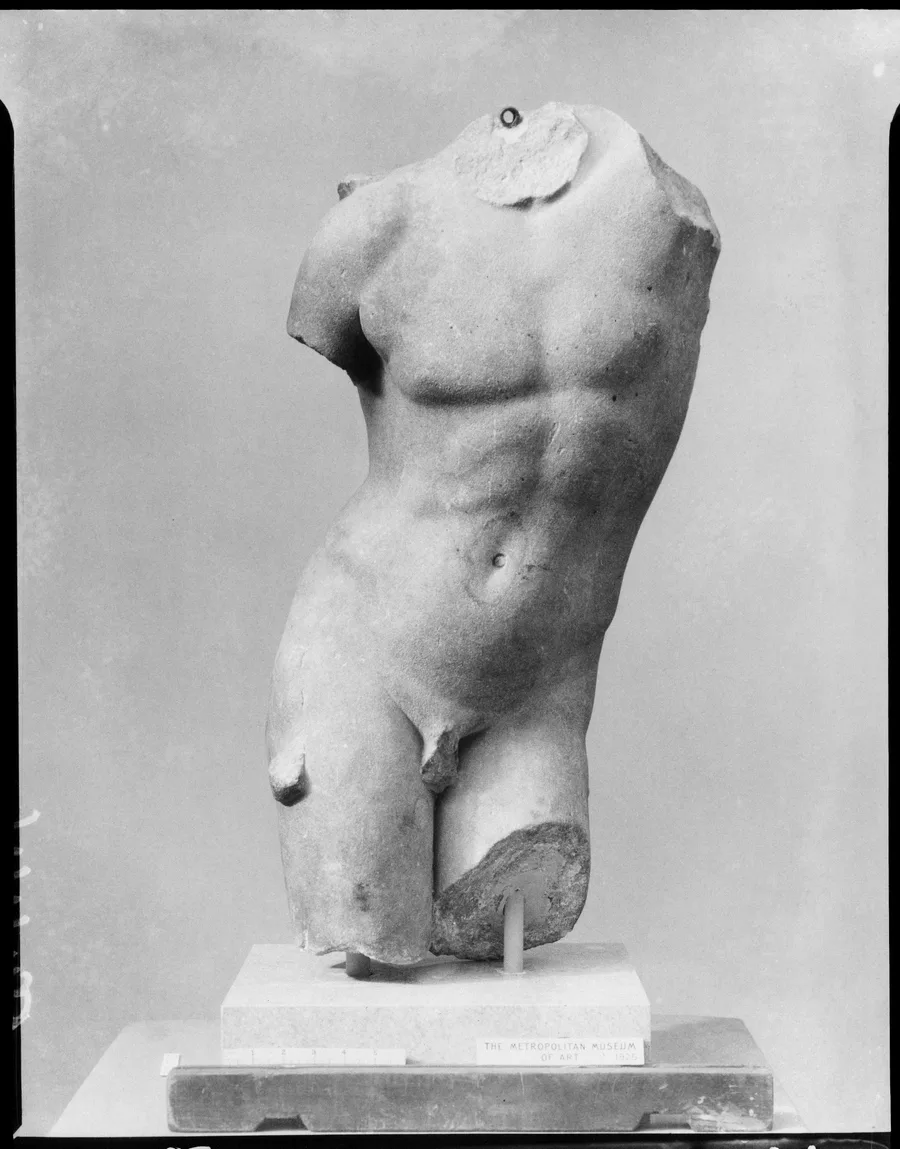
The photograph of the back, which Mr. Dobrùsky provided, shows that it was very summarily modeled. This indicates that the group was intended to be placed in a niche or against a wall. We are already familiar with a significant number of marble groups, about 0.50 meters high, which must have played a decorative role in ancient homes, similar to the role reserved for porcelain and bronze reductions in our own time. It was once believed that small marbles about a foot and a half high all dated from the Imperial era, but today there are good reasons to think that this fashion dates back to the Hellenistic or Alexandrian period. It was then, as Mr. Furtwaengler recently showed, that a taste for copies of great sculptures emerged and developed, often executed in very small dimensions and more frequently in marble than in bronze.⁴
But the originals reproduced by the copyists were not only classical masterpieces of the 5th and 4th centuries BCE. Each of these masterpieces had become, so to speak, the starting point for a lineage of similar works, adapted through modifications in technique and style to the tastes of subsequent centuries. Ancient artists combined and compiled with the same casualness as Italian painters of the 15th century. Thus were born sculptural monuments that were unions or renovations of more or less altered classical motifs, which were in turn imitated by the creators of small decorative marbles or votive offerings. It has long been known, for example, that several artists of the Alexandrian and Roman periods combined the motif of the Aphrodite of Capua with that of the Ares Borghese to produce those groups known as Mars and Venus, which Quatremère and Mr. Ravaisson invoked in support of their reconstructions of the Venus de Milo.⁵ The error of these archaeologists, in our view, was to believe the grouping was original, when it is merely the result of bringing together two isolated motifs.