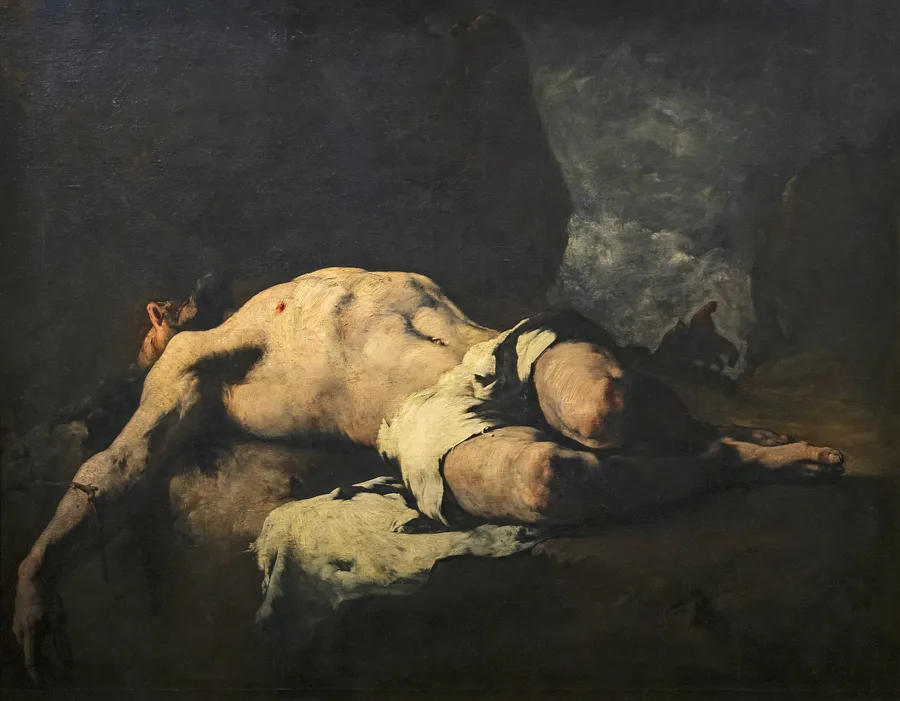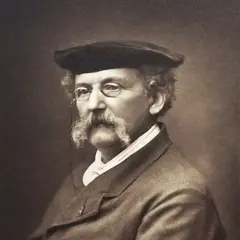
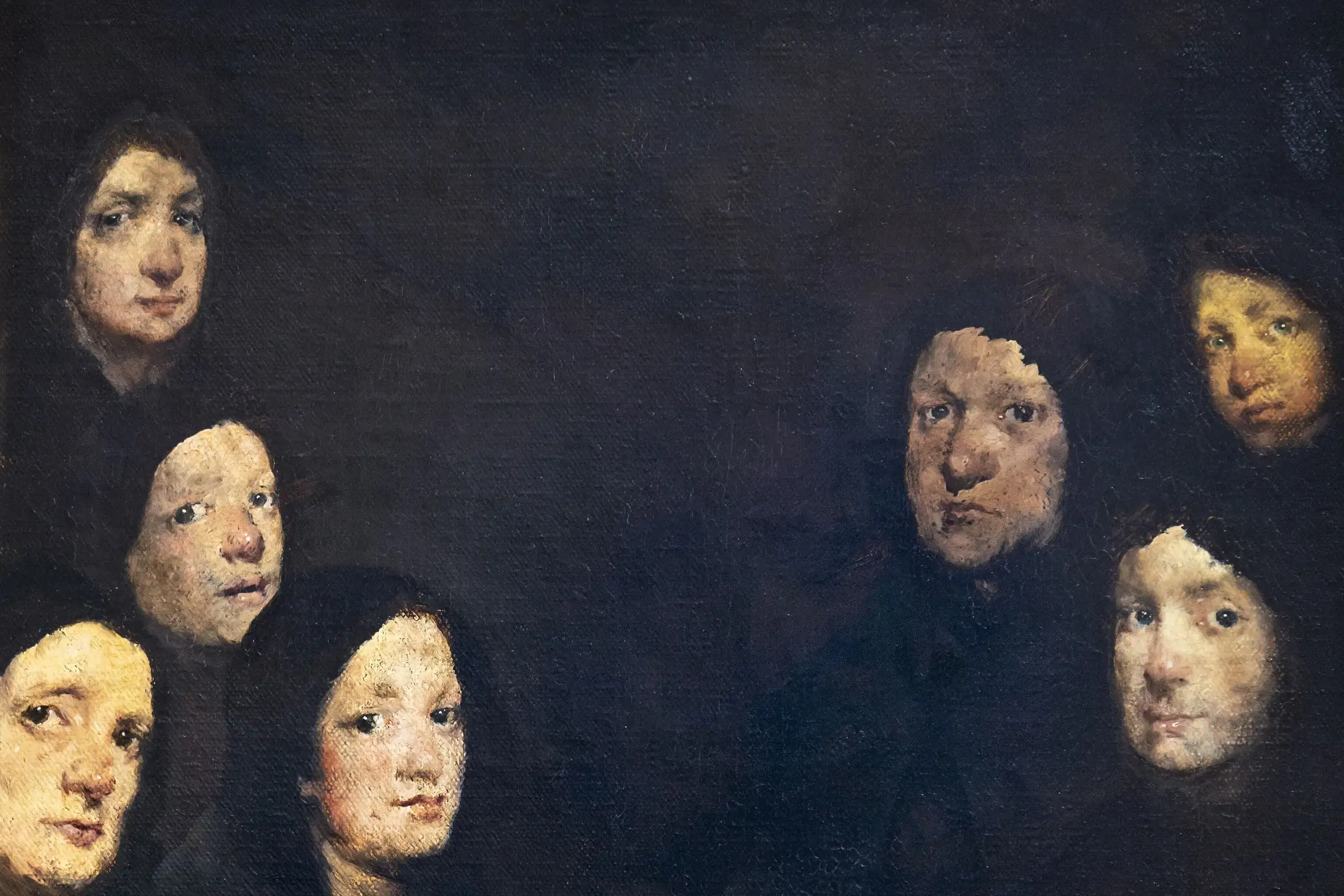
Few artists’ lives have been nobler or set a prouder example than that of the painter Théodule Ribot. For those who knew him, it is difficult to say what was more admirable: the integrity of his character or the virile energy and fine bearing of his talent. In truth, the moral man and the artist were one and the same, each a measure of the other. From this tight harmony, a body of work emerged that presents itself to us with an admirable and very rare unity. From his first works exhibited in 1861 to the last to leave his brush, everything is connected, everything holds together, everything is homogeneous. Like his temperament, the painter's entire oeuvre appears to be cut from a single cloth.
An Uncompromising Life and Art
Théodule-Augustin Ribot was born in Saint-Nicolas-d'Attez, in the Eure department, on August 8, 1823. His father, a land surveyor, wanted his son to pursue an industrial career. Although he taught him geometry and drawing, it was by no means with the intention of encouraging the artistic aptitudes of which the young man was already showing marked signs. This overly cautious father evidently had no faith in painting. Prevented from handling a brush until the age of twenty-one, Ribot did not even find the freedom to choose his own future upon his father's death.
Having become the head of the family, responsible for his mother and sisters, he showed every kind of courage to support them, successively taking on all manner of trades. He was first a bookkeeper in a drapery house in Elbeuf. He then came to Paris to seek his fortune, his only work of painting at that point being the sign for the shop he had just left.
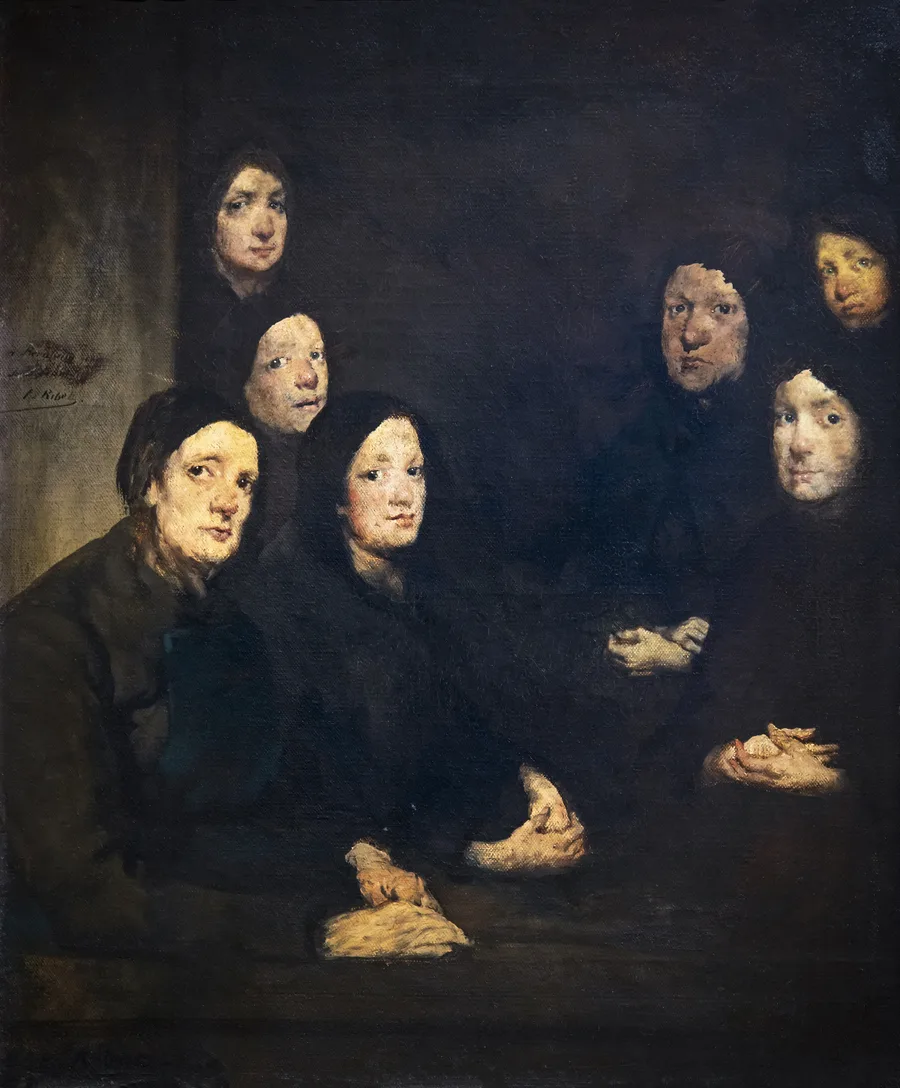
This first stay in Paris was the most difficult, painful, and also the most heroic period of his life. He had already married and came to know the full horror of atrocious poverty. Hardworking and full of energy, he considered no task too menial as long as it provided his daily bread. He decorated mirror frames for glaziers, painted window blinds and illuminations, and drew illustrations for romance sheet music for music publishers. For a time, he entered the studio of Auguste Glaize, who employed him to paint architectural backgrounds in his pictures.
In 1848, as he was not earning enough to live and despite his proud stubbornness in wanting to be a painter, Ribot was forced to accept a job in Algeria with a public works contractor. He remained there for three years, then returned to Paris to begin the struggle anew.