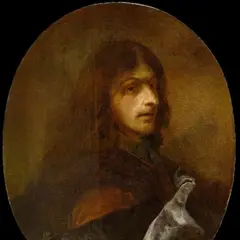
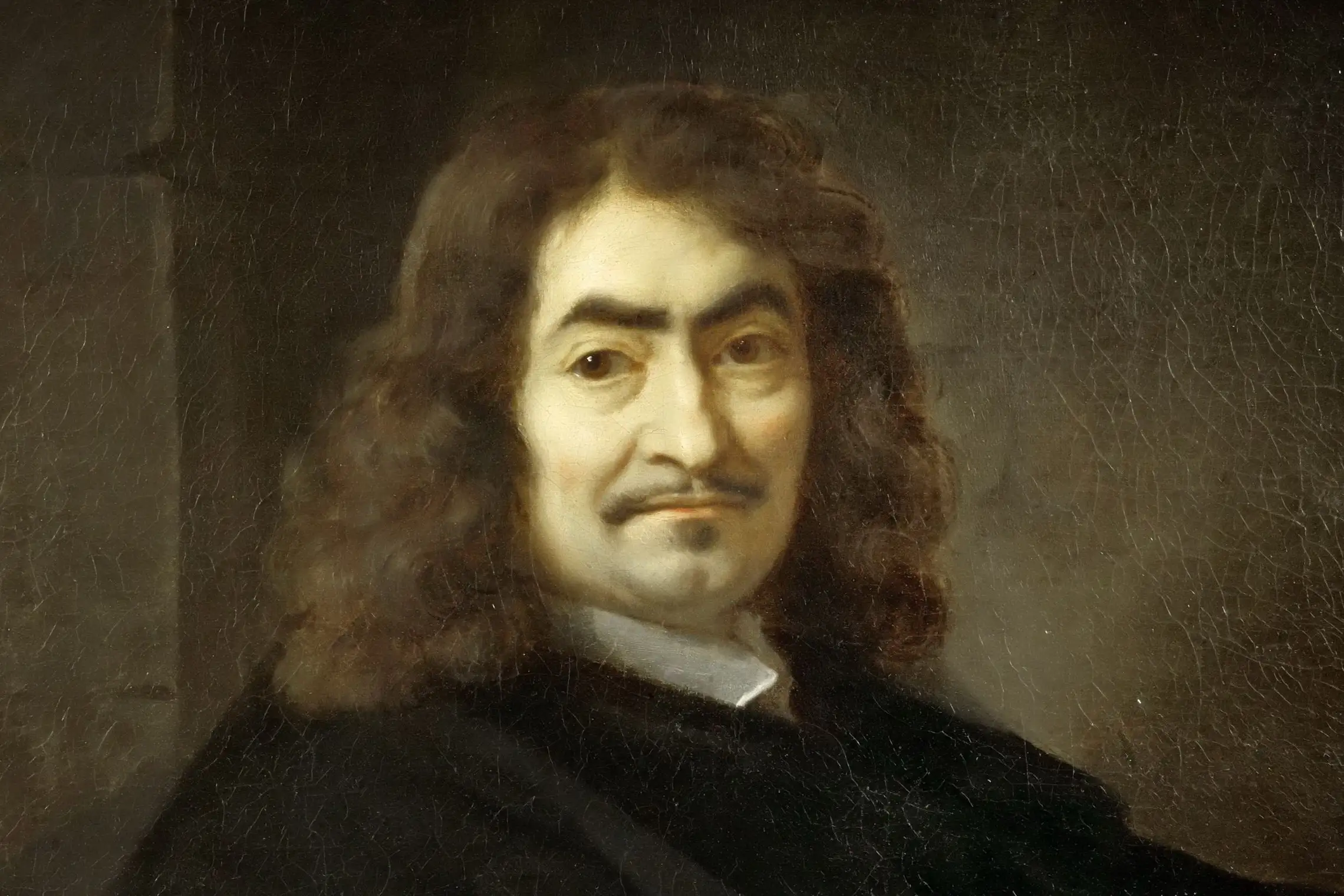
Sébastien Bourdon was little favored by official commissions during his time. He was not involved in politics or "artistic bureaucracy," and he showed little interest in academic theories and disputes. Consequently, his life offers little for biographers and historians eager for details. Furthermore, he left behind no works that command immediate and forceful examination. His decorative paintings have perished, and his easel paintings are scattered. It is all the easier to overlook several of his canvases, which have been spoiled and darkened by the use of poor-quality colors or questionable painting techniques.
Above all, Bourdon's body of work lacks unity. He does not present a clear and distinct personality, a quality so necessary to capture attention and retain sympathy, especially in our era. His work offers neither a fresh nor an original vision, nor even the objective qualities of a direct study from nature.
Ultimately, Bourdon is not a creator; he is the quintessential imitator in a century that was itself essentially a century of imitation. This is not entirely surprising: his precocious talent for mimicry allowed him to overcome the difficulties of his early career, enabling him to learn his trade without money, without protection, and with almost no formal instruction.
An Itinerant Youth and a Talent for Imitation
Sébastien Bourdon was born in Montpellier in 1616. When he was seven years old, his family sent him to Paris to live with an uncle, who placed him in the studio of a certain Barthélémy, a painter of little talent. He left at the age of only fourteen to work for himself in the provinces. However, he soon grew discouraged and weary of the poverty into which he had fallen. As one account notes, "he took up arms in Toulouse under an officer who was a very honest man and who, having seen several of his pleasant drawings, knew well that he was destined for a better post than that of a simple soldier and generously gave him his discharge."
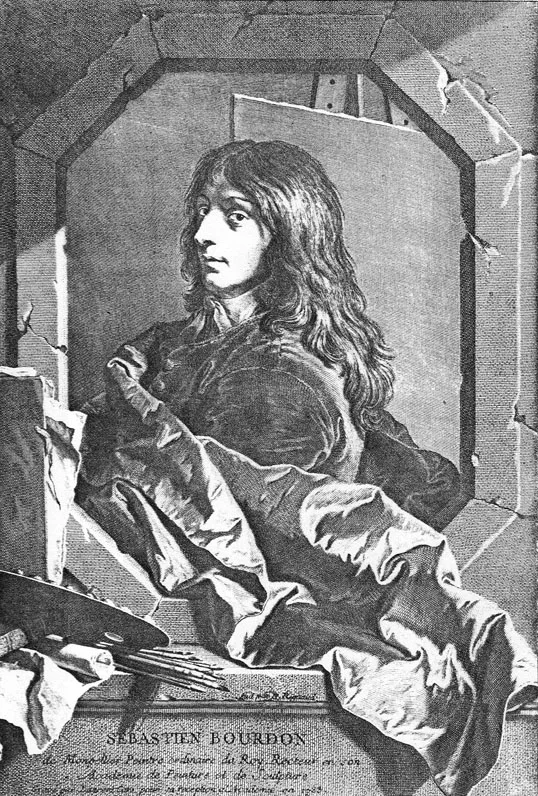
"He then came to Rome at the age of eighteen," the account continues, "but he was so short of money that he was at first reduced to working for a dealer of paintings nicknamed l'Escarpinello. As he had a lively imagination, a good memory, and a great facility with the brush, he could very easily counterfeit whatever he saw and readily adopted the manners of one artist or another."
Indeed, he painted landscapes in the style of Claude Lorrain and historical subjects, as well as "combats, guardroom scenes, or small figures, as well as the little figures of a Flemish painter nicknamed Bamboche." This work helped him to subsist in Rome at a time when, as Guillet de Saint-Georges, the dutiful secretary of a Royal Academy, adds, "the magnificence of our kings and their ardor for the fine arts had not yet established pensions for the young students who made this journey."