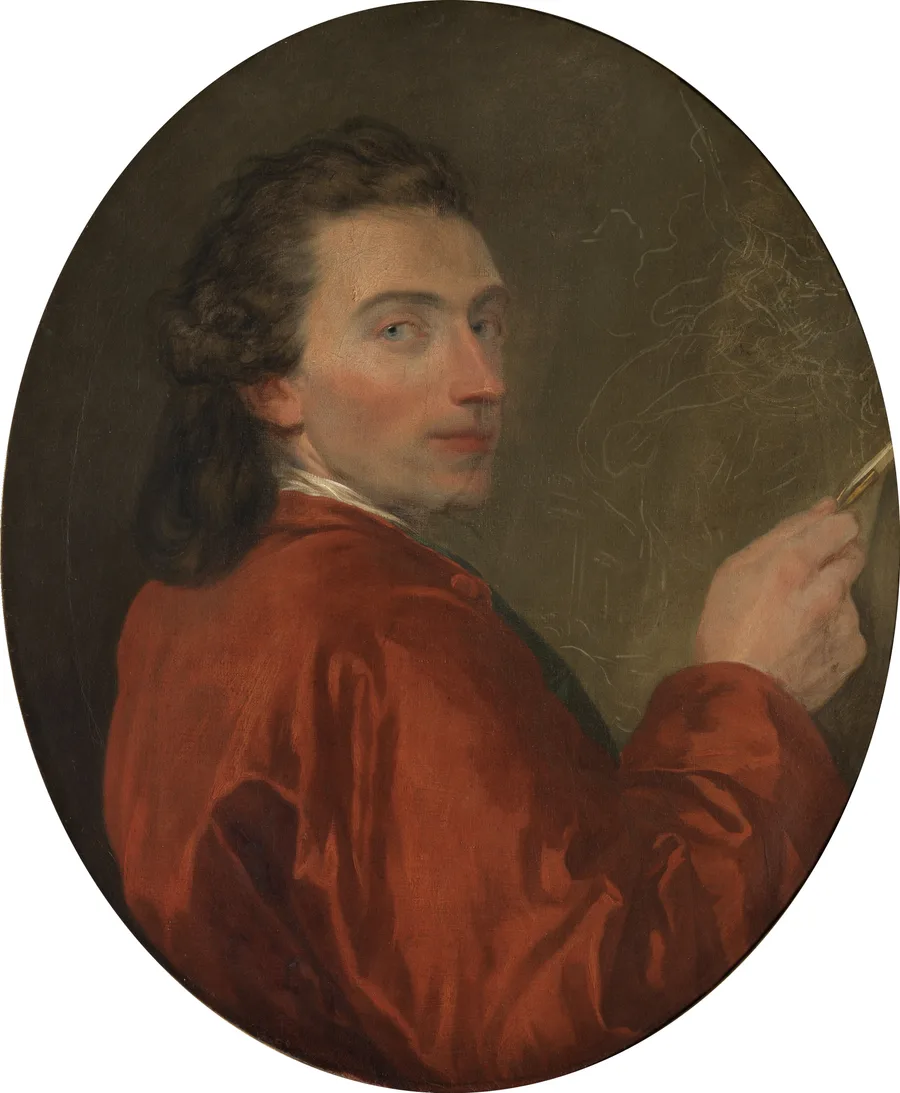
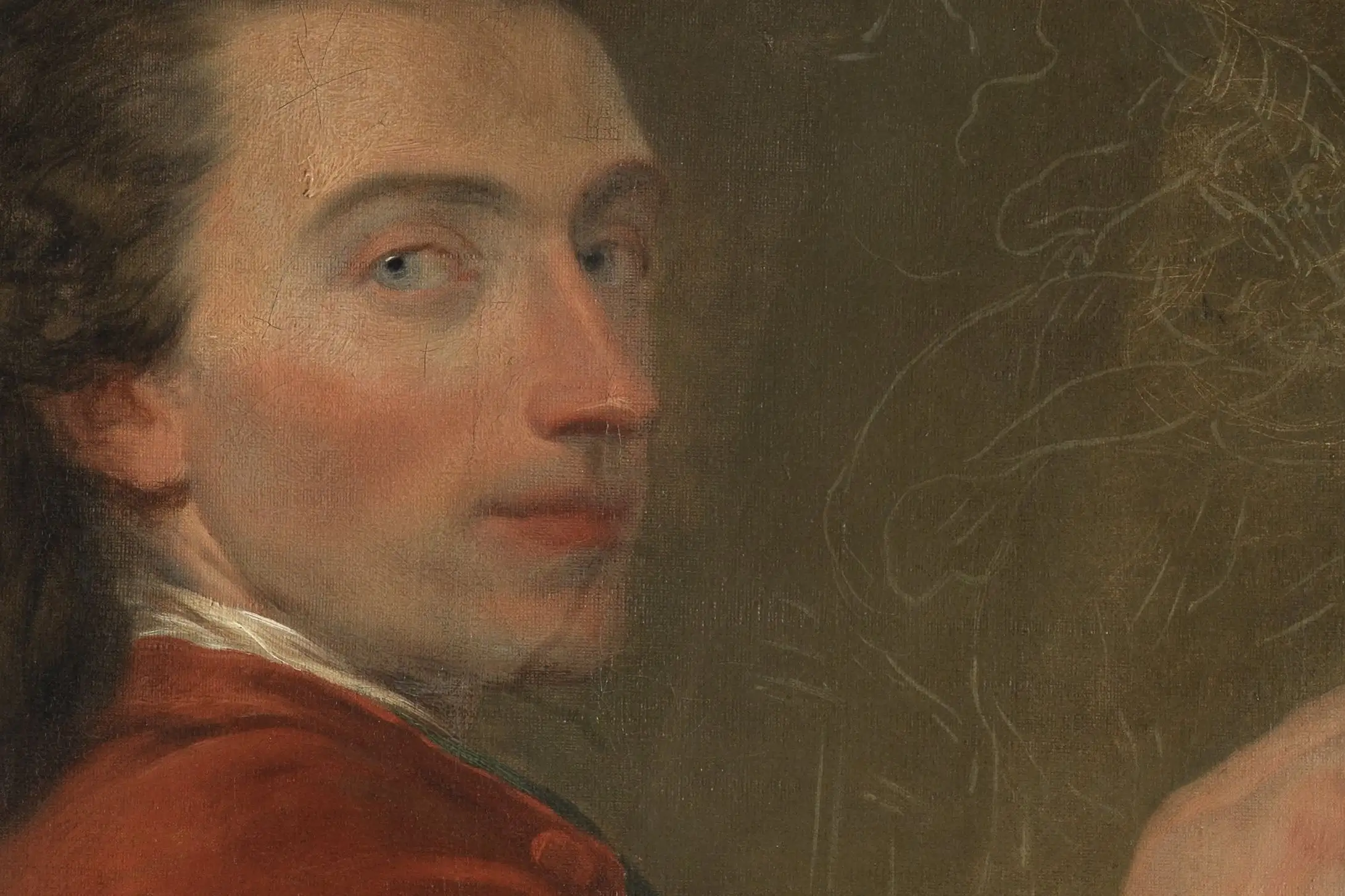
Joseph-Benoit Suvée had the good fortune to direct the French Academy in Rome at the very moment it was transferred from the Palazzo Mancini to the Villa Medici. He has thus become something of an unexpected namesake for a rather unanticipated centenary, and perhaps it is still timely to speak of him, since he has been almost in fashion.
Suvée and the Prix de Rome
Joseph-Benoit Suvée was born in Bruges in 1743; he came to Paris around 1763 and became a student of the painter Bachelier.1 He won the second grand prize for painting in 1768 and only obtained the first in 1771, for the subject The Combat of Minerva against Mars. In the preceding years, Vincent and Le Bouteux had been preferred over him in 1768 and 1769, respectively, and the competition of 1770 had seemed so weak that the Academy had refused to award its highest honor. Suvée worked for another year at the École Royale des Élèves Protégés (Royal School of Protected Students) and left for Rome at the end of 1772.
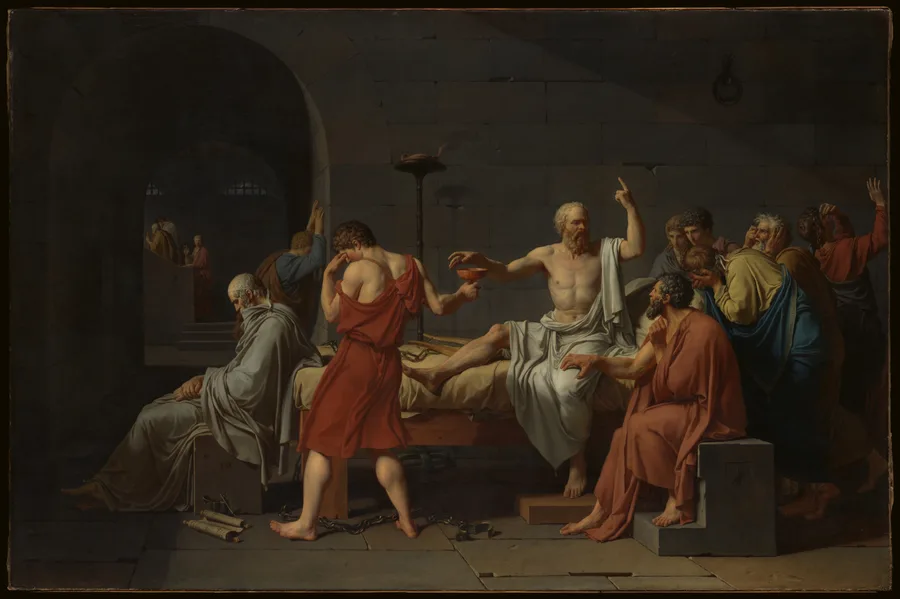
He remained there until the middle of 1778, where he was joined by the painters Vincent, Le Bouteux, Jombert, Lemonnier, and Peyron—the author of a Death of Socrates that was briefly acclaimed. His colleagues also included the sculptor Delaistre, whose group Cupid and Psyche is now in the Louvre, and the architects Renard and Rousseau, the latter of whom designed the lovely palace known today as the Palais de la Légion d'Honneur. David, who joined the Academy at the end of 1775, associated little with his comrades and lived in relative isolation.
Of all these young men, the most prominent was Vincent. Born probably on December 30, 1746, the son of a portrait painter of some repute, he was initially destined for a career in commerce. But, as his 1806 biographer put it, "he abandoned Plutus for Minerva," or rather for Apollo. He studied under Roslin and Vien and, at the tender age of twenty-two, brilliantly carried off the Prix de Rome in 1768. He stayed at the French Academy from 1771 to 1775. Although his biographer asserts that "he prepared for his successes there through profound study and in laborious solitude," it seems, on the contrary, that despite his frail health, he was very much involved in the lives of his fellow students.
Vincent was educated, cultured, pleasant, and even witty. He was primarily a draftsman, with a very lively and personal style. The drawings of his from this period, particularly the caricatures he delighted in making of his comrades—a genre he helped bring into fashion—show spontaneous qualities that academicism would later stifle. He was clearly better than the stilted works he produced later in his career, though The President Molé Resisting the Rioters, Sully at the Battle of Ivry, and The Plowing Lesson can still be viewed with interest.