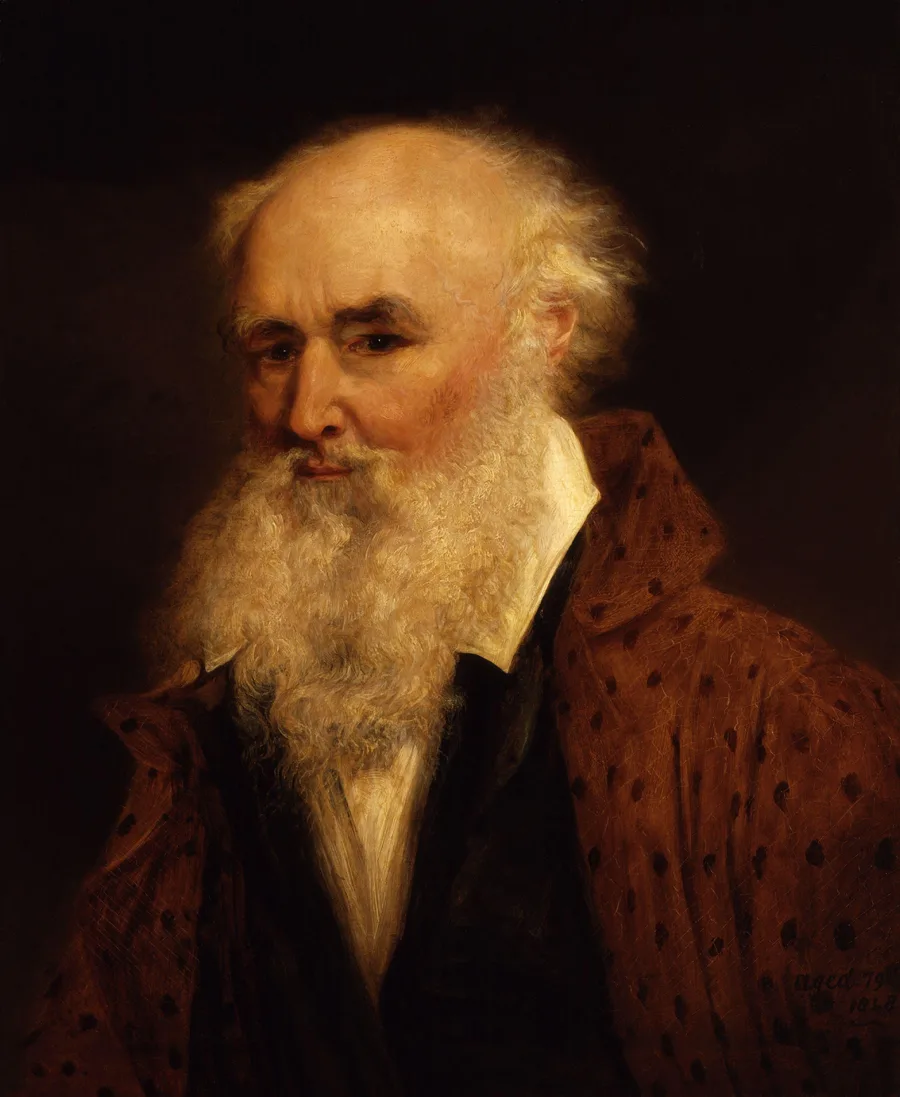
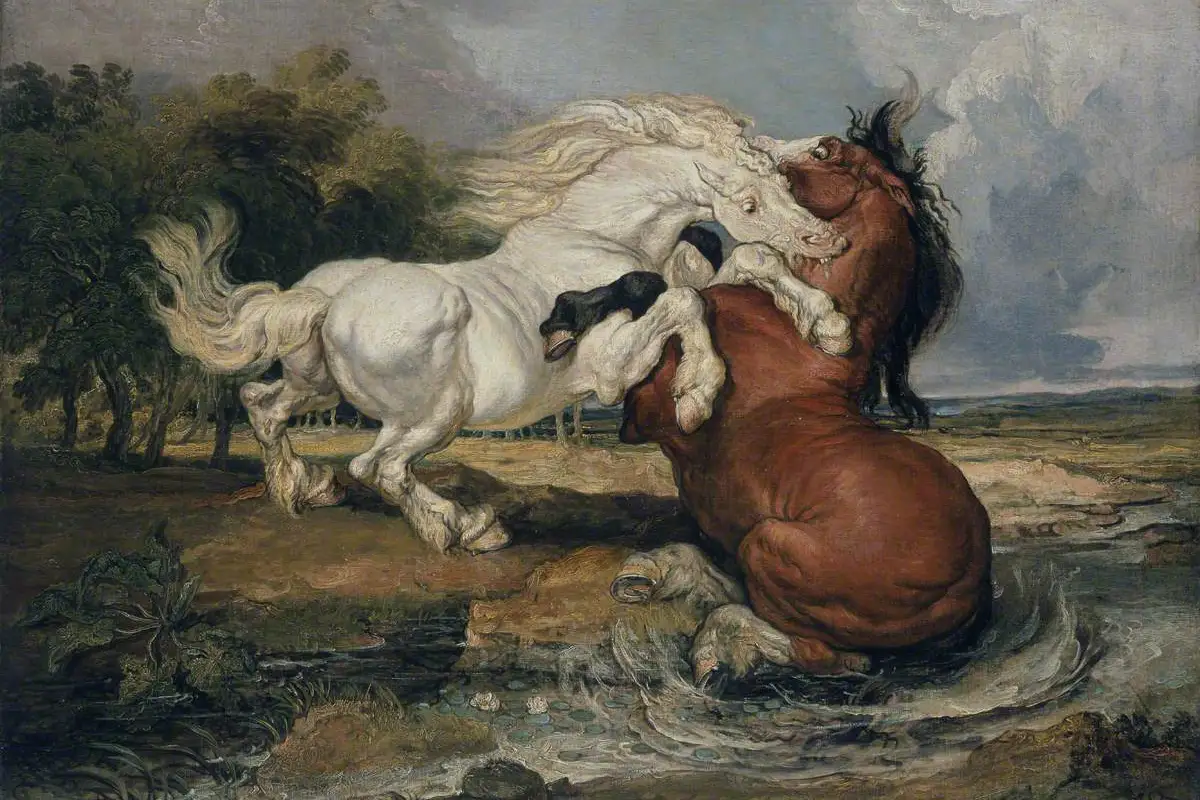

James Ward, whose passing the Royal Academy of London has just mourned, had established a reputation as an animal and landscape painter that, for many years, was quite resounding, but which, we fear, is not destined to be eternal. Journalists, always benevolent toward the dead, have buried Ward with full military honors, charitably dubbing him the "English Paul Potter." This ambitious comparison, however, should not deceive anyone; the sagacious reader doubtless knows what to make of the sentimental exaggerations of obituary writers.
Obliged to summarize the complex effort of a long life in a single word and to express a whole world of ideas and facts in one phrase, the gazetteers of London—and elsewhere—are far more concerned with making a strong impression than a correct one. It seemed perfectly simple to them to attach the name of Paul Potter to that of James Ward for the triumphant reason that they both painted animals and that each, in their unequal oeuvres, can boast a Bull that has been much talked about. We bear no ill will toward these valiant pens for judging so quickly, nor for touching candid souls by momentarily pairing an immortal glory with a reputation already under threat. Journalists do not have the time to be precise; it falls to people of leisure, to unoccupied critics, to subordinate what is fleeting to what endures, to put things back in their proper place, and to veil with a discreet half-tint the works and names that the swift brush of literary decorators has perhaps illuminated with too brilliant a light.
The Making of an Artist: Early Life and Apprenticeship
By his distant origins, and also by his character, James Ward was connected to an older world. He was born in London on October 23, 1769, and had thus just entered his ninety-first year when he recently concluded his patriarchal life. Ward's family was among the poorest. He himself recounted, in an autobiography published by the Art-Journal, that his mother, a widow with five children, removed him at the age of seven from the little school where he had been placed and kept him by her side to help with household chores.
James, however, had an older brother, William, who had long been working for Raphaël Smith, the engraver in manière noire—or mezzotint, as they say over there—who has left us so many graceful or severe portraits. Rightly or wrongly, Smith was considered a good master. At the age of twelve, James Ward was apprenticed to him, with his brother William tasked with supervising him and making his beginnings less difficult.
But upon entering this laborious workshop, Ward was setting himself up for many troubles. Absorbed by the demands of incessant production, Smith actively scratched away at his copper plates and took little interest in his pupils. Ward grew up haphazardly, without guidance, without method, and even—as he later complained with bitterness—without tools or paper. He sketched his first drawings on the back of discarded proofs. Smith did not think much of the poor boy's timid efforts. Although this adventurous apprenticeship lasted nine years, it would probably have remained sterile if William Ward had not taken his brother's side, filling the role of an unenthusiastic master, and if it had not been an ancient and fruitful law that the intelligent are given to instruct themselves.