The passing of Hugo von Tschudi, who has just died in a sanatorium in Cannstatt, near Stuttgart, where he had gone to treat an incurable illness, is an irreparable loss for German museums. The pivotal role he played in the renovation of the museums in Berlin and Munich, the importance of his historical and critical works, and finally, his active sympathy for modern French art—of which he was both the champion and the victim in Germany—compel the Gazette des Beaux-Arts to pay homage to the memory of this man, eminent in so many respects.
Hugo von Tschudi, a descendant of a very old Swiss noble family, was born on February 7, 1851, in Jakobsdorf, Lower Austria, and completed the majority of his studies at the University of Vienna. From this, no doubt, came his smiling, "Viennese-style" affability and aristocratic elegance, which lent so much charm to his person and his conversation. In his director's office at the National Gallery in Berlin, he had much less the air of a high-ranking Prussian official than that of a diplomat who had strayed into bureaucracy.
He possessed an exquisite sense of nuance. His dominant quality was distinction—not the banal, superficial kind that is merely a passkey for mediocrity, but the native nobility of elite natures who feel an instinctive aversion to vulgarity and find themselves incapable of acting, or even thinking, basely.
A Stoic in the Face of Suffering
Suffering, which sculpts the features, had further refined and spiritualized his clean-shaven, English lord-like mask. A terrible skin disease, whose slow and insidious progress was irresistible, had gradually left his epidermis raw. Seeing his ravaged face and hands, one involuntarily thought of "Poor Heinrich" from the old German tale, the leprous lord whom Gerhart Hauptmann made the pitiful and poignant hero of one of his later dramas.
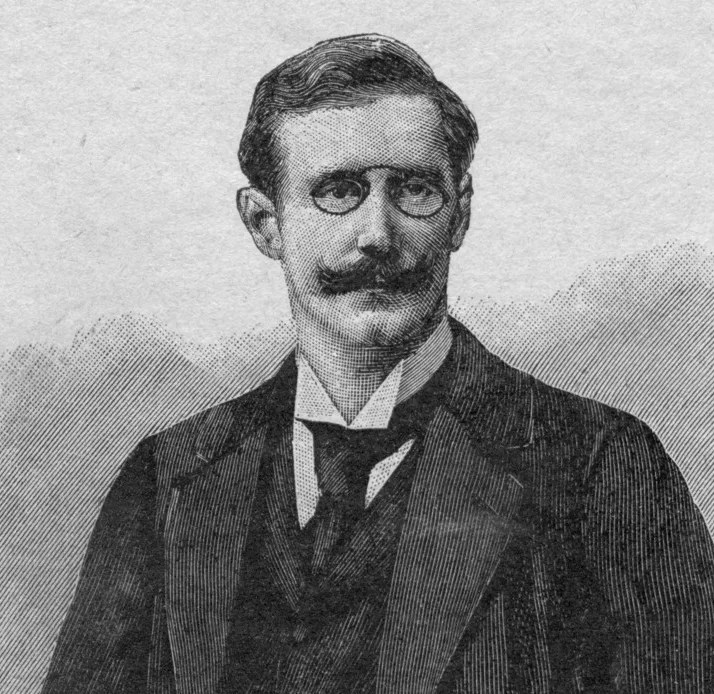
This dreadful illness humiliated him without debasing him. But despite the heroic effort he made to hide his inner distress, the veiled sadness in his eyes revealed, against his will, how much this man, who had been very handsome in his youth, suffered in his flesh and in his pride from the encroaching leprosy that disfigured him. A bitter fold had formed at the corner of his lips, and when friends or strangers came to see him, he seemed to be painfully watching their faces for an involuntary sign of physical revulsion or offensive pity, before which his pride would have bridled. From time to time, acute attacks would strike him down.
Despite this long martyrdom, he refused to desert the task to which he had dedicated his life. He remained stoic to the end. But death came to him as a deliverance.
A Scholar of Refined Taste
While Hugo von Tschudi was above all an incomparable museum director, his scholarly work is far from negligible. It is true that his writings do not have the massive scale of the monuments of Germanic erudition. He had too much taste to be anything but an enemy of bombast, prolixity, overload, and any indiscreet display of learning. Sobriety and density of style were the qualities he prized most. Thus, the relative brevity of his writings is not a sign of indigence or lack of stamina, but the effect of a severe intellectual discipline.
He began his career by focusing on ancient art, feeling particularly drawn to the Italian sculptors of the quattrocento (15th century) and the Early Netherlandish primitives. The studies he dedicated to them in the Jahrbuch der Preußischen Kunstsammlungen (Yearbook of the Prussian Art Collections) and in the Repertorium für Kunstwissenschaft (Repertory for Art History), which he co-directed with Henry Thode, attest to the sureness of his taste and the rigor of his method. To him, in particular, goes the credit for being the first to group and classify the works of the still-mysterious master (Robert Campin or Jacques Daret) known as the "Master of Flémalle."
Later, the very nature of his duties led him to shift the focus of his work, turning primarily toward modern art. It was then that he published the monumental catalog of Adolph Menzel's work, the catalog for the Centennial Exhibition organized in Berlin in 1906, and a remarkable study on Manet. This last work, with its classical sobriety, is perhaps the most penetrating analysis ever written on that great artist.1
The Transformation of the Berlin National Gallery
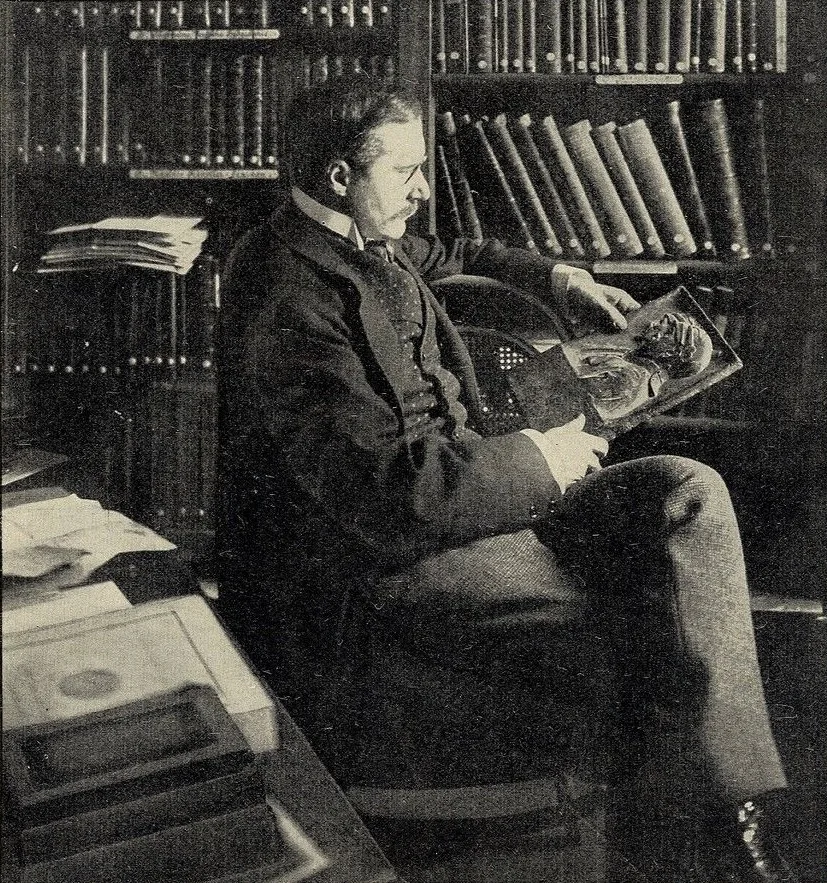
Yet his work as a museum director far surpasses his work as an art historian. It is for this, above all, that his name deserves to live on. In 1884, he joined the administration of the Prussian Museums with the title of Direktorial-Assistent (Directorial Assistant). He was first assigned to the department of Christian paintings and sculptures, for which he compiled the catalog.
This period of apprenticeship at the Old Museum in Berlin, under the direction of Dr. Wilhelm Bode, was not without benefit. But it was only from the day he was appointed director of the Nationalgalerie, Berlin's museum of modern art, that he was able to show his full potential. He would remain there for thirteen years, from 1896 to 1909, so that the name Hugo von Tschudi remains inextricably linked to the history of the Nationalgalerie, of which he is, in reality, the true creator.
When he succeeded Max Jordan, the gallery's artistic level was about as low as that of our Musée de Versailles during the reign of Louis-Philippe: a profusion of battle paintings, official portraits of the Hohenzollern dynasty, yellowed cartoons by ideological painters, and colored anecdotes, with no effort at selection. A complete overhaul was necessary. But first, he had to overcome countless difficulties, some stemming from the structural flaws of the Nationalgalerie, which was poorly suited to its purpose, and others from the ill will or outright hostility of official circles and the Emperor himself, who, despite his artistic incompetence, insisted on exercising his right of control and imposing his personal tastes.
Although Tschudi had until then confined himself to the study of ancient art, he nevertheless had a very keen understanding of modern art. His taste, formed in the school of the "Old Masters," was neither timid nor exclusive, and the boldest experiments of the younger generation did not frighten him, provided they were original and sincere.
Championing German Art
The National Gallery in Berlin had been expressly dedicated by its founder, King Frederick William IV, to "German art." The first task, therefore, was to provide as fair and complete an idea as possible of the tendencies in modern German painting. Tschudi carried out this task with an impartiality to which even his adversaries were forced to pay homage. If he energetically rejected the invasion of official, military, or anecdotal painting that was usurping all the wall space, it was because this imagery had no artistic value.
But whatever his personal preferences, no one could accuse him of deliberately sacrificing Hans von Marées to Wilhelm Leibl or Max Klinger to Max Liebermann. He confined himself, as was natural and logical, to giving a preponderant share to the artists of the Berlin School proper, notably Menzel, who today can only be studied at the Nationalgalerie, where the major part of his work is assembled.
The Centennial Exhibition of 1906,2 of which he was the main initiator along with Julius Meier-Graefe, provided him with the opportunity to radically transform the museum, which until then he had only been able to improve through cautious and partial adjustments. Certain large, cumbersome canvases with philosophical or historical pretensions were relegated to storage and replaced by more vibrant works, unearthed from private collections. It then became clear that 19th-century German painting was very incompletely represented by the "grand machines"—the large-scale academic works—of Peter von Cornelius, Wilhelm von Kaulbach, or Karl von Piloty, which alone had forced their way into public museums.
A far more interesting art had developed, on the margins of the Academies, in multiple provincial schools. The magnificent illustrated catalog of the Centennial Exhibition, for which Tschudi wrote the preface, recorded the results of this vast survey, and at the close of this artistic event, the works that had captured the attention of connoisseurs were definitively acquired for the museum.
A Sanctuary for French Modernism
Should all foreign schools be systematically excluded from the National Gallery? Tschudi did not think so. Throughout the 19th century, German painting had undergone and reflected too many external influences to be studied in isolation, without connecting it to the great currents of European painting. Among these foreign influences, the most powerful was unquestionably that of French art. In the 19th century, Paris was the capital of European art, and almost all German artists of any worth completed their apprenticeship there. For this reason, a section dedicated to French art at the Berlin National Gallery is not, as has been claimed, a useless appendage, but a necessary complement.
Tschudi personally held a very strong admiration for modern French art. He recognized in it an educational value comparable to that of 15th-century Flemish painting or Italian Renaissance art. In his eyes, it was the only great school of painting of the 19th century. His sympathy lay above all with the Impressionists, whom he strove, in concert with his friend the painter Max Liebermann, president of the Berlin Secession, to introduce to the German public.
The collection of French paintings with which he endowed the National Gallery is a masterpiece of intelligent selection. One can say without exaggeration that certain periods of our art are better represented today in Berlin than at the Musée du Luxembourg. Not that this section occupies much space: it is relegated to the attic, on the second floor of the museum, in two rather cramped rooms. But by the quality of the works that compose it, this sacrificed and almost clandestine collection nevertheless eclipses all the works of German painting, like Cinderella outshining her better-dressed sisters.
The first room contains an admirable autumn landscape by Millet, a large landscape by Daubigny, and Daumier's epic Don Quixote, to which The Drama, purchased in Paris at the Viau collection sale for an almost derisory sum, could be added. Courbet, whose influence on German art was so powerful, is represented by a robust Still Life and a replica of The Wave.
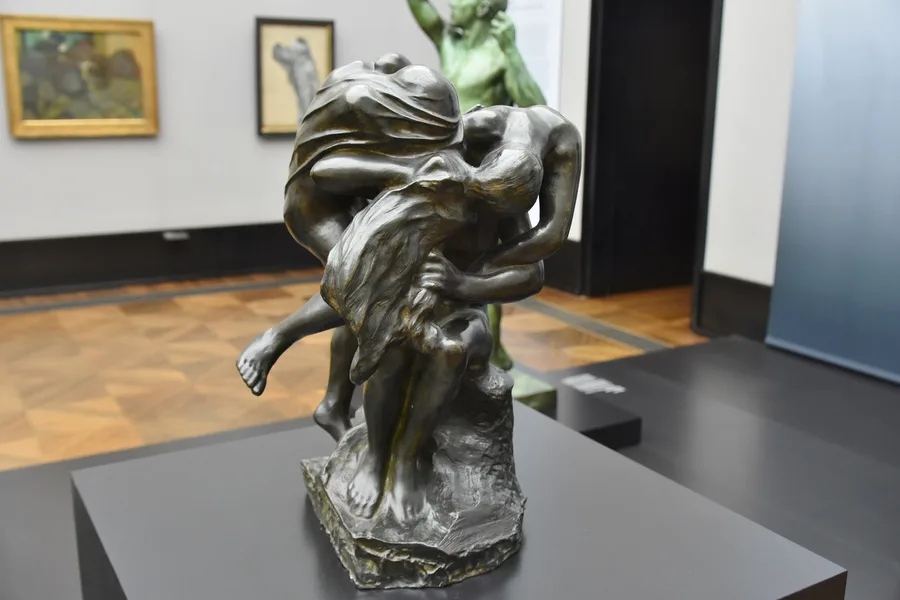
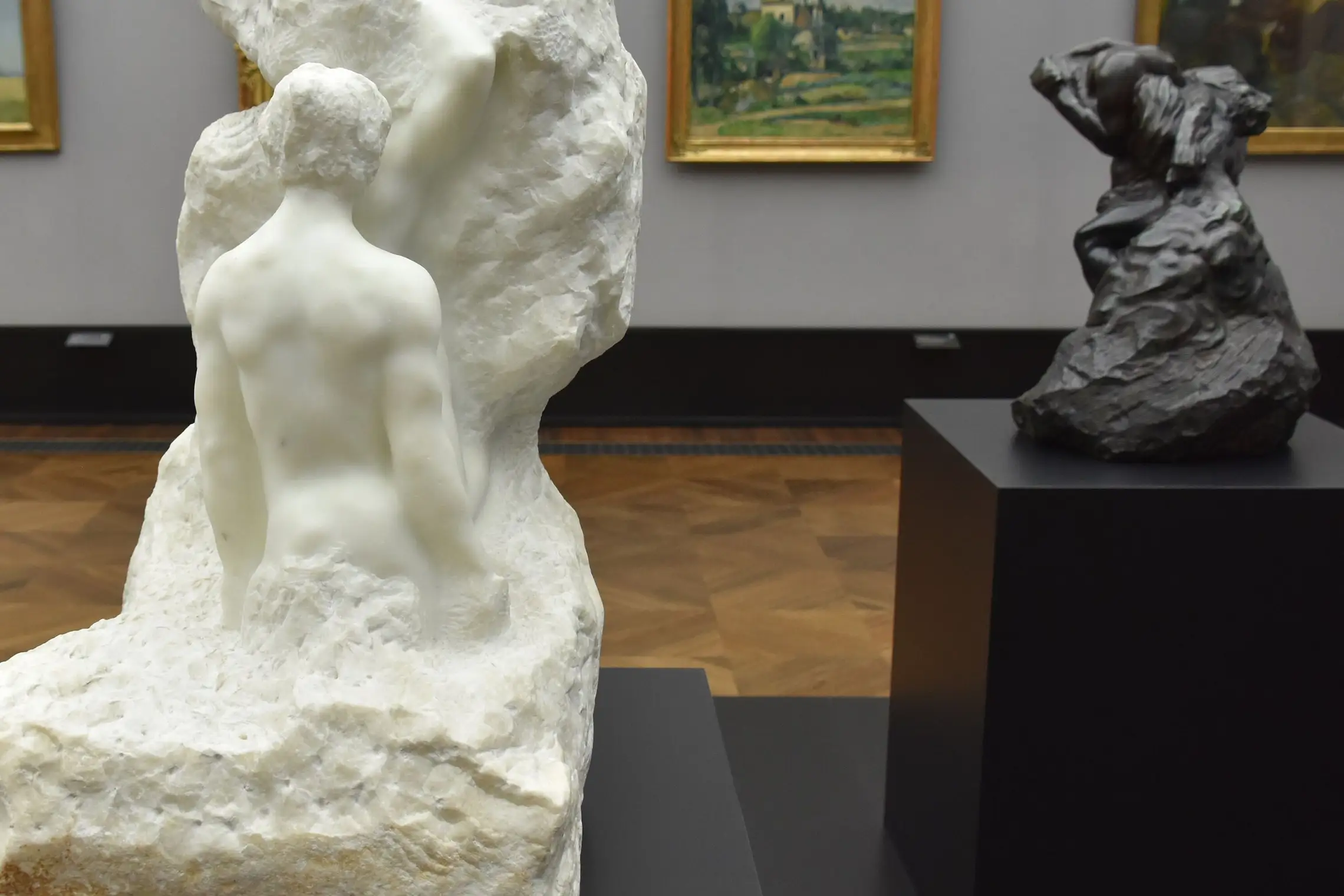
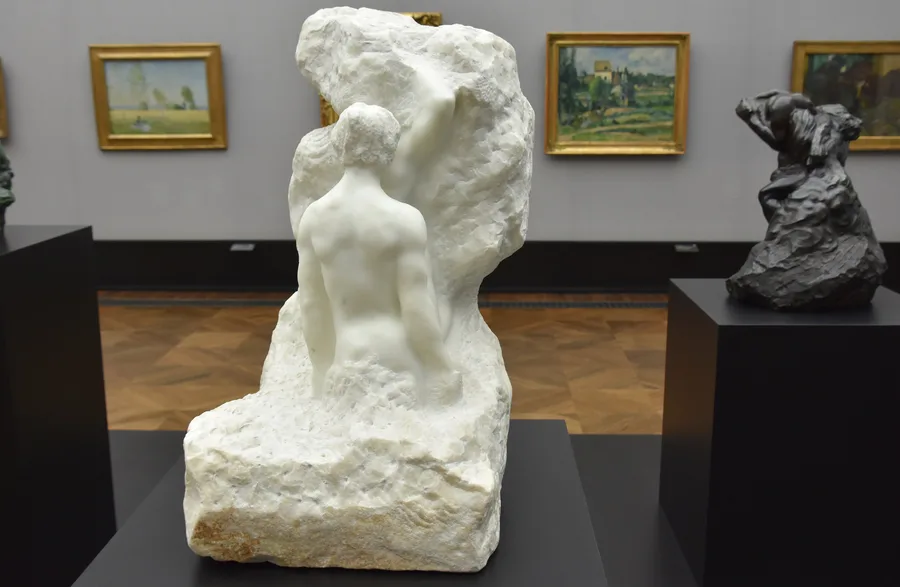
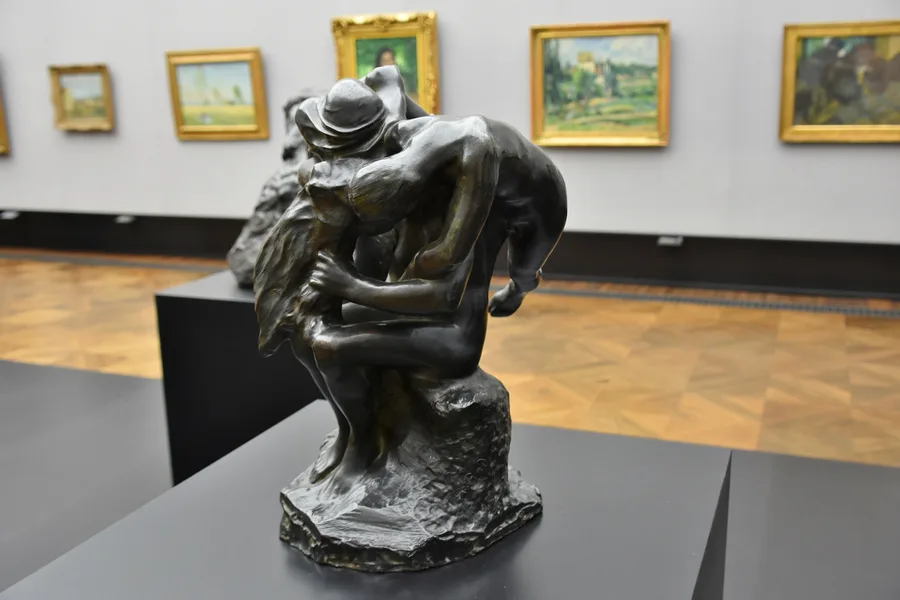
The second room, brighter and more cheerful, is reserved for the Impressionists. In the center stand bronzes and marbles by Rodin. Manet triumphs with two masterpieces: In the Conservatory and The Garden at Rueil. The evolution of Monet, Degas, Renoir, and Cézanne is also illustrated by first-rate canvases. Following these great classics of Impressionism, Tschudi wanted to reserve a place for some of the most gifted young artists of the current generation. Thus, thanks to him, the Berlin National Gallery became the first museum in Europe bold enough to exhibit watercolors by Paul Signac, studies by Pierre Bonnard and Édouard Vuillard, and statuettes by Aristide Maillol.
Tschudi had also acquired a very beautiful series of works by van Gogh, which he enjoyed showing to a few friends and held in reserve, waiting for the right moment to exhibit them without causing a scandal.
Imperial Disgrace and a New Beginning
Such results are all the more surprising given that this collection did not cost the administration of the Prussian Museums a single pfennig. No funds were allocated for the purchase of foreign paintings. It was therefore solely thanks to private subscriptions and the generous donations of a few patrons, whose enthusiasm Tschudi had managed to ignite, that this section of foreign art could be born and achieve such magnificent development. The Berlin museum was thus enriched, without opening its purse strings, with a collection of modern French art comparable to the collection of 18th-century French art that Frederick the Great had created at Potsdam.
Tschudi's bold initiatives, which were described as revolutionary, were in fact merely the continuation of a tradition established by the greatest of the Hohenzollerns.
Tschudi dreamed of completing this fragmentary collection by adding some typical works of French art from the beginning of the 19th century, notably from the Barbizon school, which was not without influence on German landscape painters. The sale of the famous van Eeghen collection from Amsterdam, which contained some of the most perfect masterpieces by Dupré, Rousseau, Troyon, and Daubigny, seemed to him an unhoped-for opportunity to fill this serious gap in a single stroke. This became the pretext for his downfall. The Emperor, who had long been prejudiced against him by cunning enemies, refused to ratify this acquisition and brutally invited him to take an indefinite leave... for health reasons.
This resounding disgrace of the eminent man who had, in a few years, made the Nationalgalerie one of Europe's leading museums, provoked indignant protests throughout Germany. All artists, all free thinkers, regardless of party, took his side against imperial arbitrariness. Despite this public outcry, Tschudi was not to resume his directorship of the National Gallery. After long months of hesitation, he was succeeded by Ludwig Justi, whose works on the history of German art are authoritative. This choice was all the better received as there had been a moment of fear of an offensive return of the official and academic art patronized by the Emperor.
The National Gallery would then have reverted to what it was before Tschudi: a Gallery of Battles that would have been a counterpart to the all-too-famous Victory Avenue. Ludwig Justi, a man of taste, had the good sense not to lend himself to these suggestions and to leave his predecessor's work intact.
The Reorganization of Munich's Museums
In the meantime, Tschudi had received the most flattering offers, even from foreign governments. He could have taken the directorship of the Hermitage Museum had he wished. He preferred to remain in Germany, and in 1909, after a trip to Japan, he settled in Munich, where the Prince Regent had offered him the very enviable post of Director General of the Bavarian State Collections. Driven from Berlin, he was now to bring his experience and his audacity to the artistic capital of Southern Germany, which had until then remained resistant to the museum reform movement.
As if spurred on by a premonition of his approaching death, he took advantage of the very extensive, almost discretionary powers entrusted to him to reorganize the Alte Pinakothek from top to bottom. The museum had remained stagnant since the time of its founder, King Ludwig I. The masterpieces were highlighted by a more rational arrangement, standing out harmoniously against light-colored wall hangings chosen with refined taste. Following these rearrangements, nearly all of them successful, the public had the impression of discovering for the first time works by Rubens, Titian, or Grünewald, whose unsuspected beauty was exalted.
At the same time, Tschudi set about filling the numerous gaps in the Pinakothek by annexing a number of first-rate works scattered in royal castles or provincial galleries. Thus, the Schleissheim Palace gallery had to yield a dramatic Crucifixion by Lucas Cranach, a nude by Boucher, and a small equestrian portrait of the Duke of Olivarez attributed to Velázquez to Munich, while the Augsburg gallery saw a Tintoretto and Jacopo de' Barbari's Glove taken from it.
It goes without saying that these transfers, perfectly justified in law, sparked noisy protests from Tschudi's opponents. He was also acrimoniously criticized for having mutilated a canvas by Rubens under the pretext of restoring it to its original state. Unfazed by this hateful criticism, the "dictator" systematically continued his reform work according to the plan he had laid out. Particularly successful purchases of works by El Greco and the English school filled the gallery's voids. The temporary exhibition of private collections, such as the von Carstanjen collection from Berlin and the Nemes collection from Budapest, so rich in major works by El Greco, brought a new element of interest and provided valuable points of comparison.
The Alte Pinakothek, so long dormant, was finally opening up to life.
This work, so bold and yet so measured in its boldness, was interrupted too soon. Perhaps it has less scope than the enormous work accomplished in the Berlin museums by the authoritarian genius of Wilhelm Bode. But to appreciate it at its true value, one must realize that all the forces of inertia and routine were leagued against Tschudi to prevent him from realizing his conception of the modern museum. His effort will not have been in vain. No one contributed more powerfully than he to refining public taste in Germany. He leaves to all who had the good fortune to know him the memory of a museum director who was at once an erudite scholar and a diplomat, a man of sure taste and upright integrity, a refined spirit, and a man of action.
LOUIS RÉAU