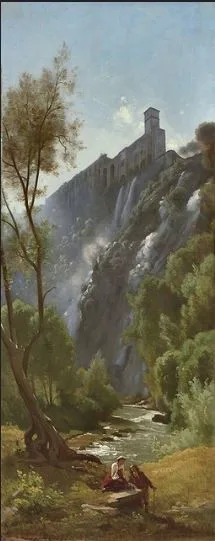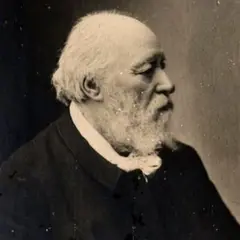
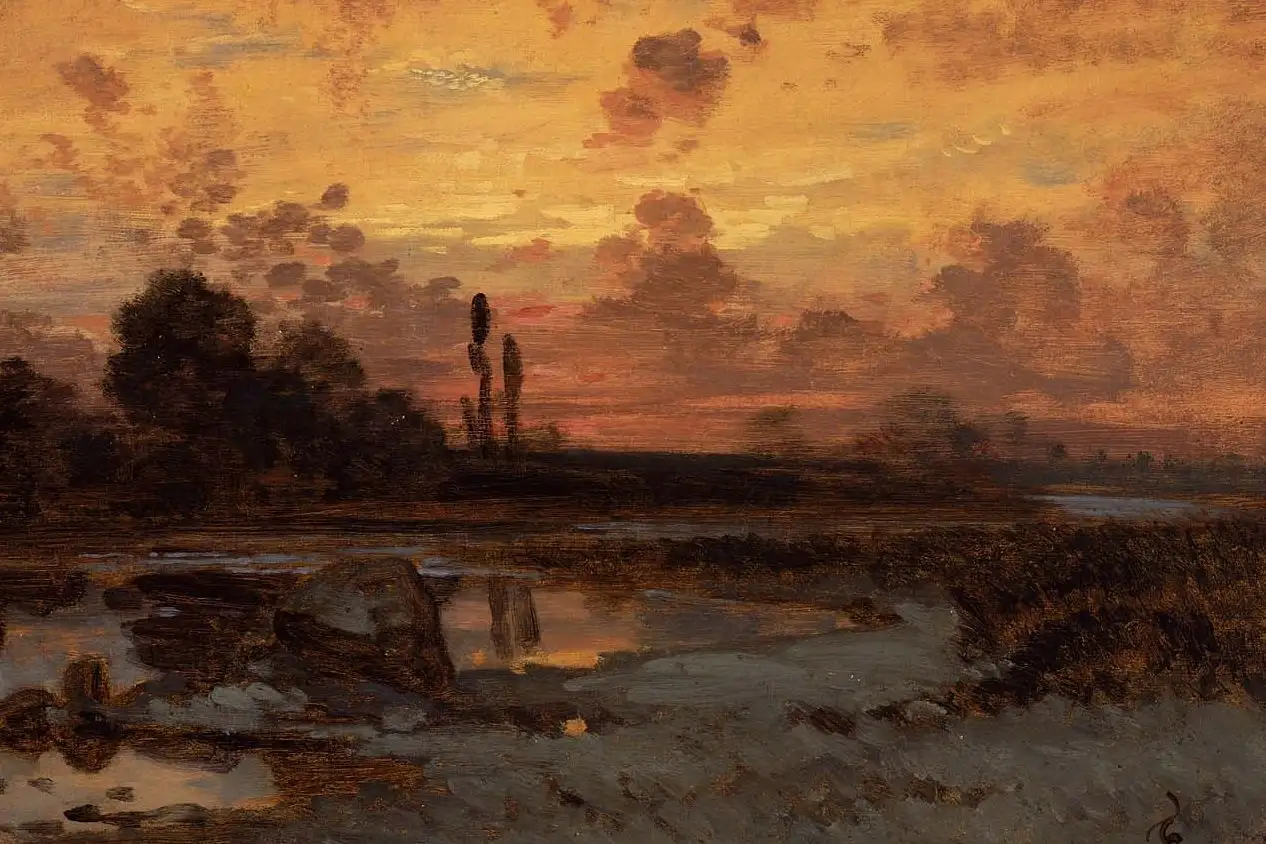
On Monday, May 31, 1897, a large crowd of artists and friends gathered for the funeral of the landscape painter François-Louis Français, who had died three days earlier at the age of eighty-two. Had one been able to overhear the words exchanged by the attendees, one would have heard nothing but expressions of universal regret. In the final farewells delivered on behalf of the various art associations that Français had founded or devotedly supported, the President of the Council of Ministers, M. Méline—his compatriot and friend—gave voice to the particular grief his death would cause in the Vosges. He spoke of the sorrow among the peasants from whose ranks the artist had emerged and to whom he returned each year to rejuvenate himself, amidst that powerful yet graceful nature that had provided his first inspirations.
Français was indeed a peasant and a Vosgien, not only by his birth and his robust constitution, which seemed to promise many more years to his vigorous old age, but also by his independent and sensible mind, the firmness of his will, his tenacity for work, and his love for that corner of the earth where the valiant artist, after his glorious labor, now rests among his own people.
Early Life and Artistic Calling
Born in Plombières on April 17, 1814, François-Louis Français belonged to an honorable and modest family long established in the region. A vague memory of the reputation several of its members had once acquired for their skill as armorers had been preserved. At the end of the previous century, the landscape painter's grandfather, a man of letters it seems, had been a reader for the Princess of Lamballe. Louis's precocious intelligence, good looks, and courage allowed his parents to dream of a future for him in commerce, one superior to what he might find by remaining with them.
Thus, once he could read well and was in possession of the beautiful handwriting he would keep his entire life, they sent him to Paris with three small écus in his pocket and new shoes on his feet. He was fourteen years old. Accustomed until then to the free and wandering life of boys his age, he now had to lead a cloistered existence in the great city, filled with the monotonous repetition of the minor chores that make up the day of a shop clerk. He had entered the service of M. Ménier, a bookseller on the Place de la Bourse, and later that of M. Paulin, the future founder of L'Illustration. Instead of the great woods and mountains that had formed his horizon in the Vosges, he saw only a desolate perspective of roofs and chimneys from the cramped attic room he inhabited, where he suffered from the severe cold of the winter of 1829–1830. But he was full of ardor and did not give in to despair.
From that moment on, he had a single idea from which he would never be swayed: he wanted to be a painter. Reserving only the bare necessities for himself, he found a way to save from his wages—and what wages! ten francs a month—enough to buy paper and pencils. Rising at the crack of dawn, he spent every moment not owed to his employer scribbling naive sketches. As soon as he had the necessary sum, he began to frequent the Académie Suisse in the early morning hours, where he drew from a live model.
An Unshakeable Vocation