
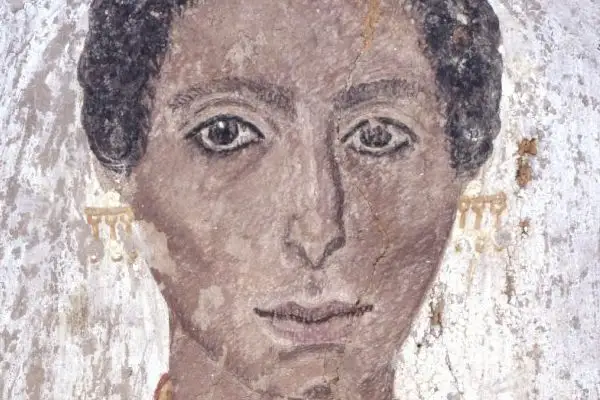
For the second time, the public has had the opportunity in Paris to admire the collection of ancient portraits that Mr. Theodor Graf brought back from Egypt.1 In 1889, Mr. Georges Perrot had already drawn attention to these rare and interesting specimens of a little-known art.2 Two years later, in his book on ancient painting, Mr. Paul Girard dedicated a few pages to these portraits, providing a brief explanation of the techniques employed by their creators.3
Beyond these mentions, little attention has been paid in France to a collection that is unfortunately being dispersed daily, with its finest pieces enriching private galleries and museums across Europe and America. An examination of the portraits exhibited by Mr. Graf raises many questions to which it is sometimes difficult to give a certain answer. One is surprised to find in these paintings such intense life, such a pursuit of individual expression, such a concern for detail, and a relatively perfect execution. We are left to wonder what school these portraits represent, to what period they should be assigned, and to which civilization they correspond. What trials and techniques led to such a remarkable representation of life?
Comparing these painted portraits with the funerary masks and busts also found in Egypt, along with a specific study of details like hairstyles, beards, clothing, and jewelry, sheds some light on these problems. For those who, like us, have admired the portraits of the Graf collection, it may be pleasing to know the current results of the research they have inspired.
From Ritual Mask to Lifelike Portrait
Our knowledge of painting in antiquity is remarkably scarce. Greek painting proper is known to us only through vases and critical texts; not a single panel painting has survived to our time. Of the works produced in Italy and Egypt by Greek artists, or those trained in the Greek school, we are left with the frescoes discovered in Campania—at Pompeii and, more recently, at Boscoreale4—and the funerary portraits found in the tombs of Egypt. The study of the magnificent compositions decorating the villa of Fannius will undoubtedly provide new and useful information on ancient painting. Meanwhile, the portraits painted on wood or canvas, preserved in the tombs of the Fayum, form a rich and important collection among the documents that acquaint us with this lost art.
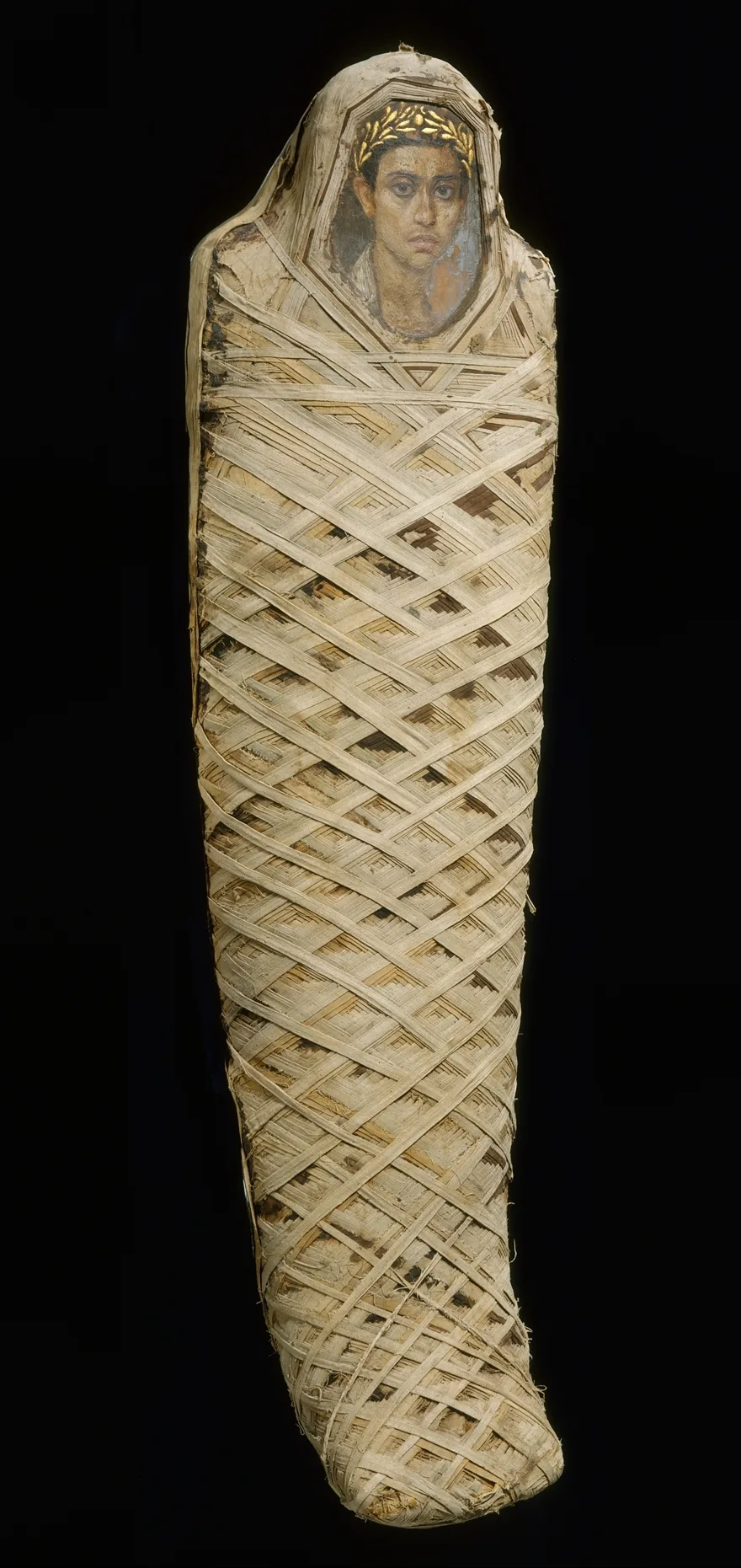
The Egyptian museums of Cairo and Gizeh possess a number of them; the Louvre Museum holds a portion of those unearthed during the excavations of 1870. Mr. Flinders Petrie brought an interesting collection back to England,5 and finally, Mr. Graf, by assembling about a hundred of these funerary portraits, formed the gallery that was exhibited in Paris in 1889 and 1900.6
The portraits acquired by Mr. Graf, like almost all paintings of this kind, come from the Fayum region; they were discovered in the years 1887–1888. One of them (no. 94) was still attached by an adhesive and linen wrappings to the mummy it was intended to adorn. More often, the mummies had not been respected: tomb robbers had opened them and stripped them of their jewelry, leaving the small painted wooden panel behind in the tomb.