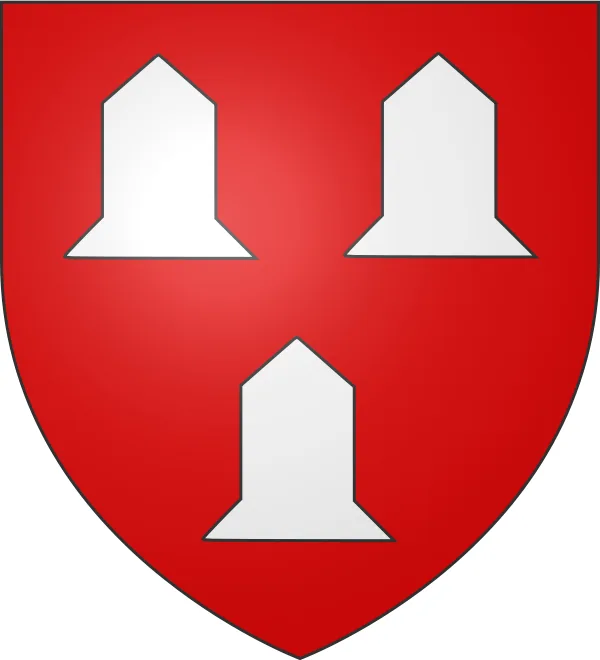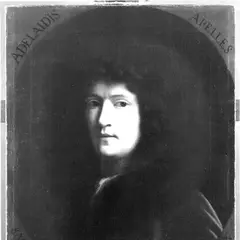
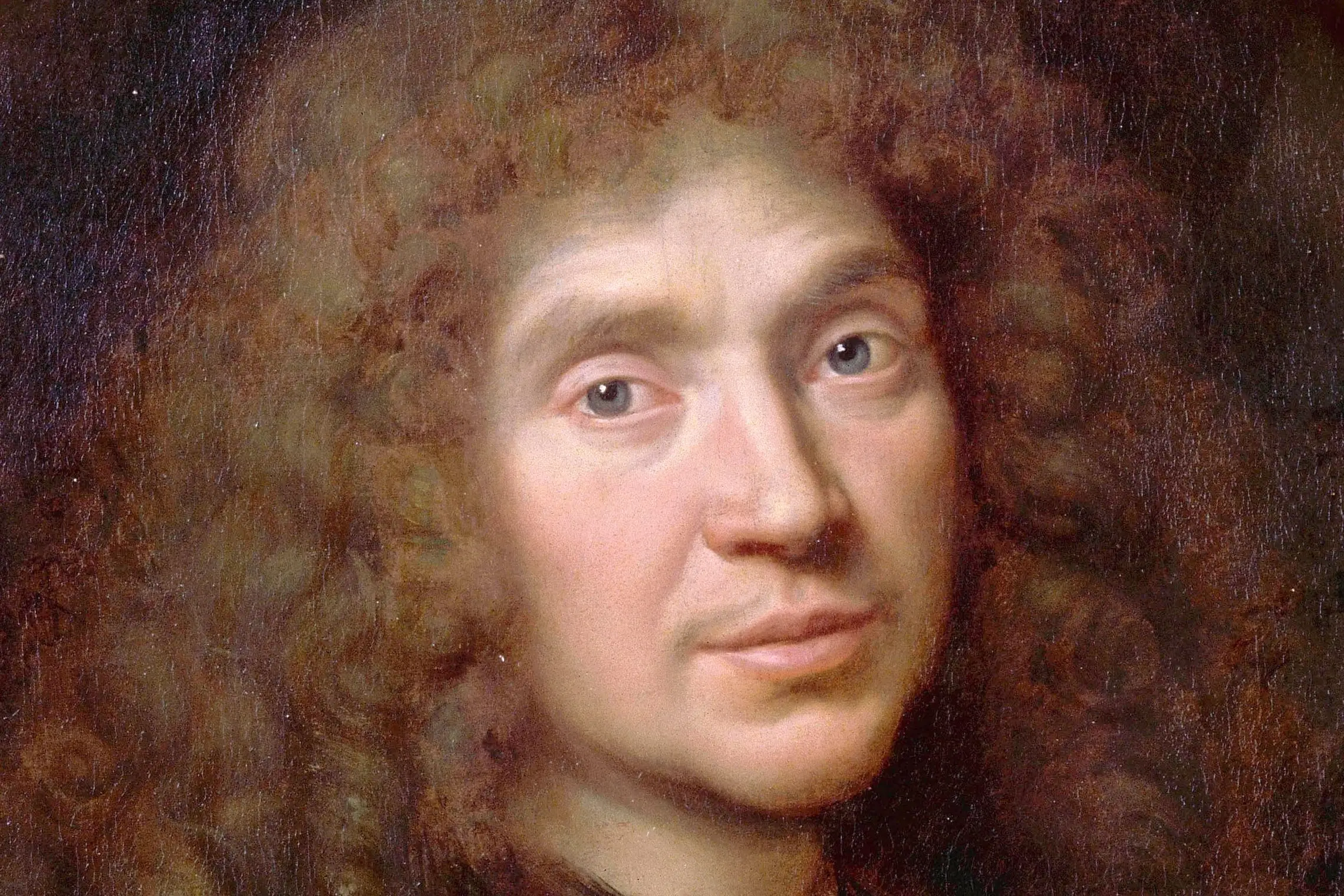
When Charles Perrault, thoroughly imbued with the prejudices of the official world of his time, granted Molière a place among the Illustrious Men of the 17th Century,¹ he sought to accompany the great comic poet's biography with an image that faithfully reproduced his features. As the plate engraved in 1685 by Jean-Baptiste Nolin, after a painting by Pierre Mignard, was still capable of yielding a large number of prints, Perrault rightly believed he could do no better than to use this precious work. The portrait, reduced to a bust, was set within an oval frame, decorated at its lower part with an escutcheon showing three mirrors, arranged two and one, and surmounted, in place of a helm, by a mask with lambrequins.
As this coat of arms has never been the subject of a special study, we will attempt to trace its origins.
The Heraldic Evidence
An extract from a small notebook of heraldic notes from the early 18th century, concerning certain families of the Parisian bourgeoisie, will first indicate the color of its tinctures. This notebook was once shared with us by M. Lefebvre, the former bookseller of the Arcade Colbert. On pages 18 and 22, we find:
"BÉJART: Azure, a fess Argent, with three mullets Or, two in chief, one in point."
"Mme DE MONTALANT-RACHEL, by name, DE MOLIÈRE-POQUELIN: Vert, three mirrors of Truth, framed Or.³"