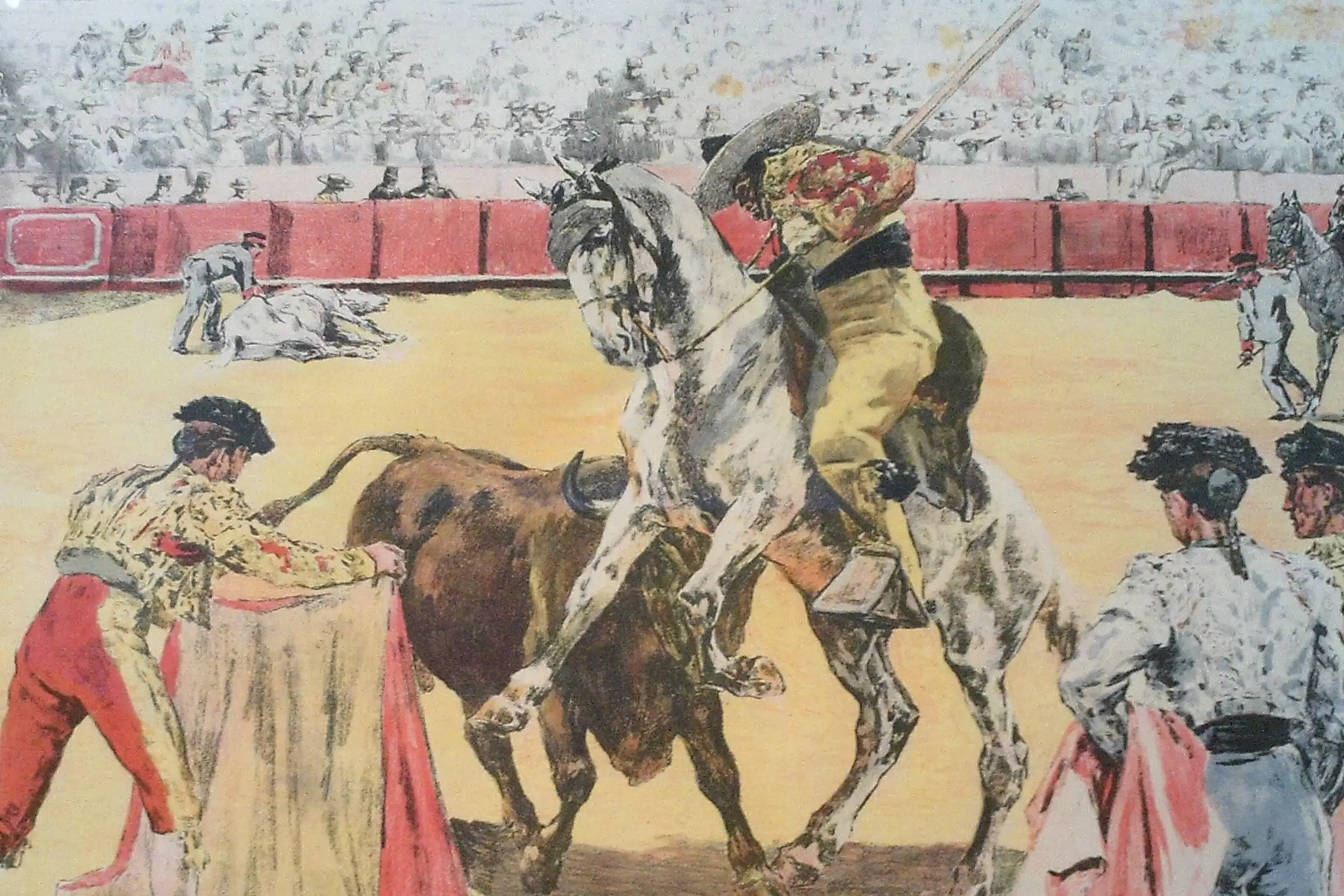
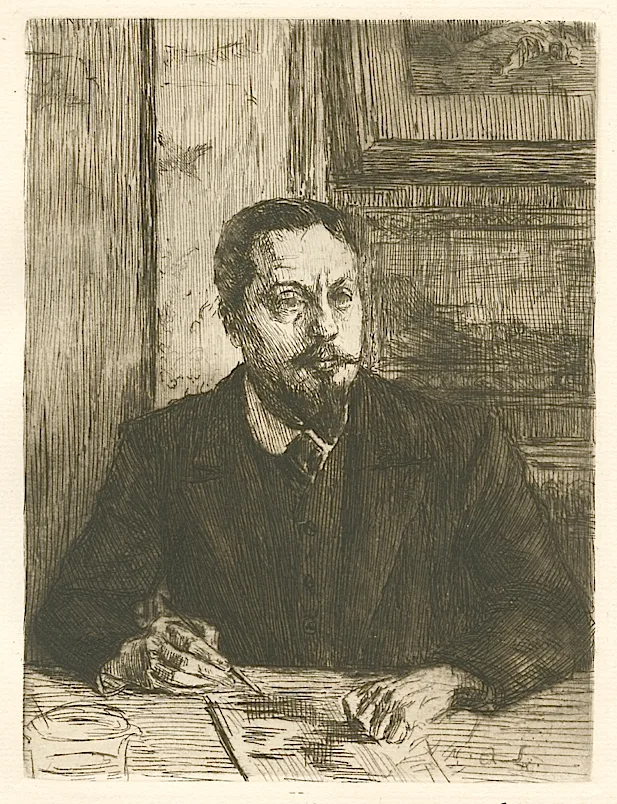
Frankness and clarity, a natural and effortless vigor, a sense of a simple and expansive life, and a spontaneous personality that emerged from his twenty-fifth year are the hallmarks of Alexandre Lunois. His work is defined by an always wholesome inspiration and an honest technique, coupled with a nomad's independence and a perpetual instinct for renewal. This drive involves no anxiety, but rather reveals a singular nonchalance toward his own completed work. Such are the principal characteristics of this still-young artist, whose name has been known for more than twenty years and to whom interesting studies have already been dedicated.1
The most recent of these studies, published by M. Emile Dacier, dates back ten years. If, in 1901, the lithographer's evolution was nearly complete, the same could not be said for the painter, and even less for the etcher, who was barely born. The attentive critic could then write without error: "In Lunois, it is the lithographer who dominates: painting and pastel, in his hands, are reduced to the conditions of a future lithograph."
Today, such a judgment would no longer be appropriate. In light of the numerous canvases brought back from Istanbul, which can currently be seen exhibited together,2 and in the clarity of his etchings, which in no way recall lithographic drawing but are truly a painter's etchings, an indisputable truth emerges: M. Alexandre Lunois is a painter, and he has never been anything but a painter.
He himself might object that before setting out on his travels across the vast world—before he knew Holland, Spain, Algeria, Morocco, and the Orient—he saw the external world solely in black and white, and that until the age of twenty-five, he was not a colorist.
The response is simple: it is the man who interests us, the artist freed from the tutelage of Sirouy and Lhermitte. His career truly begins with the luminous studies of the Zuiderzee, with the Hollandaise de Volendam (Dutch Woman of Volendam) and La Belle Tulipe (The Beautiful Tulip). These plates, remarkable for their atmosphere of color, have become rare today, and collectors already vie for them at frantic auctions. Besides, are black and white not enough to reveal a colorist? Does a plate like Rue Transnonain—which not only bears the mark of genius but also testifies to a sovereign command of chiaroscuro—not signal the painterly qualities of Honoré Daumier, just as much as The Third-Class Carriage or The Washerwomen of the Quai d'Anjou, painted thirty years later?
Furthermore, if you survey the lithographic work of M. Lunois,3 examining pieces like Les Deux Hollandaises (The Two Dutch Women), La Lessive dans le gourbi (Laundry in the Hut), La Course de chars à l'Hippodrome (The Chariot Race at the Hippodrome), and the admirable Tisseuses de burnous (Weavers of Burnooses), what seems to triumph in these prints is the brush. It is the painter's brush, not the lithographer's crayon, that gives them their strong grace, deep blacks, supple and transparent halftones, and frank highlights.